How Many Ballistic Shields Does a School Need? A Practical Guide for School Safety Planning
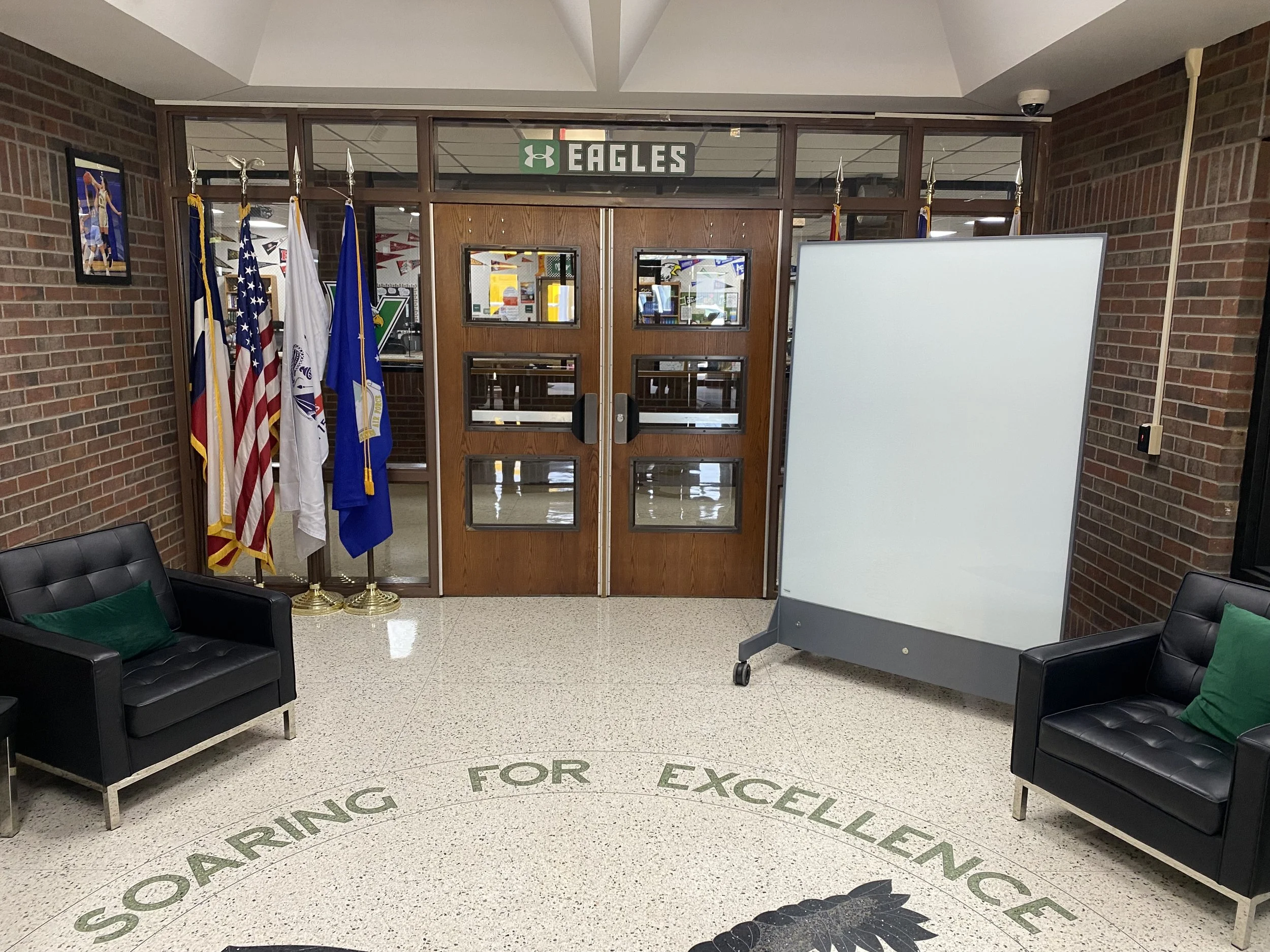
Discreet, everyday protection at one of the most critical areas on campus — the school entry point.
One of the most common questions we hear from school leaders is simple:
How many ballistic shields does a school need to properly protect a campus?
It’s a fair question — but it’s often approached the wrong way.
Because the answer isn’t a fixed number.
It’s a strategy.
The Wrong Approach: Buying a Set Number of Shields
Many schools start by asking:
“Should we buy 2?”
“Do we need one per building?”
“What are other districts doing?”
The problem is this:
Schools are not identical.
Every campus has:
Different layouts
Different entry points
Different traffic patterns
Different vulnerabilities
A fixed number doesn’t account for risk.
If you haven’t already, we break this down further in our guide on where ballistic protection should be placed in schools.
The Right Approach: Planning Based on Movement and Exposure
Effective school safety planning starts with one key principle:
Protect the paths a threat must take — not just the spaces you hope they won’t reach.
Instead of asking how many, schools should ask:
Where would an intruder enter?
Where would they move next?
Where are people most exposed?
Where can protection slow or stop movement?
This is where ballistic protection becomes strategic — not reactive.
Key Areas Every School Should Evaluate
Entry Points & Front Offices
These are the most vulnerable and most predictable access points.
Main entrances
Vestibules
Reception desks
Minimum recommendation:
At least 1–2 ballistic protection solutions per primary entry
Hallways & Intersections
Hallways are movement corridors.
If uncontrolled, they allow threats to move quickly through campus.
Goal:
Create the ability to slow, block, or redirect movement
Classrooms
This is where protection must be immediate.
There is no time to retrieve equipment during an emergency.
Protection should already be inside the room — not stored elsewhere.
Common Areas
Cafeterias
Libraries
Gyms
Auditoriums
Large open areas require flexible, mobile protection
Why Traditional Ballistic Shields Fall Short
Most traditional ballistic shields were designed for law enforcement — not schools.
Common limitations:
Limited coverage
Stored away when not in use
Requires retrieval
No daily functionality
In a real emergency, accessibility matters more than ownership.
A More Effective Model: Distributed, Everyday Protection
The most effective schools are shifting toward:
Distributed protection systems
Instead of relying on a few stored shields, they deploy protection:
Throughout the building
In everyday-use environments
Where it is instantly accessible
Why Dual-Purpose Ballistic Solutions Change the Equation
A product like a bulletproof mobile whiteboard is not just a shield — it’s part of the environment.
It serves as:
A daily-use whiteboard
A mobile barrier
A full-body ballistic shield
An instantly deployable safety tool
Because it is already in place:
There is no delay in response.
There is no need to retrieve protection.
Coverage becomes scalable across campus.
So… How Many Do You Actually Need?
Here’s the real answer:
Enough to cover your highest-risk areas with immediate access.
For most schools, that means:
Entry points are protected
Movement paths are controlled
Classrooms have immediate access
Common areas are not left exposed
Not a number.
A system.
A Layered Approach Is the Only Real Answer
Ballistic protection should be part of a broader strategy that includes:
Access control
Communication systems
Staff training
Physical barriers
Law enforcement coordination
When layered correctly, protection doesn’t just respond — it limits the threat.
Final Thought: Coverage Over Quantity
The question isn’t:
“How many ballistic shields do we need?”
The better question is:
“Where do we need protection — and how quickly can it be used?”
Because in a real emergency:
Seconds matter
Access matters
Placement matters
And the schools that plan for those realities are the ones that are truly prepared.
Frequently Asked Questions About Ballistic Shields in Schools
How many ballistic shields should a school have?
Schools should have enough ballistic protection to cover entry points, key movement paths, and classrooms where immediate protection is needed.
Where should ballistic shields be placed in a school?
Ballistic protection should be placed at entry points, hallways, classrooms, and common areas where people are most exposed.
Are ballistic shields required in schools?
Requirements vary by state, but many school safety standards, grant programs, and state initiatives strongly encourage ballistic protection as part of a layered security strategy.
Want help determining the right safety strategy for your campus?
We work directly with schools to evaluate layouts, identify vulnerabilities, and recommend practical solutions.