Where Should Ballistic Protection Be Placed in Schools? A Practical Guide for 2026
As school safety strategies continue to evolve, many district leaders are asking a more practical question:
Where should ballistic protection actually be placed inside a school?
It’s no longer just about having the right equipment — it’s about having it in the right location, where it can be accessed immediately and used effectively.
Understanding placement is critical to building a layered, real-world safety strategy that supports both protection and daily operations.
The Shift From Equipment to Strategy
In the past, many safety investments focused on acquiring equipment — often stored in offices or designated areas.
Today, leading districts are shifting toward strategic placement, ensuring that protective tools are:
immediately accessible
positioned where incidents may occur
integrated into daily school environments
Because in an emergency:
location matters just as much as the tool itself
Entry Points: The First Layer of Defense
Most school safety plans begin at the entrance.
Common protection strategies include:
secure vestibules
access control systems
ballistic-rated glass in entryways
These measures help:
control who enters the building
slow unauthorized access
create time for response
However, entry protection alone is not enough.
Hallways and Common Areas: Extending Protection
Once inside the building, hallways and shared spaces become critical areas to consider.
These environments:
connect classrooms and offices
experience frequent movement
can become transition points during emergencies
Placing ballistic protection in hallways can:
help create visual barriers
provide immediate cover
support controlled movement during lockdown situations
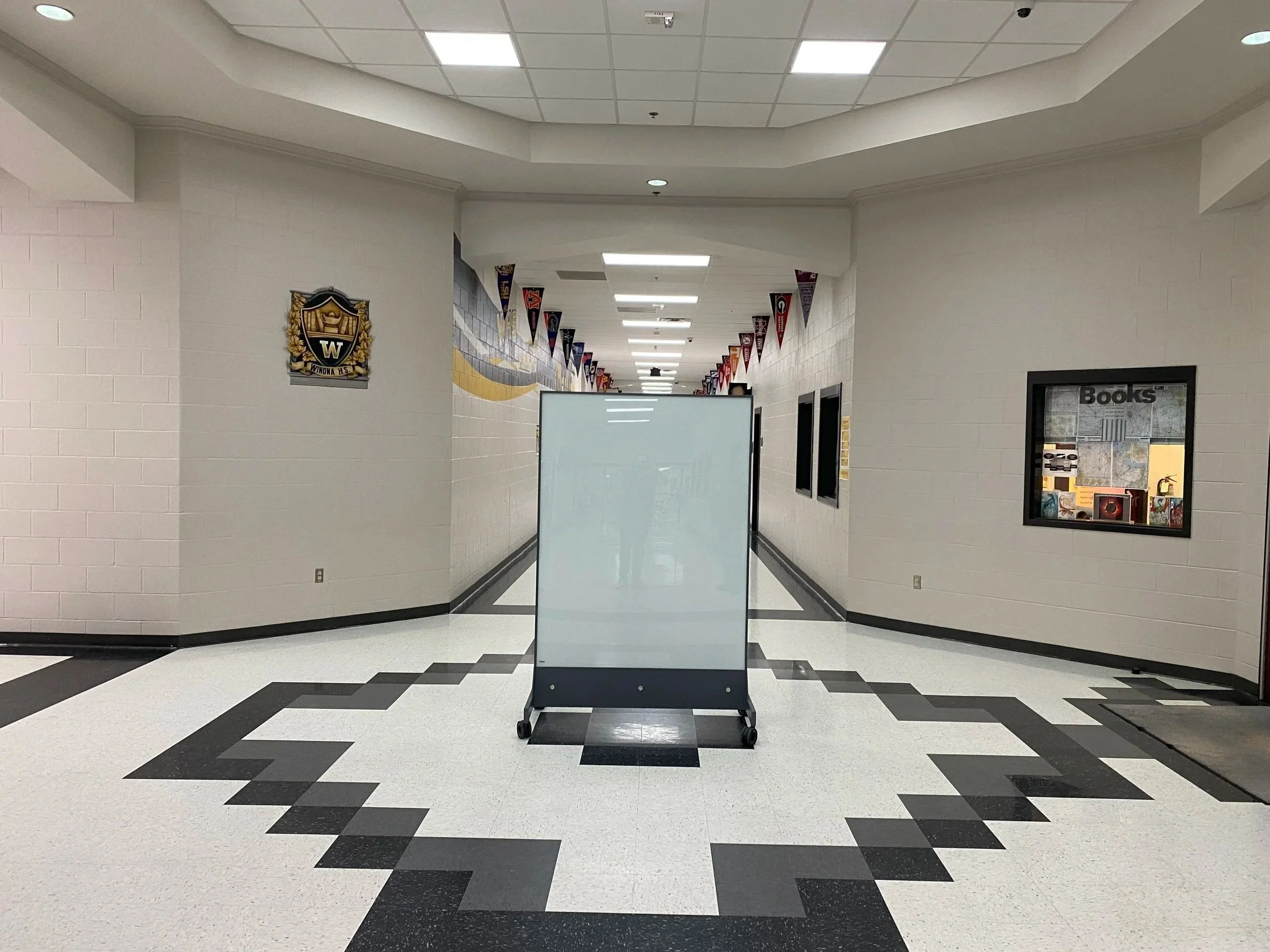
Ballistic protection placed in hallways can provide immediate cover while blending into everyday school environments.
Classrooms: Where Protection Matters Most
Classrooms are where students and teachers spend the majority of their time.
For this reason, many safety experts emphasize that protective solutions should be:
already inside the classroom
immediately accessible
usable without specialized training
This is where dual-purpose solutions become especially valuable.
Products like the TAG Mobile™ ballistic whiteboard allow schools to integrate protection directly into daily learning environments.
Administrative Areas and Front Offices
Front offices and administrative spaces are often:
high-traffic areas
first points of contact
responsible for monitoring visitors
Ballistic protection in these areas can support:
staff safety
controlled communication
visibility and response coordination
The Importance of Accessibility
One of the most important considerations in placement is accessibility.
Protective tools should not require:
retrieval from another location
assembly or setup
specialized handling
Instead, they should be:
already in place — ready when needed
A Layered Approach to Placement
No single location or solution is enough.
The most effective school safety strategies combine multiple layers, including:
entry vestibules and controlled access
ballistic glass in key locations
interior protection in classrooms and hallways
staff training and emergency procedures
Learn more about layered school safety
Recommended Deployment Priority for Schools
When planning ballistic protection, it’s important to prioritize placement based on risk, visibility, and speed of deployment. Based on real-world school safety strategies, we recommend the following approach:
1. Primary Entry / Front Office (Highest Priority)
This is the most critical location, as it is the most likely point of initial contact. Ballistic protection here helps secure staff and delay or stop a threat at the point of entry.
2. Main Hallways & Intersections
Hallways are high-traffic areas and often serve as primary pathways through a campus. Strategically placing protection here helps create barriers, limit line of sight, and protect large groups of occupants.
3. Classrooms
Classrooms benefit from immediate, in-room protection that can be deployed in seconds without requiring retrieval from another location.
4. Common Areas (Cafeteria, Library, Gym)
These larger, open spaces often house a high number of occupants. Mobile ballistic protection can be positioned to provide flexible coverage and rapid response in these environments.
This is where solutions like the TAG Mobile™ provide a unique advantage—delivering mobile, discreet ballistic protection that can be positioned exactly where it’s needed most.
Designing for Safety Without Disruption
One of the biggest challenges schools face is maintaining a positive learning environment while improving safety.
Modern solutions are designed to:
blend into classrooms and common spaces
support daily use
avoid creating a “fortified” or intimidating atmosphere
This balance is critical.
Conclusion: The Right Protection in the Right Place
School safety is not just about what you install — it’s about where you place it.
By thinking strategically about placement, districts can:
improve response readiness
enhance protection
support teachers and students
maintain welcoming learning environments
Ready to Evaluate Your Campus Layout?
If your district is reviewing safety planning or facility design, Titan Armored can help you evaluate practical solutions for classrooms, hallways, and entryways.