How Much Does Bulletproof Glass Cost? Understanding Ballistic Glass Pricing, Protection Levels & Installation
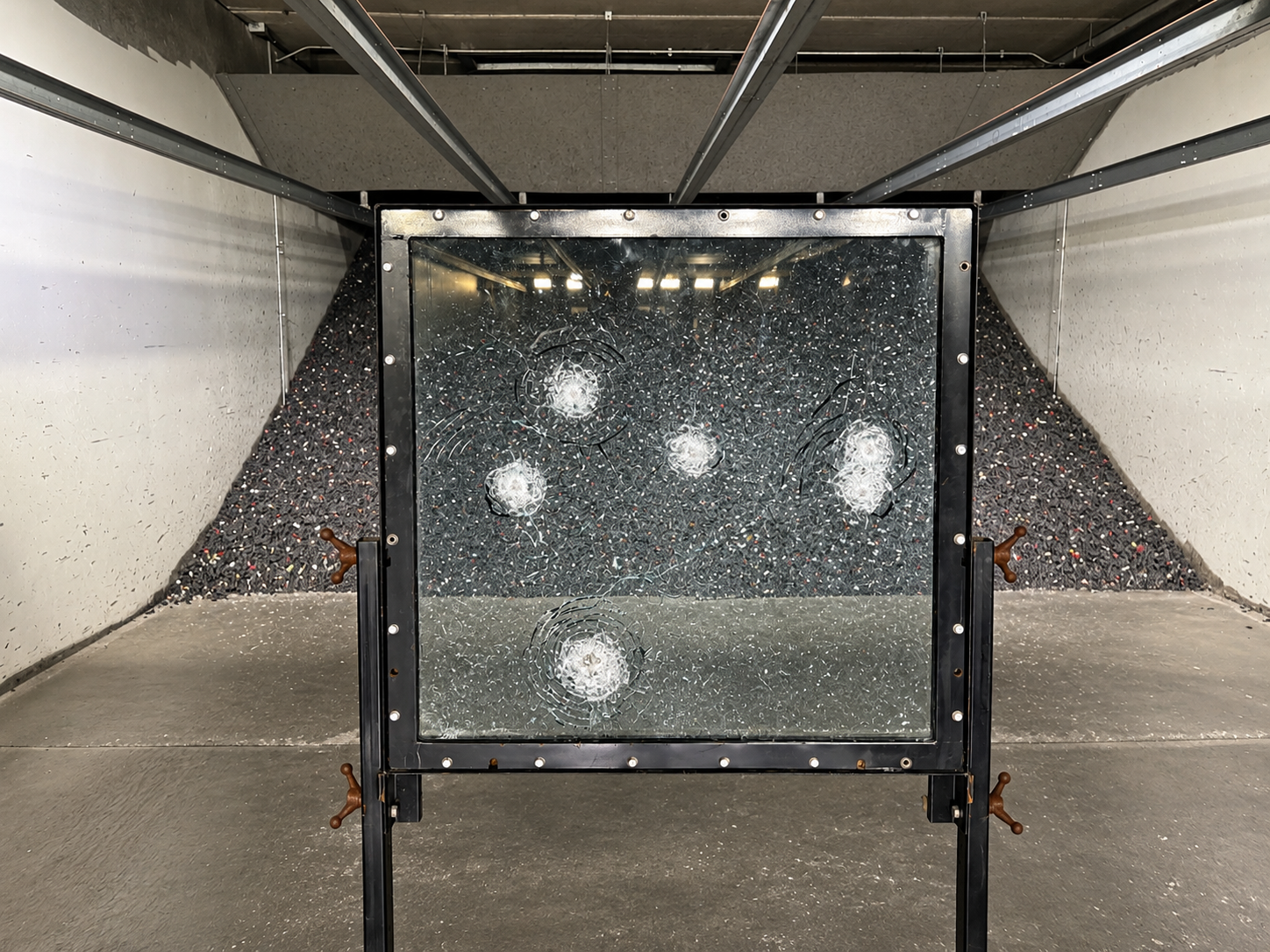
A recent NIJ Level IIIA ballistic glass demonstration attended by Titan Armored. The visible impact patterns illustrate why ballistic protection levels, glazing construction, and documented performance are important considerations when evaluating a bullet-resistant glass investment.
When organizations begin researching bulletproof glass, one of the first questions they ask is simple: How much does bulletproof glass cost?
The answer is more complex than a price per square foot.
The cost of bulletproof glass—more accurately described as bullet-resistant glass or ballistic glazing—depends on the required protection level, glazing composition, window dimensions, protective framing, installation conditions, and the application being protected.
A handgun-rated reception window, a rifle-rated exterior window, and a complete secured entrance vestibule have very different design and performance requirements. Even two windows with identical dimensions can require substantially different investments.
The most accurate way to determine ballistic glass cost is to evaluate the threat requirements, the complete protective system, and the conditions of the building where it will be installed.
At Titan Armored, we believe understanding these variables is the first step toward making an informed security investment.
Ballistic Glass Performance Begins With Testing, Not Appearance
Ballistic glass performance is best understood through testing, not appearance alone.
During a recent NIJ Level IIIA ballistic glass demonstration attended by Titan Armored, we observed firsthand how protective glazing responds to projectile impacts.
The demonstration provided a valuable reminder that two transparent materials may look similar while offering very different levels of protection.
Experiences like these reinforce an important principle: selecting ballistic glass requires understanding the threat level, material construction, and documented performance—not simply comparing prices.
The appearance of impact marks alone does not establish whether a sample passed a particular test. Actual performance must be evaluated against the relevant test requirements and supporting documentation.
For architects, security directors, school administrators, and building owners, this distinction is fundamental to making an informed purchasing decision.
Why Bulletproof Glass Is an Investment, Not Just a Building Material
Traditional architectural glass is generally selected for visibility, aesthetics, daylight, energy performance, and applicable building-code requirements.
Ballistic glass must satisfy additional performance requirements: resisting specified projectile threats under defined testing conditions.
That distinction changes how the material is designed, manufactured, specified, and installed.
A ballistic glass project may involve:
Multiple layers of glass and polymer materials engineered to resist specified ballistic threats.
Protective framing designed to support the glazing and meet project requirements.
Specialized doors, hardware, and anchoring systems.
Structural evaluation of existing openings and surrounding construction.
Professional installation and coordination with architects, contractors, and security professionals.
Documentation demonstrating the performance of selected materials or systems.
The investment is not simply in the transparent material. It is in a protective solution designed to address a specific security objective while preserving the functionality of the space.
For schools, corporate offices, government facilities, houses of worship, and other organizations, ballistic glazing can form an important part of a broader, layered security strategy.
However, no single product eliminates every security risk. Protective performance depends on tested capabilities, system design, installation, and the circumstances of an incident.
What Determines the Cost of Bulletproof Glass?
There is no universal pricing formula for ballistic glass.
Several variables influence material selection, manufacturing, engineering, and installation. Understanding these factors helps organizations compare quotations accurately and avoid selecting protection that is insufficient or unnecessarily complex for the intended application.
1. Ballistic Protection Level: Handgun-Rated vs. Rifle-Rated Glass
One of the most significant cost factors is the required level of ballistic protection.
Ballistic glazing is evaluated against specified ammunition, projectile velocities, and test conditions. Different threat requirements can demand different glazing constructions, thicknesses, weights, and supporting systems.
Handgun-rated ballistic glass may be appropriate for certain reception areas, transaction windows, and other applications where the identified threat involves specified handgun ammunition.
Rifle-rated ballistic glass is designed to resist specified rifle threats and may require substantially different materials and structural support.
Higher ballistic ratings are not automatically the best choice for every project.
The appropriate protection level should be informed by a facility-specific threat and risk assessment, operational requirements, and applicable testing documentation.
Organizations should also understand the differences between UL 752 and NIJ ballistic protection standards.
UL 752 addresses bullet-resisting equipment and assemblies, while NIJ publishes ballistic testing standards for different categories of protective equipment and materials.
The exact standard and edition matter. Ratings from different standards should not be treated as automatically interchangeable.
For a detailed explanation, read our guide:
UL 752 & NIJ Ballistic Protection Standards Explained
2. Size, Shape, and Number of Glass Openings
The dimensions of a ballistic window affect more than the quantity of glazing material required.
Larger openings can introduce additional considerations involving:
Glazing thickness and overall weight.
Manufacturing capabilities and material availability.
Protective framing and structural support.
Transportation and specialized handling.
Installation equipment and labor.
Architectural design and appearance.
Custom shapes, unusual dimensions, and oversized openings may require additional fabrication or engineering.
The number of openings also matters.
A single reception window has different project requirements from an installation involving dozens of exterior windows or an entire secured entrance.
Organizations evaluating multiple openings should provide a complete opening schedule whenever possible. This helps ensure quotations reflect the actual project scope rather than disconnected material estimates.
3. Ballistic Glass Composition and Construction
Not all bullet-resistant glass is manufactured the same way.
Depending on the required performance and application, ballistic glazing may incorporate laminated glass, polycarbonate, and other transparent materials.
Different constructions can affect:
Ballistic performance.
Overall thickness and weight.
Optical clarity.
Interior and exterior surface characteristics.
Resistance to environmental exposure.
Compatibility with framing and installation systems.
Long-term maintenance requirements.
Material selection should be based on the intended application and documented performance—not appearance alone.
For example, an exterior window may also need to satisfy environmental, weather, thermal, and building-code requirements.
A product suitable for an interior transaction window should not automatically be assumed appropriate for an exterior building envelope.
4. Ballistic Framing and Structural Support
One of the most frequently overlooked aspects of ballistic glass pricing is the frame.
A ballistic-rated glass panel does not automatically make an existing window assembly bullet-resistant.
The protective performance of a complete opening depends on the glazing, frame, connections, anchorage, and surrounding construction.
A project may require specially designed ballistic framing, reinforced supports, compatible glazing retention systems, or modifications to existing structural elements.
In some applications, framing and installation requirements can represent a substantial portion of the total investment.
This is why comparing the price of glazing alone with the price of a complete installed ballistic window system can be misleading.
Before selecting a product, buyers should establish whether the quoted protection applies to the glazing material, the complete assembly, or a particular tested configuration.
5. New Construction vs. Retrofitting Existing Windows
Installing ballistic glass during new construction presents different challenges from upgrading an existing facility.
In new construction, architects and engineers may incorporate protective framing, structural support, and security requirements into the original building design.
A retrofit project requires evaluating conditions that may not have been designed to accommodate the selected protective system.
These can include:
Existing frame dimensions and materials.
Available wall and structural support.
Weight of the proposed glazing.
Anchorage and attachment conditions.
Required demolition or modifications.
Access for transporting and installing the material.
Compatibility with building systems and applicable codes.
Some existing openings may accommodate an appropriate retrofit solution. Others may require replacement framing or additional structural work.
The feasibility of reusing an existing frame should be determined through engineering and system-specific evaluation, not assumed from the window's appearance.
The least disruptive installation is not necessarily the least expensive or most appropriate protective solution.
6. Interior vs. Exterior Applications
The location of a ballistic glass installation can materially affect project requirements.
An interior reception window may primarily need to satisfy the specified ballistic threat, operational needs, and applicable interior building requirements.
An exterior window may also need to address:
Wind loads and structural performance.
Water and air infiltration.
Thermal performance.
Weather exposure.
Building-envelope compatibility.
Applicable fire, safety, and accessibility requirements.
A secured exterior entrance may introduce additional requirements involving doors, access control, locking hardware, emergency egress, and structural connections.
These considerations can change the overall system design even when the ballistic threat level remains the same.
For more information about protective glazing applications, see:
Where Should Ballistic Glass Be Used?
7. Installation Labor, Equipment, and Logistics
Ballistic glazing can be substantially heavier and more difficult to handle than conventional architectural glass.
Depending on the project, installation may require specialized equipment, trained personnel, site preparation, and coordination with other contractors.
Costs can also be influenced by the building's location, access restrictions, working hours, security requirements, and project schedule.
Replacing a ground-level reception window in an accessible area presents different logistical conditions from installing oversized protective glazing on an upper floor or within an occupied facility.
Shipping, unloading, material handling, and final placement should all be considered when evaluating the complete project.
8. Engineering, Documentation, and Project-Specific Requirements
Some ballistic glass projects require additional design coordination, structural calculations, shop drawings, performance documentation, or third-party review.
Government facilities, schools, and other institutional projects may also have procurement requirements that affect product selection and documentation.
These services should be identified early in the planning process.
A complete quotation should clarify which engineering, fabrication, installation, and documentation services are included—and which are outside the proposed scope.
Why Two Bulletproof Windows of the Same Size Can Cost Different Amounts
Imagine two windows with identical dimensions.
The first is an interior transaction window designed for a specified handgun threat.
The second is an exterior rifle-rated window that must also satisfy wind-load requirements, incorporate compatible protective framing, and be installed in an existing structural opening.
Although the visible glass area is the same, the systems are not equivalent.
Their glazing constructions, weights, framing, anchorage, installation requirements, and documented performance may differ substantially.
That is why a simple price-per-square-foot comparison rarely tells the whole story.
The correct comparison is between solutions designed for the same threat requirements, application, and installation scope.
Bulletproof Glass vs. a Complete Ballistic Glass System: What's the Difference?
When requesting pricing, it is important to distinguish between three different products or project scopes.
Ballistic Glazing Material
This refers to the transparent protective material itself.
A material-only quotation may not include protective framing, hardware, structural modifications, installation, or other components needed for the intended application.
Ballistic Window Assembly
A ballistic window assembly includes glazing and compatible framing or related components designed for a defined opening.
Buyers should confirm which components are covered by the supplied testing documentation and what additional requirements apply to installation.
Complete Ballistic Glass System
A complete project may include multiple windows, protective frames, doors, access-control interfaces, structural work, and installation.
A secured vestibule is a good example.
Its scope can extend well beyond glazing to include entrance configuration, door operation, emergency egress, structural design, and integration with the existing building.
Titan Armored provides Ballistic Glass Systems for applications such as secure vestibules, reception windows, transaction areas, interior partitions, and exterior building openings.
Understanding the complete scope is essential to evaluating the actual investment.
How Much Does a Ballistic Glass Vestibule Cost?
A secured vestibule is not a standard-size product with one universal price.
Its cost depends on the number and dimensions of openings, required ballistic performance, framing, door systems, hardware, structural conditions, and installation complexity.
The intended security function is equally important.
Some facilities need to improve protection at a reception area. Others are designing controlled visitor-entry systems with multiple doors, administrative interfaces, and access-control features.
A vestibule project may require coordination among security consultants, architects, engineers, general contractors, and glazing specialists.
For this reason, the most useful starting point is not a generic vestibule price. It is a clear definition of the facility's security objectives and existing conditions.
Is Bulletproof Glass More Expensive Than Security Window Film?
Security window film and ballistic glass are frequently discussed together, but they should not be assumed to provide equivalent protection.
Security films are typically applied to existing glazing and may be used as part of systems intended to improve glass retention or delay certain forms of forced entry.
Their performance depends on the specific film, existing glazing, attachment system, installation, and applicable testing.
Ballistic glazing is engineered and tested to resist specified projectile threats.
Security film should not be described as bulletproof simply because it is marketed as a security upgrade.
Cost comparisons also require care.
Film installations may involve preparation, specialized attachment systems, labor, and existing-glass limitations. Ballistic glazing projects may require new glass, frames, structural work, and installation.
Depending on the products and project conditions, installed costs can vary significantly.
Neither solution should be presumed less expensive in every application, and neither should be substituted for the other without verifying the required protective performance.
The better question is:
What threat is the facility trying to address, and which tested solution is appropriate for that threat?
Does Higher Ballistic Protection Always Mean Better Value?
Not necessarily.
Higher-rated ballistic glazing may provide protection against more demanding specified threats, but it can also introduce additional weight, thickness, structural requirements, and installation complexity.
A security investment should begin with the identified risk.
For some facilities, handgun-rated protection may align with the security assessment. Others may require rifle-rated glazing or additional protective measures.
Selecting a rating without understanding the threat can lead to overspecification or inadequate protection.
The objective should be appropriate, documented protection—not simply the highest rating available.
This approach helps organizations direct security resources toward solutions that address their operational needs.
Common Mistakes When Purchasing Bulletproof Glass
Ballistic glass is a specialized building and security product. Buyers can avoid unnecessary complications by understanding several common purchasing mistakes.
Comparing Glazing-Only Prices With Installed-System Quotes
A lower material price may exclude framing, engineering, freight, labor, and structural work.
Always compare the complete scope of supply.
Assuming Existing Window Frames Are Ballistic-Rated
Conventional frames should not be assumed to provide the protective performance required by the project.
Frame compatibility, retention, anchorage, and surrounding construction must be evaluated.
Choosing a Protection Level Without a Threat Assessment
A ballistic rating should reflect the intended threat and the requirements of the facility.
Higher ratings can change material and installation requirements without necessarily being appropriate for every location.
Confusing Forced-Entry Resistance With Ballistic Resistance
Forced-entry and ballistic resistance address different attack conditions.
A product's ability to resist physical attack does not establish resistance to specified firearm threats unless supported by relevant ballistic testing.
Overlooking Doors, Hardware, and Adjacent Construction
A protective window or entrance is part of a larger assembly.
Unprotected doors, framing, walls, or other adjacent components may affect the overall security strategy.
Failing to Verify Testing Documentation
Buyers should request documentation identifying the relevant standard, edition, threat rating, and tested configuration.
A general marketing description is not a substitute for product-specific performance information.
What Information Is Needed for an Accurate Ballistic Glass Quote?
Organizations can make the quotation process more efficient by gathering a few important project details before contacting a ballistic glass supplier.
Project Information Checklist
Facility type: School, corporate office, government building, house of worship, healthcare facility, or another application.
Location: City and state of the project.
Application: Reception window, transaction window, secure vestibule, interior partition, exterior window, or another opening.
Approximate dimensions: Width and height of each opening.
Quantity: Number of windows, doors, or other protective openings.
Protection level: Required ballistic rating, if established, or information about the threat assessment.
Existing conditions: New construction or retrofit, including known framing or structural limitations.
Photographs or drawings: Images, plans, or architectural details that help describe the project.
Installation requirements: Whether the project requires materials only or a complete installed system.
Timeline: Desired project schedule and construction or procurement deadlines.
Not every buyer will know the appropriate ballistic rating or have architectural drawings available at the beginning of the process.
That is normal.
The purpose of gathering this information is to establish a practical starting point for evaluating possible system configurations and developing a more accurate quotation.
What Should You Ask a Ballistic Glass Supplier Before Purchasing?
A well-informed buyer should ask more than, “What is the price?”
Important questions include:
Which ballistic standard and threat level does the proposed glazing meet?
Is the rating supported by testing documentation for the specified product or assembly?
Does the quotation include glazing only, or compatible protective framing as well?
Are the proposed dimensions and configuration covered by applicable testing or engineering documentation?
Can the existing building accommodate the weight and structural requirements?
What installation, engineering, and site preparation services are included?
Are there additional requirements for exterior exposure, wind loads, or building-code compliance?
What are the maintenance recommendations and applicable warranty terms?
What project information is needed before final specifications and pricing can be confirmed?
These questions help buyers evaluate technical suitability, scope, and long-term value—not simply the initial quotation.
Frequently Asked Questions About Bulletproof Glass Cost
How much does bulletproof glass cost per square foot?
There is no single price per square foot that accurately represents every ballistic glass project. Protection level, material composition, dimensions, framing, and installation requirements all influence cost. A material-only price should not be confused with the cost of a complete installed ballistic window system.
Why is bulletproof glass expensive?
Ballistic glazing requires specialized materials, manufacturing, and testing to resist specified projectile threats. The complete project may also require protective framing, structural support, specialized installation, and engineering. These requirements distinguish ballistic glazing from conventional architectural glass.
Is rifle-rated bulletproof glass more expensive than handgun-rated glass?
Rifle-rated glazing often requires different constructions and more demanding support systems than handgun-rated glazing. However, final project cost also depends on size, application, framing, and installation. Protection levels should be compared within the context of the complete project.
Can bulletproof glass be installed in existing windows?
Some existing openings can be upgraded with appropriately designed ballistic glazing systems. Others require replacement framing or structural modifications. Feasibility depends on the proposed system, existing construction, dimensions, weight, and anchorage requirements.
Can existing window frames be reused with ballistic glass?
Possibly, but reuse should never be assumed. Existing frames and connections must be evaluated for compatibility with the specified glazing and required performance. A ballistic-rated glass panel does not automatically make the existing frame ballistic-resistant.
Is bulletproof glass the same as bullet-resistant glass?
The terms are often used interchangeably in everyday searches. However, bullet-resistant is the more technically accurate description because protective glazing is tested against specified threats and conditions. No glazing product should be represented as resistant to every possible firearm threat.
Does bulletproof glass stop rifle rounds?
Certain ballistic glazing products are designed and tested to resist specified rifle ammunition. Other products are rated only for specified handgun threats. Buyers should verify the applicable rating and testing documentation rather than assume that all bullet-resistant glass provides rifle protection.
Is security window film a cheaper alternative to bulletproof glass?
Not necessarily, and the products should not be treated as equivalent. Installed costs vary according to the film system, existing glazing, attachment requirements, and labor. More importantly, a security film system should not be assumed to provide ballistic resistance without relevant testing documentation.
Does the cost of ballistic glass include installation?
That depends on the supplier and quotation. Some quotations cover glazing material only, while others include framing, fabrication, delivery, and installation. Buyers should request a clear scope of work and identify any exclusions before comparing proposals.
How much does it cost to install a ballistic glass vestibule?
The investment depends on the size and layout of the vestibule, ballistic protection requirements, glazing and framing systems, doors, access-control interfaces, structural conditions, and installation scope. A project-specific evaluation is needed to develop an accurate quotation.
Is ballistic glass worth the investment?
Ballistic glass may be a valuable component of a layered security strategy when it addresses an identified threat and is appropriately specified and installed. Its value should be evaluated in relation to protective performance, facility operations, architectural requirements, and the organization's overall security plan.
What is the best way to get an accurate bulletproof glass quote?
Start by identifying the application, approximate opening dimensions, number of openings, facility location, and desired protection level if known. Photographs or architectural drawings can help clarify existing conditions. A qualified supplier can then review the project requirements and develop an appropriate proposal.
Making an Informed Investment in Ballistic Protection
The question “How much does bulletproof glass cost?” deserves more than a generalized number.
Ballistic glazing is not a commodity that can be accurately evaluated by dimensions alone. Its cost reflects the threat level, materials, protective framing, engineering, installation conditions, and intended application.
A well-planned project begins by understanding what needs to be protected, identifying appropriate performance requirements, and evaluating the complete system.
For organizations planning a security upgrade, the most important goal is not finding the lowest advertised price.
It is selecting a solution with documented performance that is appropriate for the facility and its security objectives.
At Titan Armored, our approach is to help organizations understand their ballistic protection options so they can make informed decisions about their facilities.
Request a Ballistic Glass Project Evaluation
Whether you're planning a secure vestibule, upgrading reception windows, evaluating exterior glazing, or designing a new facility, Titan Armored can help you explore ballistic glass system configurations and project requirements.
Our ballistic glass solutions serve applications across schools, corporate facilities, government buildings, houses of worship, and other environments where protective glazing may be appropriate.