
Ballistic Glass Systems for Schools, Offices & Secure Facilities
Titan Armored provides custom ballistic glass systems for schools, offices, government buildings, houses of worship, corporate facilities, and other secure environments.
Often searched for as bulletproof glass, ballistic glass is more accurately described as bullet-resistant glass because each system is designed and tested to resist specific threat levels.
From school vestibules and reception windows to corporate lobbies, administrative offices, and secure transaction areas, ballistic glass helps protect vulnerable openings while preserving visibility, natural light, and a professional appearance.
What Is Ballistic Glass?
Ballistic glass is a transparent, multi-layer security material designed to resist specific ballistic threats while maintaining visibility through windows, doors, vestibules, and other glass openings.
Although many people refer to it as bulletproof glass, the more accurate term is bullet-resistant glass. No glass system should be described as universally bulletproof. The level of protection depends on the glass makeup, frame system, installation method, and tested ballistic rating.
For schools, offices, government buildings, and public facilities, ballistic glass can play an important role in strengthening vulnerable entry points and protecting high-risk areas without making the space feel closed off or institutional.
Where Ballistic Glass Is Used
Ballistic glass systems are commonly used in areas where visibility, access control, and physical protection all matter. These applications often include school entrances, secure vestibules, administrative offices, reception areas, transaction windows, police departments, municipal buildings, healthcare facilities, corporate offices, and houses of worship.
Because every facility is different, ballistic glass should be selected based on the opening size, threat level, building layout, frame system, and the way people move through the space each day.
• School entrances
• Secure vestibules
• Front office windows
• Reception desks
• Lobby glass
• Administrative offices
• Police departments
• Municipal buildings
• Healthcare facilities
• Corporate offices
• Houses of worship
• Transaction windows
• Exterior-facing windows
• Interior security partitions
Ballistic Glass for Schools
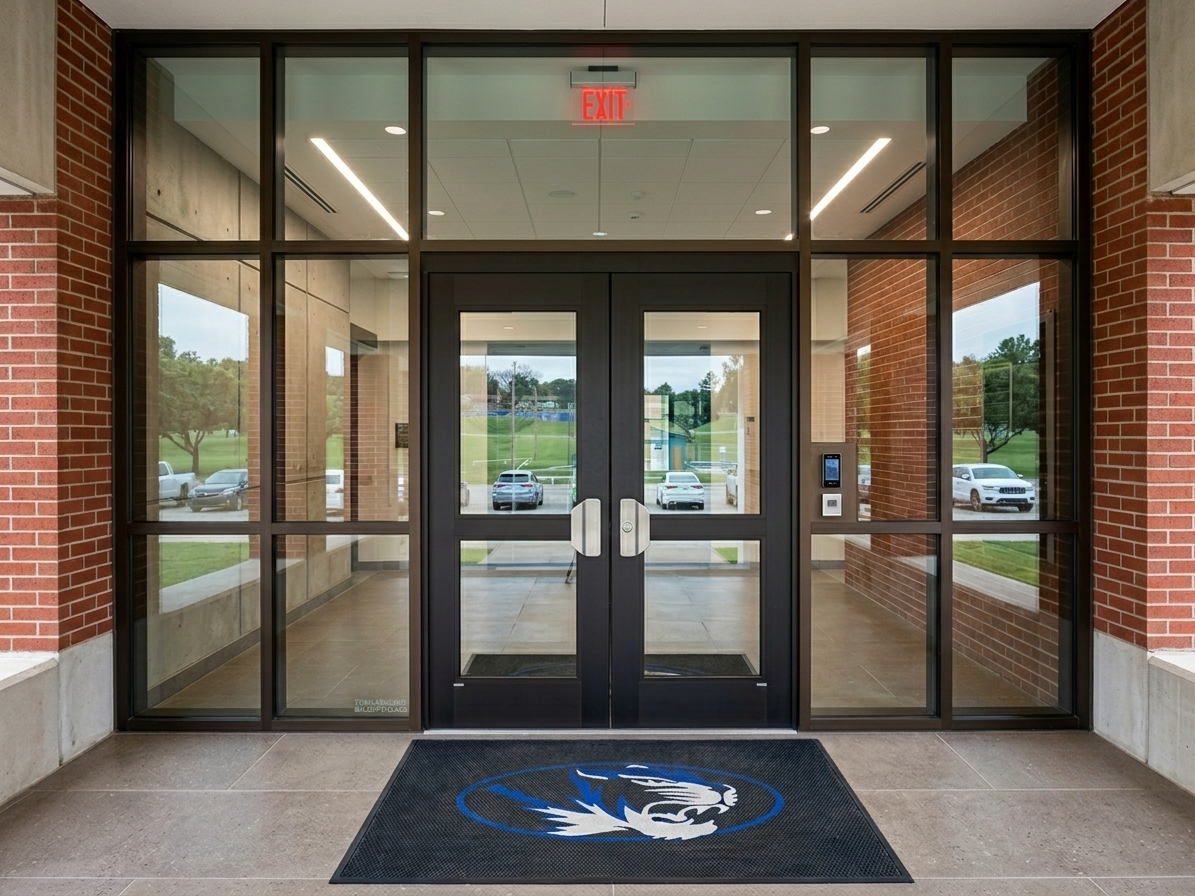
In school environments, ballistic glass is often used to strengthen main entrances, front office windows, vestibules, administrative areas, and other vulnerable access points.
Many schools are focused on improving entry security while maintaining a welcoming environment for students, staff, parents, and visitors. Ballistic glass helps support that balance by reinforcing critical openings without eliminating visibility or natural light.
When combined with access control, secure vestibule design, communication protocols, trained staff, and other physical security layers, ballistic glass can help delay unauthorized access and give school personnel more time to respond during a threat.
For additional planning guidance, read our guide on where to place ballistic protection in schools.
Ballistic Glass for Offices, Corporate Facilities & Public Buildings
Corporate offices, government buildings, municipal facilities, and public-facing workplaces often have exposed glass areas near entrances, lobbies, reception desks, and administrative offices.
Ballistic glass can help reinforce these vulnerable areas while preserving the clean, professional appearance of the building. For many organizations, the goal is not to make the space look fortified. The goal is to integrate protection discreetly into the existing environment.
Titan Armored works with facility leaders, security teams, architects, contractors, and project stakeholders to help identify where bullet-resistant glass may provide the greatest value within a broader physical security plan.
Ballistic Glass vs. Bulletproof Glass
“Bulletproof glass” is one of the most common terms people use when searching for transparent ballistic protection. However, the more accurate industry term is ballistic glass or bullet-resistant glass.
Ballistic glass systems are designed to resist specific ballistic threats based on tested protection levels. The actual performance depends on the glass construction, thickness, frame system, rating, and installation method.
At Titan Armored, we use the term ballistic glass because it reflects a more accurate and responsible approach to physical security planning. That said, whether you call it ballistic glass, bullet-resistant glass, or bulletproof glass, the goal is the same: to strengthen vulnerable openings and help protect people inside the facility.
Ballistic Glass Protection Levels
Ballistic glass systems are available in different protection levels depending on the intended application, threat profile, and project specifications.
Architectural ballistic glass used in schools, offices, government buildings, reception areas, vestibules, and other facility applications is commonly tested to UL 752 standards. Vehicle transparent armor and armored glass applications are commonly tested to NIJ standards, depending on the customer specifications, vehicle platform, and intended use.
Because every project is different, the appropriate test standard and protection level should be selected based on the application of the product, the expected threat profile, frame system, installation method, and overall security objective.
Titan Armored can help review the project scope, facility layout, vehicle application, specifications, and desired level of protection to determine the most appropriate ballistic glass solution.
Transparent Armor for Vehicle Applications
In addition to facility-based ballistic glass systems, Titan Armored can also support transparent armor applications for select vehicle protection projects.
Transparent armor, commonly used in armored vehicles, is a specialized form of ballistic glass designed to provide visibility and ballistic resistance in vehicle windows and glazing systems. These applications may include municipal vehicles, law enforcement vehicles, security vehicles, and other specialized transportation platforms.
For organizations evaluating both facility protection and vehicle armor, Titan Armored can help review the project scope and determine whether a facility-based ballistic glass system, vehicle transparent armor package, or separate dedicated solution is the right fit
Ballistic Glass vs. Security Window Film
Security window film and ballistic glass are not the same solution.
Security film may help hold broken glass together after impact, but it is not designed to provide the same level of ballistic resistance as a properly rated ballistic glass system. Ballistic glass is engineered as a multi-layer transparent barrier designed to resist specific ballistic threats.
For schools and facilities evaluating glass security upgrades, it is important to understand the difference between delaying forced entry, reducing glass fragmentation, and providing tested ballistic resistance.
Learn more in our guide comparing ballistic glass vs. security window film for schools.
Ballistic Glass as Part of a Layered Security Strategy
Ballistic glass is most effective when it is part of a broader layered security strategy.
For many schools and facilities, transparent ballistic protection may be used at entrances, vestibules, reception areas, and administrative offices. Other areas may require different solutions, such as mobile ballistic protection, fixed ballistic wall panels, access control, communication systems, trained personnel, and emergency response planning.
For a broader comparison of protection options, read our guide on ballistic glass, ballistic panels, and mobile protection.
Titan Armored helps organizations evaluate how each layer works together so protection is not limited to one product, one door, or one area of the building.
Custom Ballistic Glass System Design
Every ballistic glass project should be evaluated based on the building, application, threat level, and installation environment.
Titan Armored can help review key project details, including opening dimensions, desired protection level, frame requirements, existing conditions, new construction or retrofit needs, interior or exterior use, facility layout, and the overall security objective.
For projects involving vehicle applications, Titan Armored can also review whether transparent armor or armored glass may be appropriate based on the vehicle platform, customer specifications, and intended use.
Whether the project involves a school entrance, office reception area, government facility, secure transaction window, corporate lobby, or specialized glass application, Titan Armored can help guide the next step.
FREQUENTLY ASKED QUESTIONS
What is ballistic glass?
Ballistic glass is a transparent, multi-layer material designed to resist specific ballistic threats while maintaining visibility through windows, doors, and other openings.
Is ballistic glass the same as bulletproof glass?
Bulletproof glass is a common search term, but bullet-resistant glass or ballistic glass is more accurate. No glass system is universally bulletproof.
Where is ballistic glass commonly used?
It is commonly used in schools, secure vestibules, reception areas, offices, government buildings, police departments, houses of worship, healthcare facilities, and transaction windows.
Can ballistic glass be used in schools?
Yes. Ballistic glass can be used in school entrances, vestibules, front offices, administrative areas, and other vulnerable access points.
Is security window film the same as ballistic glass?
No. Security film may help hold glass together after impact, but ballistic glass is specifically engineered to resist certain ballistic threats.
Does Titan Armored provide ballistic glass for vehicles?
Titan Armored can support select transparent armor and ballistic glass applications for vehicle protection projects. For larger vehicle-specific programs, a dedicated project review is recommended.
Start Your Ballistic Glass Project
Planning a ballistic glass project for a school, office, government building, house of worship, or secure facility?
Titan Armored can help evaluate your space, application, threat level, and budget to determine the right bullet-resistant glass system for your project.