Upgrading School Entrances With Ballistic Glass: What Schools Should Evaluate First
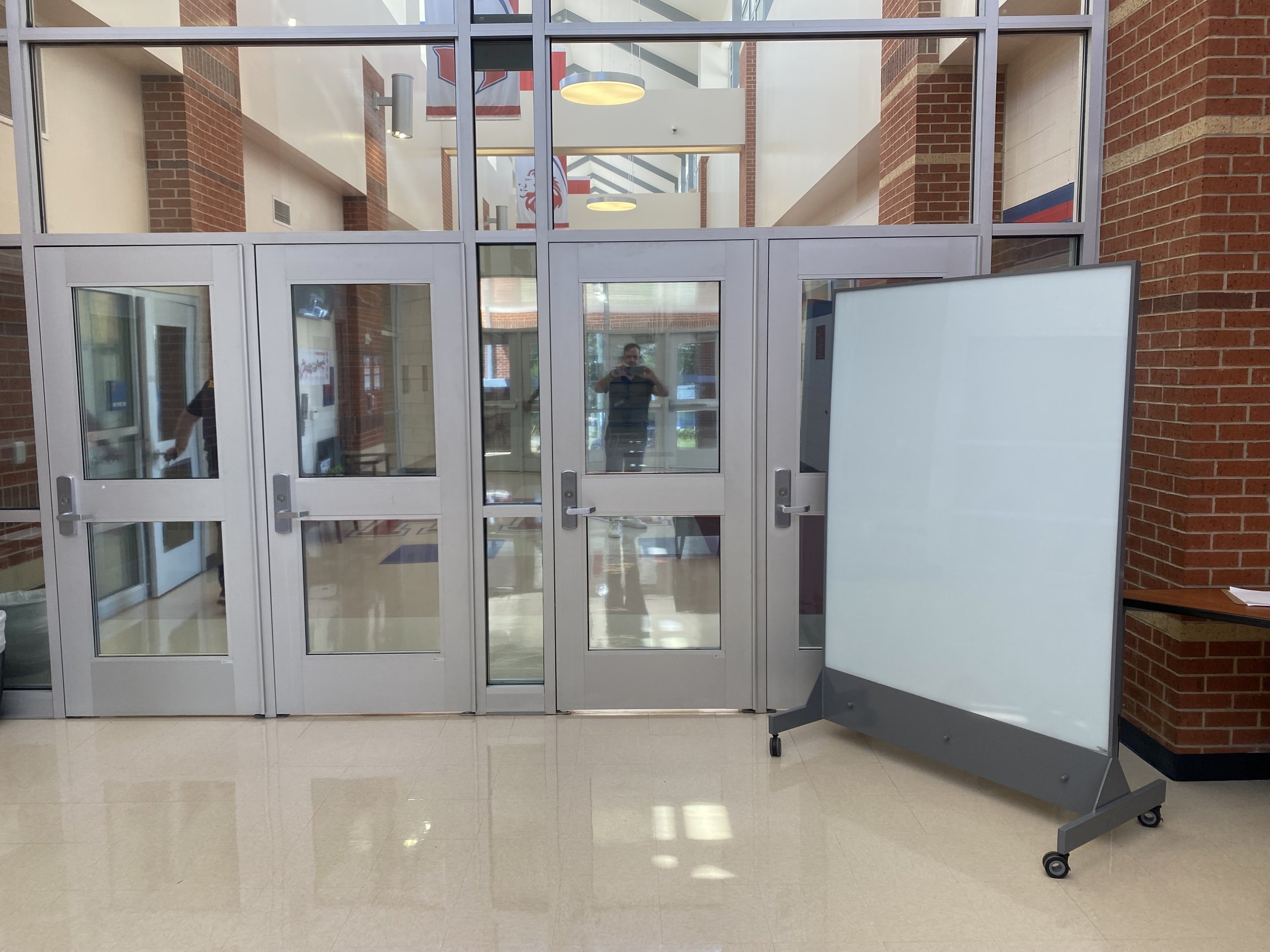
School entrance security should be evaluated as a complete system. Glazing, frames, doors, surrounding construction, access control and interior protection can all play a role in determining the appropriate security strategy for an individual campus.
School entrances are one of the most important areas to evaluate when developing a comprehensive campus security strategy. They serve as the primary point of entry for students, staff, parents, visitors and vendors—and they must remain functional, accessible and welcoming throughout the school day.
When a security assessment identifies vulnerabilities around an entrance or vestibule, however, determining what to upgrade is not always straightforward.
A district may look at an existing entrance and see doors, windows and frames that could potentially be upgraded with ballistic glass. But strengthening an entrance against ballistic threats involves more than simply replacing conventional glass with bullet-resistant glazing.
A school entrance should be evaluated as a complete security system.
The glazing, framing system, doors, hardware, anchorage, surrounding construction, access control and intended level of ballistic protection can all influence what type of solution is appropriate.
For some schools, portions of an existing entrance or vestibule may be suitable for an upgrade. For others, the existing construction may not support the desired level of protection without significant modification. In certain applications, designing and engineering a new ballistic window system or secured vestibule may ultimately provide a more appropriate solution.
There is no universal answer.
The goal should be to evaluate the existing conditions first and engineer the security solution around the building, the identified risk and the way the entrance functions every day.
Start With the Security Objective—Not the Glass
Before selecting ballistic glass, schools should first understand what they are trying to protect against and what they are trying to accomplish.
This is an important distinction.
It can be tempting to begin a project by asking questions such as:
What level of ballistic glass should we purchase?
How thick does the glass need to be?
Can we replace the glass in our existing vestibule?
Can we use our existing window frames?
Should we replace the doors?
Those questions matter—but they come later.
The first questions should be:
What vulnerability are we trying to address?
What area are we trying to protect?
What threat has the district determined is appropriate to plan against?
How does this entrance currently control access to the school?
What happens if an unauthorized person gets through the first layer of the entrance?
What must the entrance continue to accomplish during normal school operations?
These questions are why entrance-security projects should ideally begin within the context of a broader school security assessment.
A comprehensive assessment can help identify vulnerabilities involving doors, glazing, access control, visitor management, sightlines, surrounding construction and other components of the entrance. Those findings can then be weighed against other campus needs when schools prioritize school security upgrades.
This creates a much more disciplined progression:
Assess → Identify → Prioritize → Evaluate → Engineer
Instead of beginning with a particular product, the district begins with the problem it needs to solve.
Ballistic Glass Is Only One Component of a Ballistic System
One of the most important concepts for school leaders to understand is that ballistic glass does not operate independently of the structure holding it in place.
A piece of ballistic glazing may be designed and tested to withstand specific ballistic threats. But installing rated glazing into an opening does not automatically mean the entire opening provides the same level of ballistic protection.
The surrounding system matters.
Depending on the application, an architectural ballistic protection system may involve:
Ballistic Glazing + Framing + Anchorage + Doors + Hardware + Surrounding Construction + Installation
Each component can influence the performance of the overall opening.
Consider a typical school vestibule.
The entrance may contain several large glazed panels, multiple aluminum frames, exterior doors, interior doors, sidelites, transoms, access-control hardware and adjacent walls.
Replacing only the visible glass without evaluating those other components can leave unanswered questions about how the overall entrance will perform.
This is why ballistic-glass projects should be approached as system-design projects rather than simple glass-replacement projects.
The objective is not merely to install stronger glass.
The objective is to develop a security system appropriate for the opening and the protection requirements of the facility.
Why the Existing Framing System Matters
The framing system is one of the first components that should be evaluated when a school is considering upgrading existing glazing.
Conventional architectural window and storefront systems were designed for particular types of glass, dimensions, loads and building conditions. They should not automatically be assumed to be suitable for a ballistic application.
Ballistic glazing can differ substantially from conventional architectural glass in its composition, thickness and weight.
That means an existing frame needs to be evaluated as part of the project—not simply treated as a convenient opening into which new glass can be installed.
Among the questions that may need to be considered are:
What type of framing system currently exists?
How is the frame constructed?
How is it attached to the surrounding structure?
What glazing was the frame originally designed to support?
Can the existing system accommodate the dimensions and weight of the proposed ballistic glazing?
What level of ballistic protection is being sought?
How does the frame interface with adjacent doors, walls and glazing?
The answers will vary from building to building.
Two school entrances that appear nearly identical from the hallway may have very different framing, anchorage and structural conditions behind the finished surfaces.
This is one reason a site-specific evaluation is so important.
A district should not assume that an existing frame can be reused simply because ballistic glazing can physically fit within the visible opening.
Likewise, schools should not assume that an entire entrance must automatically be demolished and replaced.
The appropriate approach depends on the existing system and the desired security objective.
Look Beyond the Window: What Else Should Schools Evaluate?
When school leaders think about strengthening a glazed entrance, their attention naturally goes to the windows.
But an entrance can contain numerous interconnected components.
A security evaluation may need to consider:
Exterior entrance doors
Interior vestibule doors
Door glazing
Sidelites
Transoms
Fixed glazed panels
Window and door frames
Frame anchorage
Door hardware
Access-control systems
Visitor-management procedures
Adjacent walls and surrounding construction
Reception or front-office configuration
Visibility and staff sightlines
Emergency egress and everyday circulation
This broader perspective is particularly important when the objective is ballistic protection.
For example, strengthening a large glazed panel while leaving adjacent components unexamined may not address the vulnerability identified during the school's assessment.
The same principle applies to doors.
If ballistic protection is being considered for the glazing surrounding an entrance, the construction and configuration of the doors within that same opening should also be evaluated as part of the overall system.
Security is strongest when the components are designed to work together.
That does not mean every component must necessarily be replaced or upgraded. It means each relevant component should be considered before determining the appropriate scope of work.
Can an Existing School Entrance Be Retrofitted With Ballistic Glass?
In some applications, yes. In others, a retrofit may not be appropriate.
There is no one-size-fits-all answer.
Existing school entrances and vestibules vary considerably in their construction. The framing system, opening dimensions, doors, anchorage, surrounding structure and desired ballistic protection can all influence whether portions of the existing system can appropriately remain.
A retrofit could potentially involve upgrading specific components while retaining other suitable portions of the existing entrance.
Another project may require replacing the glazing and framing while retaining other elements.
And in some circumstances, the existing entrance may not provide an appropriate foundation for the desired ballistic system. Designing a new custom ballistic window system or secured vestibule may then be the more appropriate approach.
This is why the word “retrofit” should not be interpreted as simply removing the existing glass and installing ballistic glass in its place.
A true security upgrade begins with determining what can appropriately remain, what needs to change and how the completed system will work together.
Three Potential Paths
At a high level, schools evaluating an existing entrance may encounter three general approaches:
1. Upgrade Existing Conditions Where Appropriate
Certain components of an existing entrance may be suitable for continued use while other components are upgraded.
2. Replace or Modify Specific Components
The project may require new ballistic glazing, framing, doors or other components while portions of the existing entrance remain.
3. Design a New Engineered Ballistic System
When existing conditions are not appropriate for the desired protection, a purpose-designed ballistic window system or secured vestibule may provide a more comprehensive solution.
None of these approaches is automatically better than the others.
The correct solution is the one that appropriately addresses the identified vulnerability and the conditions of the individual building.
What If the School Already Has Security Window Film?
Some schools have previously installed security window film or other glazing-retention products as part of their security improvements.
If a district later evaluates ballistic protection for a particular entrance or opening, the presence of security film does not eliminate the need to assess the underlying glazing, framing and surrounding system.
Security window film and purpose-built ballistic glazing are designed around different performance objectives.
That distinction matters.
Rather than assuming an existing film installation must remain or must be replaced, schools should determine what performance they now require from that particular opening.
If the identified objective includes protection against specific ballistic threats, the district can then evaluate whether a purpose-built ballistic glazing system is appropriate for that location.
We explore the differences between these approaches in greater detail in Ballistic Glass vs. Security Window Film: What Schools Need to Know.
The larger lesson is the same:
Start with the required security outcome—not the product already installed.
Retrofit, Partial Replacement or a New Engineered System?
Once the existing conditions and security objectives have been evaluated, schools can begin determining the appropriate project scope.
This decision should not be driven by a preference for keeping everything that already exists—or by an assumption that everything needs to be replaced.
Instead, each component should be evaluated based on whether it can appropriately support the intended system.
Retrofitting Existing Conditions
Where suitable conditions exist, portions of an entrance may potentially be incorporated into an upgraded security system.
This can be particularly attractive for schools that want to improve specific openings while minimizing unnecessary changes to surrounding architecture.
However, the feasibility of a retrofit should be determined before ballistic glazing is specified or ordered.
Partial Replacement
Other entrances may fall somewhere in the middle.
Certain existing components may be appropriate to retain, while others—such as glazing, frames, doors or hardware—may need to be replaced or modified.
This approach allows the security solution to be developed around the actual conditions rather than forcing the project into an all-or-nothing decision.
New Custom Ballistic Window System or Secured Vestibule
In other situations, the existing conditions may not be suitable for the intended ballistic protection.
A newly designed system can allow the glazing, frames, anchorage, doors, hardware and other relevant components to be considered together from the beginning.
Titan Armored designs, engineers and fabricates custom Ballistic Glass Systems for entrances, vestibules, reception areas and other critical openings.
Depending on the facility and project requirements, that may include a Custom Ballistic Window System & Secured Vestibule designed around the specific opening rather than attempting to force a standardized solution into an existing condition.
When a New Secured Vestibule May Be the Better Approach
A vestibule is more than a set of doors between the exterior and interior of a school.
When properly incorporated into a broader security plan, it can create a controlled transition between the public exterior of the campus and occupied interior spaces.
But existing vestibules were built at different times, under different design standards and for different purposes.
Some may lend themselves to security upgrades.
Others may have framing, glazing, door configurations or surrounding construction that make extensive modification impractical or inconsistent with the desired protection strategy.
In those situations, designing a new secured vestibule around the school's current security objectives may allow the entire system to be considered together.
That can include the relationship between:
Exterior Entry → Vestibule → Access Control → Visitor Management → Interior Entry → Front Office
The objective is not simply to create another set of doors.
It is to establish a controlled entrance sequence that supports the school's overall security strategy while remaining functional during normal operations.
For a deeper discussion of this approach, see Why Schools Are Investing in Ballistic Vestibules and Reinforced Entry Systems.
Don't Select a Ballistic Protection Level in Isolation
Another common mistake is beginning with a particular ballistic rating before determining the actual security requirement.
Different ballistic systems are designed and tested around different threat levels.
The appropriate level of protection should therefore be considered within the context of the school's risk assessment, security objectives and surrounding construction.
Simply specifying a higher-rated piece of glass does not automatically create a better security system.
The glazing, framing and other components should be considered together so that the protection strategy is coherent across the opening.
This is particularly important when upgrading an existing building, where the new components must interface with construction that may have been installed decades earlier.
The goal is not to select the strongest individual component. The goal is to develop an appropriate system for the identified threat and application.
Security Still Has to Work on Monday Morning
Physical security improvements have to perform during an emergency.
But they also have to function during thousands of ordinary school days.
A school entrance handles a constant flow of people and activities:
Students arriving and leaving
Staff entering throughout the day
Parents dropping off materials or checking out students
Visitors checking in
Vendors and deliveries
After-hours activities
Emergency responders
Individuals requiring accessible routes into the building
Security improvements therefore need to account for more than ballistic performance.
Schools should consider how an upgraded entrance affects:
Access control. Visitor management. Visibility. Communication. Accessibility. Emergency egress. Traffic flow. Daily supervision.
An entrance that becomes difficult for staff to operate or creates unintended problems for everyday circulation may introduce challenges of its own.
The strongest security strategies account for both protection and operation.
A Secure Entrance Doesn't Have to Feel Like a Fortress
Increasing physical protection does not require turning a school entrance into an intimidating checkpoint.
Architectural glazing is valuable partly because it provides visibility, daylight and a sense of openness. Those qualities matter in educational environments.
Thoughtfully designed ballistic glazing and framing systems can help strengthen critical openings while preserving many of the architectural characteristics that make an entrance feel welcoming.
This philosophy extends beyond entrances.
Titan Armored believes physical security should integrate into the everyday environment whenever possible rather than constantly reminding students and staff of the threat it was designed to address.
We explore that philosophy in How to Harden a School Without Making It Feel Like a Fortress.
Good security can be substantial without being visually overwhelming.
A Better Process for Planning School Entrance Upgrades
The most effective entrance-security projects rarely begin with a catalog.
They begin with a process.
1. Assess
Understand the campus, existing entrance and identified vulnerabilities.
2. Identify
Define the specific security problem the project needs to address.
3. Prioritize
Determine how the entrance improvement fits within the school's broader security needs and available resources.
4. Evaluate Existing Conditions
Examine the glazing, frames, doors, hardware, surrounding construction and other relevant components.
5. Define Protection Requirements
Determine the intended security performance based on the identified threat and application.
6. Engineer the Solution
Decide what can appropriately remain, what needs to be modified or replaced, and how the components will function together.
7. Fabricate and Install
Produce and install the system according to the project requirements and existing site conditions.
8. Reassess
Security planning should continue after installation as buildings, operations, threats and campus needs evolve.
This process connects an individual entrance project to the school's larger school security master plan.
It also prevents an important mistake:
Buying a security product before defining the security problem.
Questions Schools Should Ask Before Starting a Ballistic Glazing Project
Before deciding how to upgrade an existing entrance, school leaders, facilities teams and security professionals should be able to answer—or know who will help them answer—several important questions:
What vulnerability are we trying to address?
What ballistic threat are we planning against?
Has the existing glazing and framing system been evaluated?
How is the existing frame attached to the surrounding construction?
Are the doors, sidelites, transoms and adjacent openings included in the evaluation?
Can any existing components appropriately remain?
Does the project require a retrofit, partial replacement or a new engineered system?
How will the entrance integrate with access control and visitor management?
How will the upgraded system affect visibility, accessibility and everyday circulation?
Who is responsible for the engineering, fabrication and installation of the system?
The objective of these questions isn't to make the project unnecessarily complicated.
It is to make sure the district is solving the right problem with the right system.
Frequently Asked Questions About Upgrading School Entrances With Ballistic Glass
Can ballistic glass be installed in an existing school?
Potentially. Many existing schools can incorporate ballistic glazing as part of a security improvement, but the appropriate approach depends on the specific opening, framing system, surrounding construction, doors and desired level of protection.
A site-specific evaluation should occur before determining whether an existing system can be upgraded or whether new components are required.
Can ballistic glass be installed in an existing window frame?
Not every existing frame should be assumed suitable for ballistic glazing.
The frame needs to be evaluated for the proposed application, including factors such as its construction, dimensions, attachment, glazing capacity and relationship to the surrounding structure. In some applications an existing system may be usable; in others, new framing may be necessary.
Can an existing school vestibule be upgraded?
In some cases, yes.
However, the feasibility and scope of an upgrade depend on the existing glazing, frames, doors, anchorage, surrounding construction and security objectives. Some projects may involve upgrading selected components, while others may warrant a newly engineered vestibule.
Is security window film the same as ballistic glass?
No.
Security window film and ballistic glazing are different types of products designed around different performance objectives. Schools should determine the protection required for a particular opening before selecting the appropriate approach.
Read our complete comparison: Ballistic Glass vs. Security Window Film: What Schools Need to Know.
Does installing ballistic glass make the entire entrance bullet-resistant?
Not necessarily.
Ballistic glazing is one component of an opening. Frames, doors, anchorage, surrounding construction and other components can influence the performance of the overall system.
This is why entrance-security projects should be evaluated as systems rather than as isolated pieces of glass.
Does a school have to replace its entire entrance to add ballistic protection?
Not automatically.
Some projects may allow portions of the existing entrance to remain, while others may require partial or complete replacement. The appropriate scope should be determined after evaluating the existing conditions and intended protection requirements.
Can ballistic protection still preserve the appearance of a school entrance?
Yes. Ballistic glazing can provide transparency and visibility while being incorporated into architectural entrance and vestibule designs.
Thoughtful system design can help schools improve physical protection without unnecessarily sacrificing natural light, visibility or the welcoming character of the campus.
Evaluate First. Engineer the Right Solution.
There is no universal blueprint for upgrading an existing school entrance with ballistic protection.
One campus may have an entrance where portions of the existing construction can appropriately be incorporated into an upgraded system. Another may require new glazing and framing. A third may benefit from a completely new custom ballistic window system or secured vestibule.
The correct answer should come from the evaluation—not from a predetermined product.
That is why school entrance security should begin by understanding what is already there, identifying what needs to be protected and determining what the existing construction can appropriately support.
From there, the project can be engineered around the building, the identified threat and the people who rely on that entrance every day.
The objective isn't to force every school into the same solution.
It's to engineer the right solution for the building, the risk and the people it protects.
Evaluating a School Entrance or Vestibule?
Titan Armored works with school districts, architects, contractors and security professionals to evaluate existing entrance conditions and develop custom ballistic security solutions for schools.
Depending on the project requirements and existing conditions, Titan Armored can support upgrades to existing openings or design, engineer and fabricate a Custom Ballistic Window System & Secured Vestibule tailored to the facility and intended protection requirements.