How to Prioritize School Security Upgrades: What Should Schools Fix First?
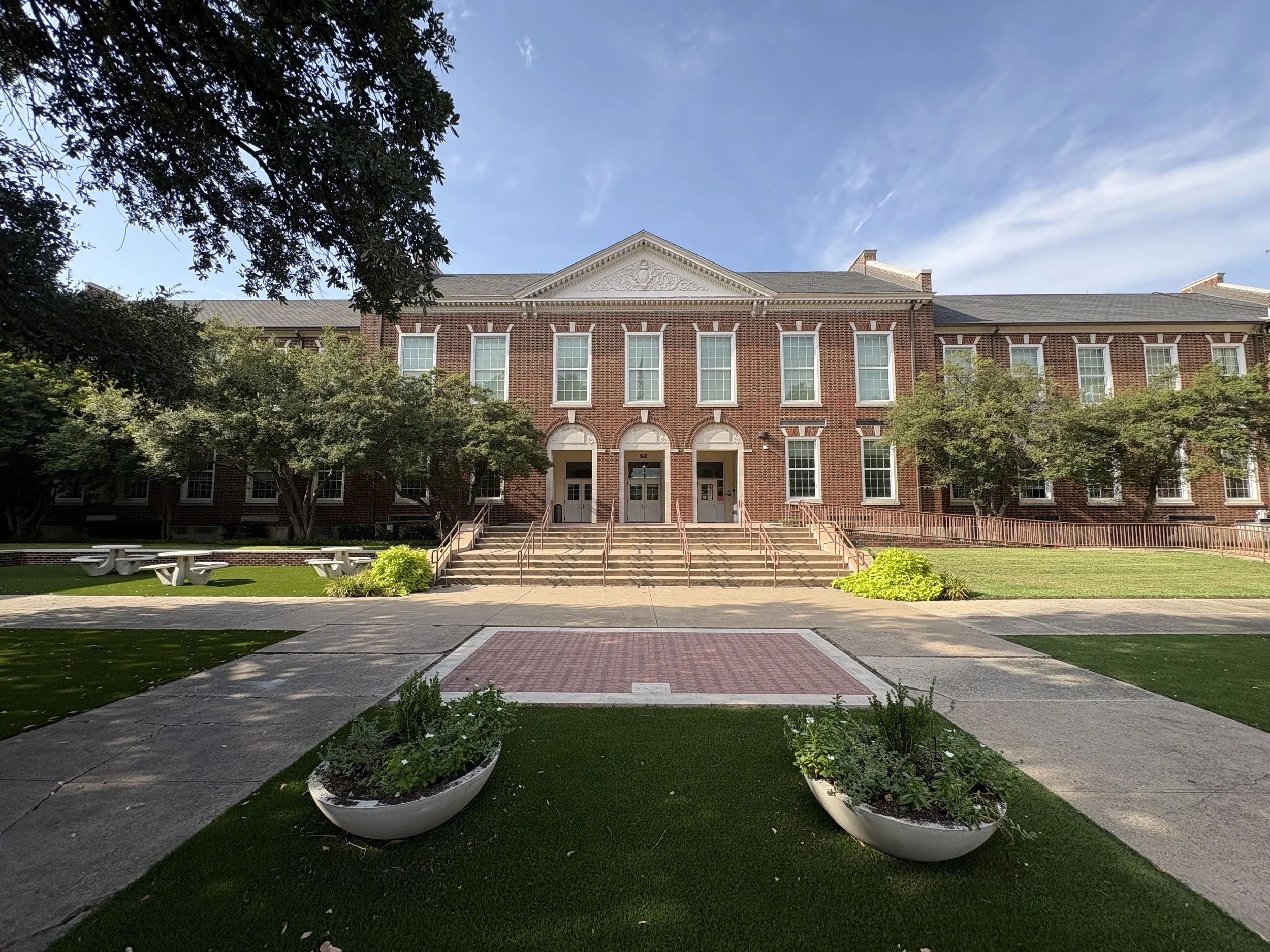
Every school campus is different. Effective school security planning begins by evaluating the entire environment, identifying vulnerabilities, and prioritizing improvements based on risk, exposure, existing protection, and the needs of the individual campus.
A school security assessment can identify dozens of opportunities for improvement.
An exterior door may not secure properly.
A secondary entrance may provide uncontrolled access.
A reception area may contain vulnerable glazing.
A classroom wing may have limited protective options.
A busy entrance may be exposed to vehicle traffic.
An aging gate may no longer provide the level of access control originally intended.
The list can become long very quickly.
Then comes the more difficult question:
What should the school fix first?
Most schools cannot address every vulnerability simultaneously. Budgets are limited. Construction takes time. Some improvements require architectural planning or capital funding, while others may be corrected through maintenance, operational changes, or relatively simple upgrades.
More importantly, not every vulnerability represents the same level of risk.
Effective school security planning requires districts to determine which improvements should be addressed immediately, which should become near-term priorities, and which belong within a longer-term capital improvement strategy.
The objective is not simply to add more security.
The objective is to reduce the most meaningful vulnerabilities in the most effective order.
Why School Security Prioritization Matters
Finding a vulnerability and prioritizing a vulnerability are two different things.
A comprehensive assessment might identify deficiencies across the perimeter, parking areas, entrances, administrative offices, hallways, classrooms, common areas, emergency procedures, and physical security infrastructure.
But treating every finding as equally urgent can create its own problems.
Districts may spend significant resources on highly visible projects while relatively simple vulnerabilities remain unresolved.
They may invest heavily in one part of the campus while overlooking another area with greater exposure.
Or individual security products may be purchased without considering how they fit into the school's broader protection strategy.
Prioritization helps decision-makers move from a list of findings to a practical plan of action.
The question becomes less about:
What security products should we buy?
And more about:
Where can we reduce risk most effectively?
That distinction matters.
A relatively inexpensive repair to an exterior door that does not lock properly may deserve attention before a major capital project.
A vulnerable main entrance used by hundreds of students and visitors each day may warrant greater investment than a lower-traffic location.
And a security improvement that strengthens several layers of protection may provide greater value than an isolated improvement addressing only one concern.
Good security prioritization is not based on price alone. It is based on risk, exposure, consequence, existing protection, and the needs of the individual campus.
Start With a School Security Assessment
Before a school can determine what to improve first, it needs to understand what already exists.
That is one of the primary purposes of a comprehensive school security assessment.
A security assessment can help school leaders examine the campus as an interconnected environment rather than a collection of individual products or systems.
That evaluation may include:
Property perimeter
Parking and vehicle access
Pedestrian circulation
Exterior doors
Visitor entrances
Secure vestibules
Administrative and reception areas
Glazing
Access-control systems
Hallways
Classrooms
Common areas
Emergency communications
Existing protective infrastructure
Policies and procedures
The assessment establishes the existing condition.
Prioritization determines what happens next.
This distinction is important:
Assessment identifies. Prioritization organizes. Master planning implements over time.
Without that progression, security decisions can become reactive.
A district hears about a particular product, technology, or security incident and immediately asks:
Should we buy this?
A stronger question is:
Does this address one of the most important vulnerabilities identified on our campus?
That keeps the campus—not the product—at the center of the decision.
The School Security Prioritization Framework
There is no universal list of security improvements that every school should complete in exactly the same order.
A rural elementary school, an urban high school, a multi-building campus, and a newly constructed school can have very different vulnerabilities.
However, decision-makers can evaluate security findings using a consistent framework.
For each identified vulnerability, consider the following seven factors.
1. Risk
Start with the vulnerability itself.
What threat, hazard, or security deficiency is being addressed?
Is the concern related to unauthorized entry?
Vehicle access?
Vulnerable glazing?
Interior circulation?
A lack of protective coverage?
A malfunctioning security system?
An operational procedure?
Clearly defining the problem prevents schools from jumping prematurely to a particular solution.
2. Exposure
Next, consider who or what may be exposed.
A vulnerability affecting a frequently occupied entrance, reception area, classroom wing, cafeteria, library, or other high-use space may require different consideration than one affecting a rarely occupied location.
Schools should consider both the number of people potentially exposed and how the space functions during the school day.
3. Access
How easily could someone reach or exploit the vulnerability?
Consider how people move through the campus.
A location may technically be secured but still create risk because of uncontrolled circulation, poor visibility, multiple access paths, or operational practices that undermine the intended security layer.
Understanding access means looking beyond the physical object itself and examining how the surrounding space actually functions.
4. Existing Protection
Security improvements should not be evaluated in isolation.
What protective layers are already present?
For example:
Is access controlled?
Are doors monitored?
Is there a secure vestibule?
Is glazing standard architectural glass or purpose-built protective glazing?
Are interior protective resources available?
Can staff communicate quickly during an emergency?
Are procedures established and practiced?
Existing layers can substantially affect the priority assigned to a particular vulnerability.
5. Consequence
Ask what could happen if the existing protective layers fail.
This is different from simply asking whether a vulnerability exists.
Decision-makers should consider the potential consequences for occupants, operations, emergency response, and the surrounding campus.
Areas where failure could create significant exposure may warrant higher priority.
6. Correctability
Some vulnerabilities can be reduced relatively quickly.
Others require design, engineering, funding, procurement, or construction.
That distinction matters.
If a door fails to latch properly, the appropriate response may be maintenance—not a multimillion-dollar capital project.
If staff routinely prop open a controlled exterior entrance, the initial solution may involve procedures, training, supervision, or hardware.
Schools should identify opportunities where relatively straightforward corrective action can meaningfully reduce risk.
Fixing what is already broken should often come before adding something new.
7. Cost, Complexity and Integration
Finally, consider what will be required to implement the improvement.
Does it require:
Routine maintenance?
Operational changes?
New hardware?
Specialized installation?
Architectural modifications?
Engineering?
Construction?
Capital funding?
Coordination with other planned renovations?
Cost matters, but it should not be the only consideration.
Schools should also ask whether an improvement strengthens other security layers.
An entrance redesign, for example, might improve visitor management, access control, visibility, glazing protection, and administrative security simultaneously.
That type of integrated improvement may provide greater long-term value than several unrelated purchases.
Priority 1: Correct Immediate Security Deficiencies
The first priority does not necessarily involve buying anything new.
Start by identifying security measures that are supposed to work—but don't.
Examples may include:
Exterior doors that do not close or latch properly
Failed locks or door hardware
Damaged fencing or gates
Malfunctioning access-control equipment
Cameras or communication systems that are not functioning as intended
Uncontrolled access points
Poor visitor routing
Obstructed sight lines
Security procedures that are not consistently followed
Previously identified deficiencies that remain unresolved
These issues deserve attention because the school may already be relying on those systems as part of its security strategy.
A locked exterior door provides little protection if it does not reliably latch.
An access-control system provides limited value if an adjacent entrance is routinely left unsecured.
And a security procedure cannot provide its intended benefit if the people responsible for implementing it do not understand it.
Before expanding the security program, schools should understand whether their existing layers are functioning as intended.
Priority 2: Strengthen High-Risk Access Points
Once immediate deficiencies are addressed, schools can evaluate locations where people enter and interact with the building.
The main entrance is an obvious consideration—but it should not automatically be the only one.
Depending on campus design, schools may need to evaluate:
Primary entrances
Secondary entrances
Secure vestibules
Reception areas
Administrative offices
Door sidelites
Interior transaction areas
Exterior glazing
Visitor screening locations
After-hours entrances
These areas often combine several security functions.
They manage access while maintaining visibility, communication, visitor processing, and everyday circulation.
That makes entrance security a good example of why layered protection matters.
A secure door may address one vulnerability while adjacent standard glazing remains exposed.
A ballistic glazing system may strengthen the glazing while poor access-control procedures undermine the entrance.
A well-designed vestibule may provide valuable separation, but its effectiveness still depends on how the entire entry sequence operates.
Where an assessment identifies vulnerable glazing as part of a high-risk entrance, vestibule, reception area, or administrative space, schools may evaluate Ballistic Glass Systems as one component of a reinforced entry strategy.
Ballistic glazing should not be selected simply because a building contains glass.
Its use should correspond to the identified threat, desired protection level, surrounding construction, framing system, location, and broader security strategy.
For schools specifically evaluating entrance design, see Why Schools Are Investing in Ballistic Vestibules and Reinforced Entry Systems.
This is also why security window film and purpose-built ballistic glazing should not be treated as interchangeable solutions.
Priority 3: Protect High-Occupancy and High-Consequence Areas
The security conversation should not end at the front entrance.
Students and staff spend most of the school day inside classrooms, hallways, libraries, cafeterias, administrative offices, learning commons, and other shared spaces.
An assessment may identify interior locations where additional protection could provide meaningful benefit.
Those locations may include:
Classroom wings
Administrative offices
Reception areas
Hallway intersections
Libraries
Cafeterias
Common areas
Multi-use learning environments
Other high-occupancy spaces
The appropriate solution depends on the vulnerability.
Some locations may benefit from permanent protection.
Others may require flexibility.
And some environments may benefit from both.
Permanent Ballistic Protection
Permanent solutions can be incorporated into locations where fixed coverage is appropriate.
For example, Titan WallShield™ integrates ballistic protection into functional wall surfaces while maintaining the appearance and usability of an educational environment.
Mobile Ballistic Protection
Other environments may benefit from protection that can be repositioned as needs change.
The TAG Mobile™ Bulletproof Mobile Whiteboard combines an everyday educational surface with accessible mobile ballistic protection.
This is where the distinction between having protection somewhere on campus and having appropriate protection where it may be needed becomes important.
Schools should evaluate location, accessibility, occupancy, circulation, and intended use rather than assuming that one type of protection is appropriate everywhere.
Don't Overlook the Campus Perimeter
School security begins before someone reaches the front door.
Depending on campus design and identified vulnerabilities, an assessment may also examine:
Property boundaries
Pedestrian access
Vehicle approaches
Parking areas
Drop-off and pickup zones
Exterior gathering spaces
Fencing
Gates
Service entrances
Emergency access routes
For some campuses, improvements may include repairing existing fencing, improving controlled access, modifying gates, or addressing vehicle access near vulnerable or highly occupied areas.
Where the identified risk warrants it, schools and design teams may also evaluate hardened gates, ballistic fencing, bollards, or vehicle barriers as part of a broader layered security strategy.
These measures should be driven by the assessment and campus environment—not added simply because they exist.
The perimeter is another security layer.
It is not the entire security strategy.
Priority 4: Address Gaps in Interior Protection
A strong entrance can significantly improve campus security.
It cannot protect every interior location.
Once an individual is inside a building—or if an incident originates inside—the security problem changes.
Schools should therefore consider whether appropriate protective options exist deeper within the campus.
That evaluation may include:
Classrooms → Hallways → Administrative Areas → Common Spaces → Protected Areas
Different vulnerabilities may call for different solutions.
Ballistic glass can help address vulnerable glazed openings.
Permanent ballistic wall systems can provide fixed protection.
Mobile ballistic products can provide flexibility within changing educational environments.
And certain campuses may determine that designated safe rooms or protected spaces are appropriate for specific applications.
The important point is not that every school needs every solution.
It is that interior protection should be considered deliberately rather than assumed to be addressed simply because the building has a secure entrance.
Permanent vs. Mobile Protection: Which Should Come First?
Neither automatically comes first.
The vulnerability should determine the solution.
Permanent ballistic protection may be appropriate when a fixed location requires continuous coverage.
Mobile ballistic protection may be appropriate where flexibility, accessibility, changing room configurations, or multiple potential uses matter.
Some environments may benefit from a combination of both.
This is another reason security products should not be selected independently from an assessment.
A product can perform exactly as designed and still be the wrong solution for a particular location.
For a deeper comparison, read Ballistic Glass vs. Ballistic Panels vs. Mobile Protection: What's the Difference?
Quick Wins vs. Capital Security Projects
One of the most useful outcomes of prioritization is the ability to separate improvements by implementation complexity.
Not every security improvement needs to become a construction project.
Immediate or Operational Improvements
These may include:
Repairing doors or hardware
Correcting procedural deficiencies
Improving visitor routing
Removing visual obstructions
Updating signage
Adjusting existing equipment placement
Repairing malfunctioning security systems
Reinforcing staff procedures
Near-Term Security Improvements
These may include:
Access-control upgrades
Selected glazing improvements
Mobile ballistic protection
Permanent wall protection
Lighting improvements
Entrance modifications
Targeted fencing or gate improvements
Long-Term Capital Projects
These may include:
Secure vestibules
Extensive ballistic glazing
Major entrance reconstruction
Safe rooms or designated protected spaces
Major renovations
Significant perimeter redesign
Vehicle mitigation where warranted
Breaking improvements into these categories can help districts address meaningful vulnerabilities now while planning appropriately for larger projects.
A limited capital budget does not necessarily mean security improvement has to stop.
Sometimes the most important next step is simply knowing what should happen first.
Should Every School Upgrade Security in the Same Order?
No.
And this may be one of the most important principles in school security planning.
An elementary school does not operate exactly like a high school.
A rural campus may have different vulnerabilities than a dense urban campus.
A single-building school may function differently from a campus containing multiple buildings.
A newly constructed facility may already incorporate security features that an older building lacks.
Even two schools within the same district can have substantially different:
Layouts
Occupancy
Traffic patterns
Entrances
Glazing
Construction
Perimeters
Operational practices
Existing security infrastructure
That is why a universal purchasing checklist can be misleading.
There may be common best practices.
But priorities should come from the campus itself.
Security Upgrades Should Become a Long-Term Plan
Once vulnerabilities have been identified and prioritized, schools can begin organizing improvements into a long-term strategy.
That is where school security master planning becomes important.
A master plan can help districts coordinate:
Immediate corrective actions
Near-term security projects
Capital improvements
Renovations
New construction
Funding opportunities
Phased implementation
Future reassessment
This creates a logical progression:
Assess → Prioritize → Plan → Implement → Reassess
Rather than reacting to individual products or incidents, districts can make security decisions within a broader framework.
That can also help architects, facility planners, security professionals, administrators, and school boards understand how individual projects fit into the district's long-term objectives.
Security Should Support the Educational Environment
Security improvements should protect the people inside a school.
But schools still need to function as schools.
Students need welcoming environments.
Teachers need functional classrooms.
Administrators need usable offices.
Architects need to consider circulation, daylight, visibility, acoustics, and aesthetics.
Facilities teams need systems they can maintain.
Security professionals need protection appropriate to the identified threat.
The strongest solutions consider those requirements together.
That philosophy is explored further in How to Harden a School Without Making It Feel Like a Fortress.
Security does not have to dominate the educational environment to become part of it.
A Practical School Security Prioritization Checklist
When reviewing an identified vulnerability or proposed security improvement, ask:
What vulnerability are we trying to address?
Who is potentially exposed?
How easily could the vulnerability be exploited?
What protective layers already exist?
Are those existing layers functioning correctly?
What could happen if they fail?
Can the vulnerability be corrected immediately?
Does the solution require an operational change or physical construction?
What is the expected cost and complexity?
Does the improvement strengthen other security layers?
Does it integrate with existing systems?
Is it already part of a planned renovation or capital project?
Who is responsible for implementation?
How will the improvement be maintained?
When should the vulnerability be reassessed?
If those questions cannot be answered, the school may not yet have enough information to make the purchasing decision.
Frequently Asked Questions About Prioritizing School Security Upgrades
What school security upgrades should schools prioritize first?
Schools should generally begin by addressing significant vulnerabilities identified through an assessment, including existing security measures that are not functioning as intended.
Priority should be based on factors such as risk, exposure, access, existing protection, potential consequence, correctability, cost, and how the improvement integrates with the broader security strategy.
There is no single upgrade that should automatically come first at every school.
How should schools prioritize security spending?
Security spending should be tied to identified vulnerabilities rather than divided equally among products or campuses.
Districts can separate findings into immediate corrective actions, near-term improvements, and long-term capital projects while considering the potential risk reduction associated with each investment.
Should schools secure entrances before classrooms?
Not automatically.
Entrances are an important security layer, but the appropriate priority depends on the campus assessment.
A school with a highly vulnerable entrance may need to address it immediately, while another campus may already have a strong entry system but significant vulnerabilities elsewhere.
Is ballistic glass always the first security upgrade a school should make?
No.
Ballistic glass can provide important protection where vulnerable glazing is identified, but it should be selected based on the specific location, threat, surrounding construction, desired protection level, and broader security strategy.
Other deficiencies may warrant higher priority on a particular campus.
Should schools fix existing security systems before adding new ones?
Existing security systems that are malfunctioning or not performing as intended should be evaluated as part of the initial corrective-action process.
In many cases, restoring an existing security layer may provide meaningful risk reduction before additional systems are added.
How can schools improve security with a limited budget?
Begin by separating vulnerabilities into operational fixes, maintenance needs, near-term improvements, and capital projects.
Some meaningful improvements may involve repairing existing systems, modifying procedures, improving access control, or correcting relatively simple deficiencies rather than undertaking major construction.
Prioritization allows available resources to be directed toward the vulnerabilities that matter most.
What is the difference between a school security assessment and a security master plan?
A school security assessment evaluates existing conditions and identifies potential vulnerabilities.
Prioritization determines which findings should receive attention first.
A security master plan organizes those priorities into a coordinated long-term implementation strategy.
In simple terms:
Assessment identifies. Prioritization organizes. Master planning implements.
How often should school security priorities be reevaluated?
Security priorities should be revisited as campus conditions change, deficiencies are corrected, new facilities are built, renovations occur, security systems change, or new assessment findings become available.
Security planning should be treated as an ongoing process rather than a one-time project.
Do Texas school security audits identify corrective actions?
Texas school districts and open-enrollment charter schools operate within state school safety and security requirements, including required safety and security audits and related reporting processes.
Schools should consult current Texas Education Agency and Texas School Safety Center guidance for applicable requirements, audit procedures, reporting obligations, and timelines.
From Security Findings to Smarter Investments
A school security assessment can identify vulnerabilities.
But identifying a problem is only the beginning.
The next step is determining which vulnerabilities require immediate correction, which improvements can be addressed in the near term, and which should become part of a longer-term capital strategy.
That process requires more than comparing products or prices.
It requires understanding:
Risk.
Exposure.
Access.
Existing protection.
Consequence.
Correctability.
Integration.
When those factors guide decision-making, schools can move away from isolated security purchases and toward a coordinated strategy in which each improvement strengthens the layers around it.
The question should never simply be:
What should we buy next?
A better question is:
What should we protect next—and why?
Additional School Security Planning Resources
School Security Assessments: The Complete Guide to Evaluating Your Campus
School Security Master Planning: The Complete Guide
How to Harden a School Without Making It Feel Like a Fortress
Where Should Ballistic Protection Be Placed in Schools?
Ballistic Glass vs. Ballistic Panels vs. Mobile Protection: What's the Difference?
Why Schools Are Investing in Ballistic Vestibules and Reinforced Entry Systems
Planning Your Next School Security Improvement?
Every campus has different vulnerabilities, priorities, budgets, operational requirements, and long-term objectives.
The strongest security strategies begin by understanding the campus, identifying the most meaningful vulnerabilities, and selecting improvements that work together as part of a layered plan.
Titan Armored works with schools, architects, facility planners, and security professionals to integrate ballistic protection into educational environments while preserving everyday functionality and design.
Explore Titan Armored's ballistic security solutions or contact our team to discuss your project.