Back-to-School Safety: A Practical Guide for Students, Parents & Schools
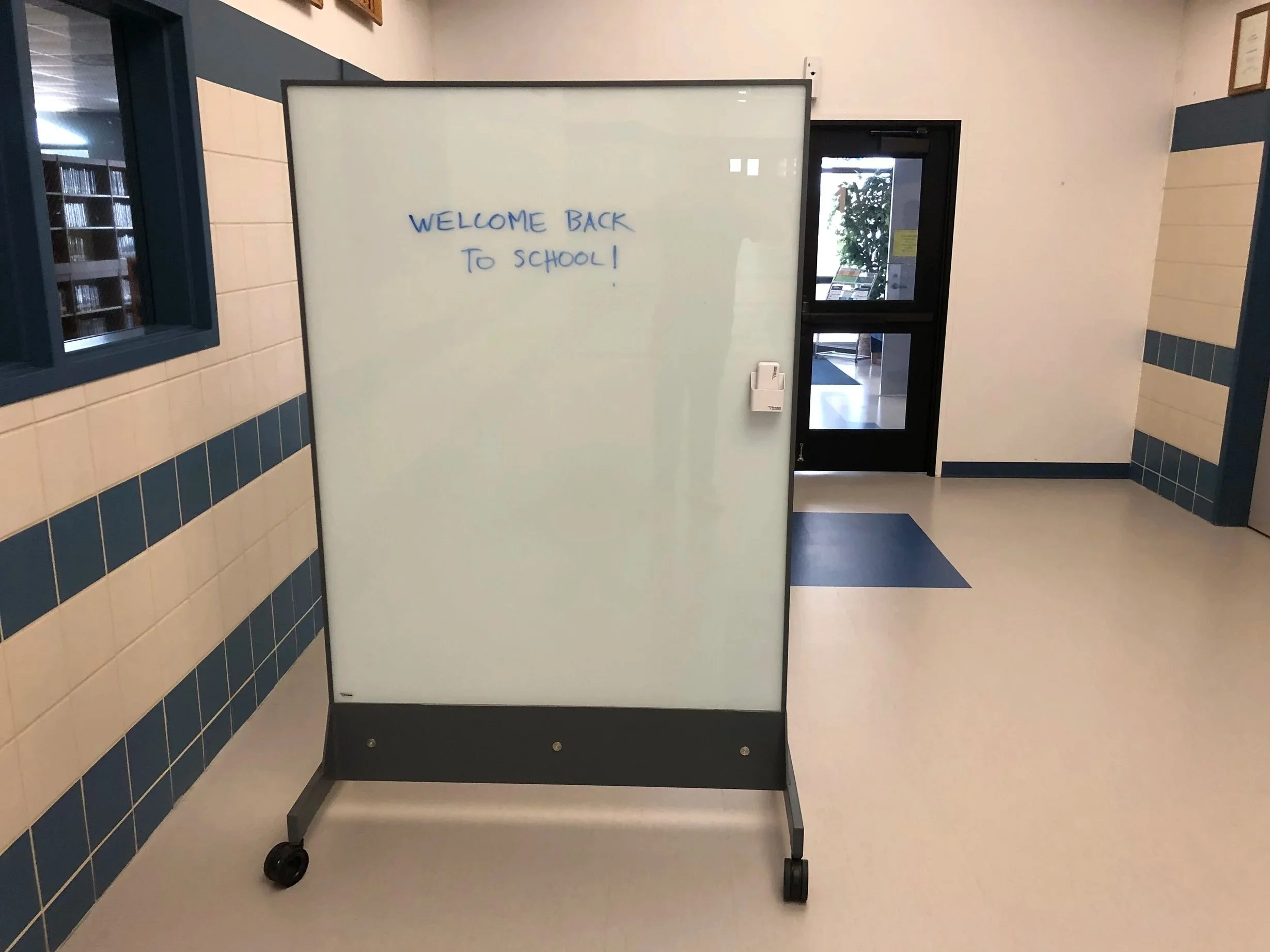
Back-to-school safety begins with awareness, communication, preparedness, and protective resources that integrate naturally into the everyday learning environment.
A new school year brings new teachers, new classrooms, new routines, new friendships, and new opportunities.
It also provides an important opportunity for families and schools to revisit something that affects everyone on campus:
Safety.
Back-to-school safety is about much more than locks, cameras, security equipment, or emergency procedures.
It begins with people.
Students who know how to report something concerning.
Parents who understand their school's emergency procedures.
Teachers and staff who know how to respond.
Administrators who continually evaluate their campuses.
And schools that combine awareness, communication, preparedness, and physical security into a coordinated strategy.
The goal isn't to make students afraid of what could happen.
The goal is to help everyone know what to do if something does happen.
What Does Back-to-School Safety Really Mean?
A safe school is not created by a single product, policy, person, or procedure.
Modern school safety is layered.
Those layers may include:
Situational awareness
Student and parent communication
Behavioral threat reporting
Visitor management
Access control
Emergency communications
Staff training
Emergency drills
Reunification planning
Physical security
Law enforcement coordination
Ongoing campus security assessments
Each layer serves a different purpose.
Together, they help create a school community that is better prepared to recognize concerns, communicate effectively, respond appropriately, and protect students and staff.
For school leaders evaluating the physical campus itself, our School Security Assessments: The Complete Guide to Evaluating Your Campus explains how schools can systematically examine their perimeter, entrances, hallways, classrooms, common areas, procedures, and existing protective measures.
Situational Awareness Without Creating Fear
The phrase situational awareness can sound tactical.
For students and families, it doesn't need to be.
At its simplest, situational awareness means:
Pay attention to your surroundings. Recognize when something seems wrong. Know how to respond.
Students should never be expected to become security personnel or investigate suspicious behavior themselves.
Instead, age-appropriate situational awareness can involve simple habits:
Knowing where trusted adults are located
Paying attention to school announcements
Understanding emergency terminology
Knowing primary and alternate exits
Recognizing when something appears unusual or concerning
Reporting concerns rather than investigating them
Following staff instructions during an emergency
Taking drills seriously
These habits can become part of normal school preparedness without creating an atmosphere of fear.
The Texas School Safety Center notes that standardized emergency response protocols can help develop situational awareness while encouraging communication among students, staff, and parents.
Preparedness works best when people understand what is expected of them before an emergency occurs.
What Should Students Pay Attention To?
Students spend thousands of hours inside their schools.
They understand their environment in ways that adults sometimes do not.
They know what normally belongs in a hallway.
They recognize classmates.
They understand daily routines.
They often notice when something feels different.
That doesn't mean students should investigate potential threats.
It means students should understand the importance of communicating concerns to a trusted adult.
Depending on the situation, a concern might involve:
A threatening statement
A concerning social media post
A weapon or suspected weapon
Someone attempting to enter a restricted area
An unfamiliar person behaving suspiciously
A door that should be secured but is repeatedly left open
Threatening or alarming behavior
Information suggesting someone may intend to harm themselves or others
The student's responsibility is not to determine whether the concern is credible.
The student's responsibility is to report it.
Adults and appropriate authorities can determine what happens next.
See Something Concerning? Report It—Don't Share It
Social media has changed how quickly information can move through a school community.
Unfortunately, that includes threats.
A threatening message, image, video, or social media post can be copied and shared among dozens—or thousands—of people within minutes.
Students may forward something because they are shocked, curious, or trying to warn friends.
But repeatedly sharing threatening content can amplify fear, create confusion, complicate investigations, and spread the threat far beyond its original audience.
A better principle is simple:
Don't make threats.
Don't spread threats.
Report threats.
Students who encounter concerning content should follow their school's reporting procedures, tell a trusted adult, or use an available anonymous reporting system where appropriate.
If there is an immediate danger, emergency services should be contacted according to the school's procedures.
The important lesson for students is straightforward:
You don't have to determine whether a threat is real before reporting it.
Let responsible adults and authorities make that determination.
Parents: Know Your School's Safety Procedures Before You Need Them
Parents naturally want to know that their child's school is prepared.
The beginning of the school year is an excellent time to learn how the school communicates and responds during emergencies.
Parents may want to ask:
How will the school communicate during an emergency?
Are emergency notifications sent by text, email, phone, app, or multiple channels?
Is my contact information current?
What emergency terminology does the school use?
Where can I find the district's emergency information?
What should parents do during a lockdown or other emergency?
What should parents avoid doing?
How will reunification occur if students must leave campus?
Where will official updates be published?
Does the district have an anonymous reporting system?
Finding those answers during a calm August afternoon is considerably easier than trying to find them during an emergency.
Know the Language: Hold, Secure, Lockdown, Evacuate and Shelter
One of the most useful things families can do is understand the terminology their school uses during an emergency.
Texas schools use the Standard Response Protocol within district emergency operations planning.
The protocol organizes emergency response around five actions:
Hold
Students remain in their rooms or designated areas while hallways are kept clear.
Secure
People are brought inside and exterior access is secured because of a potential threat or hazard outside the building.
Lockdown
Students and staff take protective actions because of a potential threat inside the building.
Evacuate
Students and staff move from one location to another according to instructions.
Shelter
Specific protective actions are taken in response to a particular hazard or emergency.
The value of common terminology is simplicity.
During an emergency, people should not have to decipher complicated instructions before understanding what action is expected.
Why Training and Drills Matter
Knowing an emergency procedure intellectually is different from having practiced it.
Training and drills help students and staff become familiar with:
Emergency terminology
Classroom procedures
Evacuation routes
Communication expectations
Accountability procedures
Where to go
What actions to take
The objective should not be to frighten students.
It should be to reduce uncertainty.
Age-appropriate preparation can help students understand that schools plan for emergencies for the same reason they practice fire drills: people respond more effectively when procedures are familiar.
Schools should also account for the individual needs of students who may require accommodations during drills or emergencies.
Parents: Keep Your Emergency Contact Information Current
This sounds remarkably simple.
It is also extremely important.
Phone numbers change.
People move.
Emergency contacts change.
Email addresses are abandoned.
A parent may assume the school has current information when its records actually contain a phone number from several years ago.
At the beginning of each school year, parents should verify:
Parent and guardian phone numbers
Email addresses
Home address
Authorized emergency contacts
Individuals permitted to pick up the student
Relevant student information requested by the school
During an emergency, reliable communication depends on reliable information.
What Should Parents Do During a School Emergency?
For a parent, the instinct to immediately drive to the school during an emergency is understandable.
But an uncontrolled arrival of parents can potentially interfere with emergency operations, traffic flow, first responders, or a planned reunification process.
Parents should follow official instructions from the school or district.
That generally means:
Monitor official school communications
Keep phone lines available
Avoid relying on rumors or unverified social media posts
Do not go to the campus unless directed
Follow law enforcement and school instructions
Know who is authorized to pick up your child
Bring identification when directed to a reunification location
Be prepared for the process to take time
During a serious incident, accurate information is more valuable than fast rumors.
Families should identify their district's official communication channels before an emergency occurs.
Understand Reunification Before an Emergency
Emergency preparedness does not end when students leave the school building.
Sometimes an incident requires students to be relocated and formally reunited with parents or guardians.
This is called reunification.
A reunification site may be somewhere other than the school itself.
Parents may be required to:
Travel to a designated location
Present identification
Complete a check-in process
Wait while the student is located
Follow controlled pickup procedures
Leave through a designated exit
These procedures may feel slower than simply allowing everyone to leave.
There is a reason.
Schools need to maintain accountability and make sure students are released to authorized individuals.
Parents should understand their district's reunification procedures before an emergency and follow official directions if a reunification is activated.
School Safety Is Also About the Physical Environment
Awareness, communication, training, and emergency procedures are essential.
But they represent only part of a comprehensive school safety strategy.
The physical campus matters too.
A layered security assessment may examine:
Perimeter → Vehicle Access → Entrances → Vestibules → Administrative Areas → Hallways → Classrooms → Shared Spaces → Protected Areas
Schools may evaluate:
Fencing and gates
Vehicle access
Bollards and vehicle barriers
Exterior doors
Access control
Secure vestibules
Ballistic glass
Interior wall construction
Mobile ballistic protection
Permanent bullet-resistant wall protection
Safe rooms or protected spaces
Emergency communications
The objective is not to surround students with visible security equipment.
The objective is to identify vulnerabilities and integrate appropriate protection into the environment as naturally as possible.
For a comprehensive explanation of this approach, read How to Harden a School Without Making It Feel Like a Fortress.
Everyday Functionality Can Be Part of School Safety
Some of the most effective school security improvements don't have to look like security equipment.
The photograph at the top of this article is a good example.
At first glance, it shows something completely ordinary:
A whiteboard welcoming students back to school.
The TAG Mobile™ Bulletproof Mobile Whiteboard is designed to serve an everyday educational purpose while keeping mobile ballistic protection accessible within the school environment.
It functions as a dry-erase whiteboard and acoustic display surface during normal school operations while providing UL 752 Level 8 mobile ballistic protection as part of a broader layered security strategy.
That dual-use philosophy matters.
Schools should still feel like places designed for:
Learning.
Collaboration.
Creativity.
Community.
Security can support those goals rather than compete with them.
Physical Security Is Only One Layer
No ballistic product can replace good communication.
No camera can replace appropriate training.
No access-control system eliminates the need for situational awareness.
And no single physical barrier can protect every location against every possible threat.
Effective school safety requires different layers working together.
Those layers may include:
Awareness + Reporting + Communication + Training + Access Control + Physical Protection + Emergency Response + Reunification
This is why schools should begin with planning rather than products.
A comprehensive school security assessment can help identify vulnerabilities.
A school security master plan can then help prioritize improvements over time.
Physical security solutions can be selected based on the needs of the actual campus rather than being purchased in isolation.
Creating a Culture of Everyday School Safety
The strongest school safety programs are not activated only during an emergency.
Safety becomes part of everyday campus culture.
Students understand that reporting a concern is responsible—not embarrassing.
Parents know where to obtain reliable information.
Teachers understand emergency procedures.
Staff members recognize vulnerabilities.
Administrators continually evaluate the campus.
Facilities teams maintain physical security systems.
School resource officers and local responders understand the environment.
And security improvements are planned as part of a long-term strategy.
That culture cannot be purchased.
It has to be developed.
But physical security, policies, training, communication, and preparedness can all support it.
Back-to-School Safety Checklist for Families
As the new school year begins, parents and students can take a few practical steps together.
Students
Know how to contact a trusted adult at school.
Learn your school's emergency terminology.
Take drills and emergency instructions seriously.
Know your surroundings and normal school routines.
Report concerning behavior, statements, or online threats.
Do not investigate suspicious situations yourself.
Do not repost or spread threatening content.
Follow staff and emergency responder instructions.
Parents and Guardians
Verify your emergency contact information.
Know your district's official communication channels.
Understand the emergency terminology used by your child's school.
Ask about the school's reunification procedures.
Know who is authorized to pick up your child.
Discuss age-appropriate safety expectations at home.
Encourage your child to report concerns.
Avoid spreading unverified information during an emergency.
Follow school and law-enforcement instructions during an incident.
Schools
Review emergency communication procedures.
Confirm staff understand emergency protocols.
Conduct required training and drills.
Review visitor-management procedures.
Verify exterior doors and access-control systems are functioning.
Evaluate campus vulnerabilities.
Review reunification procedures.
Make reporting options clear to students.
Correct identified physical security deficiencies.
Continue evaluating security throughout the school year.
Safety is not one action performed in August.
It is an ongoing process.
Frequently Asked Questions About Back-to-School Safety
What is situational awareness for students?
Situational awareness means paying attention to your surroundings, understanding what is normal in your environment, recognizing when something appears concerning, and knowing how to respond appropriately.
For students, that generally means reporting concerns to a trusted adult or through an appropriate reporting channel—not attempting to investigate potential threats themselves.
What should a student do if they see a threatening social media post?
Students should avoid repeatedly sharing or reposting threatening content and should report the concern through appropriate channels.
Depending on the circumstances, that may mean telling a parent, teacher, administrator, school resource officer, or using the school's reporting system.
An immediate threat should be treated as an emergency.
What should parents know at the beginning of the school year?
Parents should know how their school communicates during emergencies, ensure contact information is current, understand the school's emergency terminology, know the district's reunification procedures, and discuss age-appropriate safety expectations with their children.
What is the Standard Response Protocol?
The Standard Response Protocol provides common terminology for emergency actions.
The five actions used in the Texas SRP are Hold, Secure, Lockdown, Evacuate, and Shelter.
Families should ask their school or district which emergency response protocol it uses and become familiar with its terminology.
What is school reunification?
Reunification is the controlled process of returning students to their parents or authorized guardians following an emergency or other event requiring students to be relocated.
The process helps schools maintain student accountability while ensuring students are released to appropriate individuals.
Should parents immediately go to school during a lockdown?
Parents should follow instructions from their school district and law enforcement.
During an active emergency, arriving at the campus without being directed to do so may interfere with emergency operations. Schools may instead direct parents to a designated reunification location.
How does physical security fit into back-to-school safety?
Physical security is one component of a broader safety strategy.
Depending on the campus, physical-security layers may include controlled access, secure vestibules, ballistic glazing, permanent wall protection, mobile ballistic protection, fencing, gates, vehicle barriers, communication systems, and other measures.
Those physical layers should complement—not replace—awareness, communication, training, emergency procedures, and threat reporting.
Back to School Means Back to Preparedness
A new school year should be filled with possibility.
Students should be thinking about friends, teachers, activities, sports, music, projects, and everything they hope to accomplish.
Safety planning exists to support that environment—not define it.
When students understand how to report concerns, parents understand emergency procedures, educators are prepared, administrators continually evaluate vulnerabilities, and appropriate physical security is integrated into the campus, those layers work together.
The objective is not fear.
It is preparedness.
And preparedness is strongest when the entire school community participates.
Additional School Safety Resources
Continue exploring the principles discussed in this guide:
School Security Assessments: The Complete Guide to Evaluating Your Campus
School Security Master Planning: The Complete Guide
How to Harden a School Without Making It Feel Like a Fortress
Why a Layered School Safety Strategy Is Essential for Modern Campus Protection
Texas School Safety Center — A Parent's Guide to School Safety
Texas School Safety Center — Standard Response Protocol
Texas School Safety Center — Standard Reunification Method
Building Safer Schools Without Disrupting Learning
Every campus is different, and effective school security should reflect the people, buildings, operations, vulnerabilities, and long-term objectives of that individual school.
Titan Armored works with schools, architects, facility planners, and security professionals to integrate discreet ballistic protection into educational environments while preserving everyday functionality and design.
Explore Titan Armored's ballistic security solutions or contact our team to discuss your campus security project.