How to Harden a School Without Making It Feel Like a Fortress: A Guide to Discreet School Security
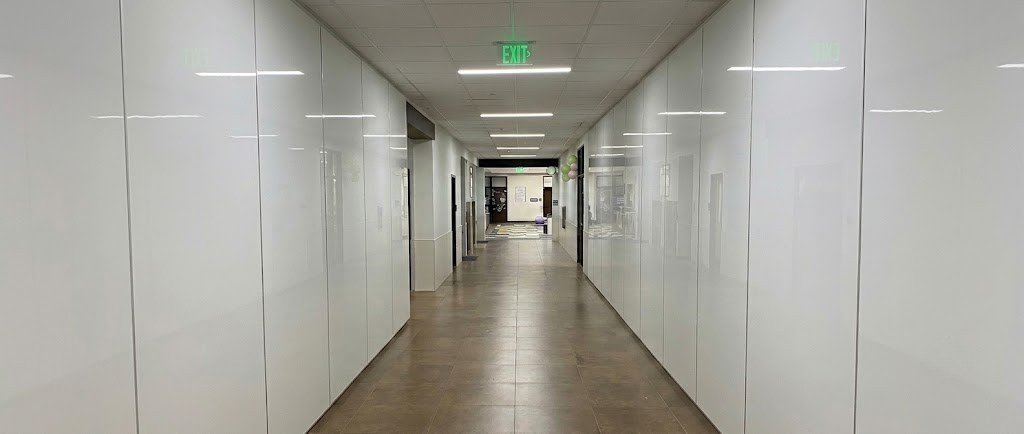
Modern school security doesn't have to look like a fortress. Titan WallShield™ integrates permanent ballistic protection directly into everyday learning environments while preserving clean architectural design and collaborative spaces.
Across the United States, schools are investing more in campus security than ever before. Administrators, architects, school boards, and safety professionals are working together to strengthen facilities while preserving what makes schools welcoming places to learn.
The challenge is finding the right balance.
No one wants a school that feels intimidating, institutional, or closed off from the community. Students learn best in environments filled with natural light, collaboration, creativity, and openness. At the same time, every district has a responsibility to evaluate how buildings can better protect students, teachers, staff, and visitors during an emergency.
Fortunately, improving physical security no longer means covering campuses with visible barriers or turning schools into fortresses.
Modern ballistic protection has evolved dramatically over the last decade. Today's solutions can be integrated into classrooms, hallways, administrative offices, reception areas, and entry vestibules while serving useful everyday purposes that support teaching, collaboration, and daily operations.
The goal isn't to make security more visible.
The goal is to make protection more intentional.
Throughout this guide, we'll explore how schools can create safer learning environments using layered security strategies, discreet architectural integration, and dual-purpose ballistic protection that enhances both safety and education.
Table of Contents
Then create a simple bulleted list:
What Does It Mean to Harden a School?
Why Schools Shouldn't Feel Like Fortresses
The Shift Toward Discreet School Security
Start With the Most Vulnerable Areas
Layered Security Starts at the Front Door
Designing Security That Becomes Part of the School
Ballistic Glass Strengthens Security While Preserving Openness
Permanent Protection Can Also Support Learning
Mobile Protection That Is Already Where It's Needed
Safe Rooms Are About Planning—Not Fear
Every Layer Has a Different Purpose
New Construction vs. Retrofitting Existing Schools
Prioritize the Areas That Matter Most
Security Planning Should Begin During the Design Process
Layered Security Is Built Over Time
Frequently Asked Questions
What Does It Mean to Harden a School?
School hardening is the process of strengthening a campus through physical, operational, and procedural improvements that reduce vulnerabilities while supporting emergency preparedness.
Contrary to popular belief, hardening a school is not about creating fear or making students feel like they are entering a secure government facility.
Instead, effective school hardening focuses on identifying vulnerable areas and integrating practical security measures into the normal operation of the building.
A comprehensive strategy may include:
Controlled visitor access
Secure entry vestibules
Ballistic glass systems
Bullet-resistant wall systems
Mobile ballistic protection
Safe rooms or protected spaces
Access control systems
Emergency communications
Staff training
Regular emergency planning
Each element serves a different purpose, but together they create multiple layers of protection that help delay threats, improve response time, and support first responders during an emergency.
As discussed in Layered School Safety: The Proven Approach to Preventing Active Shooter Attacks, effective security is never built around one product. It is built around multiple complementary layers working together.
Why Schools Shouldn't Feel Like Fortresses
Schools are fundamentally different from correctional facilities, government compounds, or military installations.
They are places where children learn, teachers inspire, and communities gather.
Security improvements that dominate the visual environment can unintentionally create stress, distract from learning, or send the wrong message to students and families.
The most successful school security projects are often the ones students never notice.
Instead of relying on highly visible barriers, many districts are choosing security solutions that blend naturally into the architecture of the building.
Examples include:
Ballistic glass that maintains visibility while strengthening entry points
Bullet-resistant wall systems that function as everyday dry-erase collaboration surfaces
Mobile ballistic whiteboards that serve as classroom teaching tools while remaining immediately accessible during emergencies
Secure vestibules designed to preserve openness while controlling visitor access
These solutions provide meaningful protection without changing the educational character of the campus.
The Shift Toward Discreet School Security
The conversation around school safety has changed significantly over the last several years.
Rather than asking:
"What products should we buy?"
Many districts now ask:
"How can we improve security without changing the learning environment?"
This shift has encouraged architects, facility planners, school resource officers, and administrators to think beyond traditional security equipment.
Modern school design increasingly focuses on integrating protection directly into everyday spaces.
For example:
A hallway wall can become a permanent layer of ballistic protection while continuing to function as a collaborative dry-erase surface.
A classroom whiteboard can provide daily instruction while remaining immediately available if an emergency occurs.
A secure vestibule can strengthen visitor screening without eliminating natural light or creating an intimidating entrance.
These approaches demonstrate that physical security and thoughtful design are no longer competing priorities.
They can work together.
Start With the Most Vulnerable Areas
Every school is different.
A rural elementary school has different needs than an urban high school, and a newly constructed campus presents different opportunities than a decades-old facility.
However, most security assessments begin by evaluating the same critical areas.
These often include:
Main entrances
Reception areas
Administrative offices
Classroom corridors
High-traffic hallways
Libraries
Cafeterias
Common gathering areas
Designated shelter locations
Improving these spaces first often produces the greatest impact while supporting a phased approach to future security upgrades.
Rather than attempting to reinforce every part of a campus simultaneously, many districts prioritize improvements based on risk, daily use, available funding, and long-term facility planning.
Layered Security Starts at the Front Door
The main entrance remains one of the most important locations on any campus.
This is where visitors arrive, deliveries are received, and access to the building is first controlled.
Many schools now begin their security improvements by strengthening entrance vestibules using Ballistic Glass Systems integrated with access control, visitor management, and secure reception areas.
Unlike standard glazing, ballistic glass helps strengthen vulnerable openings while preserving visibility, transparency, and the welcoming appearance expected in modern educational facilities.
When combined with thoughtful architectural planning, secure vestibules can improve campus security without making the entrance feel closed off or institutional.
To better understand how modern entry systems are evolving, explore our guide on Why Schools Are Investing in Ballistic Vestibules and Reinforced Entry Systems.
Designing Security That Becomes Part of the School
The most effective security improvements are often the ones that become part of the building itself.
Rather than introducing equipment that only serves a purpose during an emergency, today's schools increasingly invest in solutions that support education every day while remaining ready if they are ever needed.
This philosophy has become one of the defining characteristics of modern school security.
Instead of asking how much security can be added to a building, many architects and administrators now ask a different question:
How can protection become part of the learning environment?
That shift has led to greater interest in dual-purpose products, integrated architectural systems, and layered security solutions that support both safety and everyday operations.
Ballistic Glass Strengthens Security While Preserving Openness
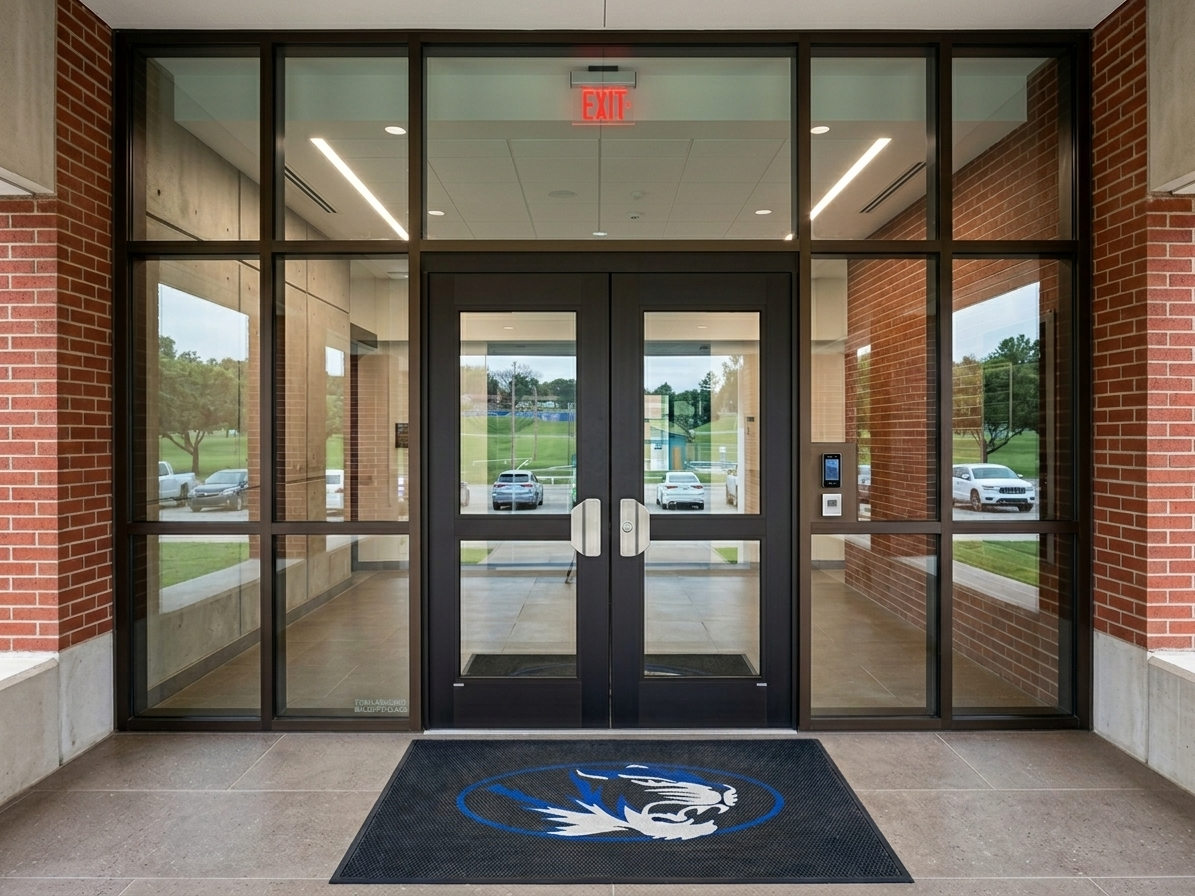
Ballistic Glass Systems help schools strengthen entry vestibules, reception areas, and administrative offices while maintaining visibility, natural light, and an inviting architectural design.
Natural light, visibility, and welcoming entrances remain important priorities for modern schools.
Parents, students, and visitors expect schools to feel open and inviting—not closed off behind solid barriers.
That's one reason Ballistic Glass Systems have become an increasingly important component of campus security planning.
Unlike opaque barriers, ballistic glass helps strengthen vulnerable openings while maintaining transparency throughout the building.
Common applications include:
Secure entry vestibules
Reception areas
Administrative offices
Visitor check-in locations
Interior observation windows
Transaction windows
Conference rooms
When thoughtfully integrated into the architecture, ballistic glass allows schools to improve protection while preserving the openness that supports communication, supervision, and natural daylight.
Rather than replacing the character of a building, it helps reinforce the areas where protection is needed most.
To better understand how ballistic glazing compares with other options, read Ballistic Glass vs. Security Window Film.
Permanent Protection Can Also Support Learning
Many people still imagine ballistic protection as thick steel plates or industrial-looking barriers.
Modern educational environments have changed that perception.
Today's schools increasingly look for products that improve both security and daily classroom functionality.
A great example is Titan WallShield™ Bullet-Resistant Wall Panels.
Rather than installing visible armor that changes the appearance of a classroom or hallway, WallShield transforms everyday wall space into a functional dry-erase collaboration surface while permanently integrating ballistic protection into the building.
Teachers gain additional writing space.
Students gain more opportunities for collaboration.
Facility managers gain permanent ballistic protection that requires no deployment during an emergency.
This type of dual-purpose design demonstrates how security can become part of the educational experience instead of interrupting it.
Whether installed in classrooms, administrative offices, hallways, libraries, or collaborative learning spaces, permanent ballistic wall systems help schools strengthen key areas while maintaining a clean architectural appearance.
Learn more in What Is a Bulletproof Wall Panel? The Complete Guide.
Mobile Protection That Is Already Where It's Needed
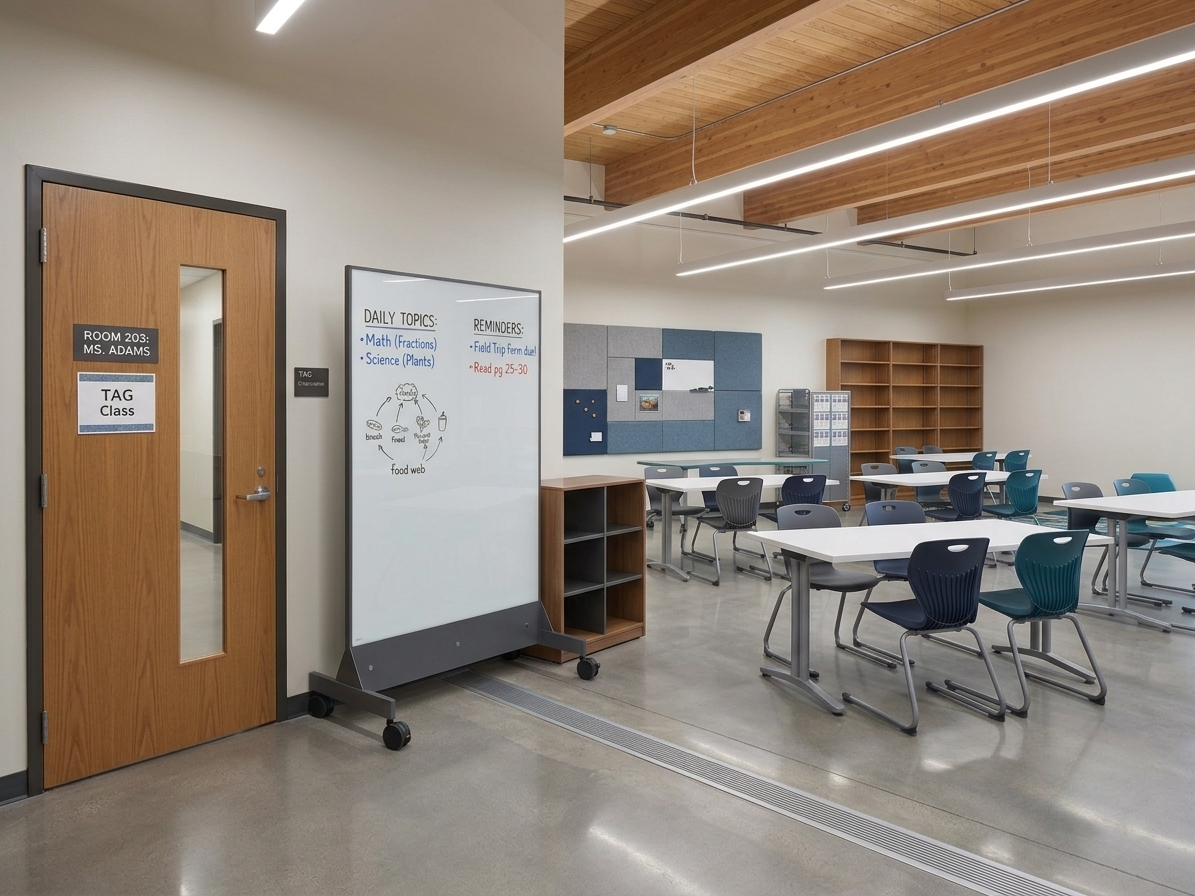
TAG Mobile™ combines everyday classroom collaboration with discreet ballistic protection, allowing schools to enhance preparedness without disrupting the learning environment.
Traditional ballistic shields are often stored until an emergency occurs.
While they provide important protection, stored equipment depends on someone retrieving it before it can be used.
Many districts are now evaluating approaches that place protection directly inside the classroom as part of everyday instruction.
The TAG Mobile™ Bulletproof Mobile Whiteboard represents this evolution in school safety.
Every day, it functions as a premium mobile dry-erase whiteboard that supports teaching, brainstorming, group activities, and collaborative learning.
If an emergency occurs, it is already positioned inside the classroom where teachers and students spend their day.
There is no need to unlock a storage room, retrieve equipment from another hallway, or interrupt instruction to keep protective equipment nearby.
This dual-purpose philosophy helps schools maximize the value of every investment while ensuring that safety equipment contributes to education every day—not just during emergencies.
To explore the concept further, read What Is a Bulletproof Whiteboard? The Complete Guide.
Safe Rooms Are About Planning—Not Fear
Safe rooms are sometimes misunderstood.
Many people picture isolated concrete bunkers or hidden emergency shelters.
In reality, modern safe rooms are often thoughtfully designed spaces that continue serving everyday purposes while providing an additional layer of protection when needed.
Depending on the school's design, a safe room may function as:
A conference room
An administrative office
A classroom
A staff collaboration area
A counseling office
A library support space
The room continues serving its intended purpose every day.
Its protective features simply become another layer within the school's overall security strategy.
A well-designed safe room may incorporate:
Ballistic glass
Bullet-resistant wall panels
Reinforced structural elements
Secure communication systems
Controlled access
Emergency supplies
Rather than existing as a standalone solution, safe rooms work best when integrated into the broader campus safety plan.
For a more detailed discussion, explore What Is a Safe Room? The Complete Guide for Schools, Businesses, and Government Facilities.
Every Layer Has a Different Purpose
One of the most common misconceptions about school security is that one product can solve every challenge.
In reality, every protective system has a different role.
For example:
Ballistic Glass Systems strengthen transparent openings while preserving visibility.
Titan WallShield™ provides permanent protection integrated into everyday wall space.
TAG Mobile™ places mobile ballistic protection directly inside learning environments while supporting daily instruction.
Safe rooms combine multiple protective elements—including ballistic glass, bullet-resistant wall panels, and controlled access—to create designated protected spaces for specific situations and operational needs.None of these solutions replace one another.
Instead, they complement each other as part of a comprehensive layered security strategy.
Schools achieve the best long-term outcomes when they evaluate how multiple protective elements work together rather than relying on a single product or isolated upgrade.
As discussed in Ballistic Glass vs. Ballistic Panels vs. Mobile Protection, every solution contributes differently depending on the building layout, educational goals, and security objectives.
Security Should Support Education
Perhaps the most important lesson from modern school design is that security should never compete with education.
Instead, it should quietly support it.
The strongest campuses are not necessarily the ones with the most visible security.
They are the ones where protection has been thoughtfully integrated into the architecture, the learning environment, and the daily experience of students and educators.
When security becomes part of everyday school life—rather than something separate from it—it is more likely to be accepted, maintained, and available when it matters most.
New Construction vs. Retrofitting Existing Schools
Every school district faces unique challenges when planning security improvements.
Some districts are designing brand-new campuses with security integrated from the beginning, while others are working with buildings that may be decades—or even a century—old.
The good news is that meaningful security improvements are possible in both situations.
New construction provides architects and design teams with the opportunity to incorporate ballistic protection directly into the building's overall design. Ballistic glass, reinforced wall systems, secure vestibules, and protected administrative areas can all be planned alongside the building's architectural vision.
Existing schools often require a different approach.
Rather than replacing entire sections of a building, many districts prioritize retrofit solutions that strengthen the most vulnerable areas while minimizing disruption to students and staff.
Modern ballistic protection systems are increasingly designed to support both new construction and retrofit applications, allowing schools to improve security while extending the life of existing facilities.
Prioritize the Areas That Matter Most
For many districts, budget limitations make it impractical to complete every security improvement at once.
Instead, successful projects often begin with a phased implementation plan.
Rather than asking, "How do we harden the entire school?" a better question is:
"Which improvements will have the greatest impact today while supporting future phases?"
Many schools begin with:
Main entrances and secure vestibules
Reception and administrative offices
High-traffic hallways
Classroom corridors
Libraries
Cafeterias
Multipurpose gathering spaces
As additional funding becomes available, districts can expand protection throughout the campus while maintaining a consistent long-term security strategy.
This phased approach allows schools to make steady progress without delaying important improvements while waiting for a larger capital project.
For additional guidance, read Where to Place Ballistic Protection in Schools.
Security Planning Should Begin During the Design Process
The most successful projects begin long before construction starts.
Architects, school administrators, facility managers, school resource officers, security consultants, and contractors each bring valuable perspectives to the planning process.
By involving all stakeholders early, districts can better evaluate:
Building layout
Daily traffic flow
Visitor access
Emergency response procedures
Classroom visibility
Future expansion plans
Security priorities
Budget considerations
This collaborative planning process helps ensure that security enhancements support the educational mission of the school rather than becoming isolated additions later in the project.
Schools that incorporate security planning early often achieve better architectural integration, fewer change orders, and more efficient project execution.
To learn more about designing security into educational facilities, read Selecting Physical Barriers: What Architects & Interior Designers Need to Know.
Layered Security Is Built Over Time
One of the biggest misconceptions about school security is that it must be completed all at once.
In reality, many of today's safest campuses have strengthened their security over several years through carefully planned improvements.
A typical progression may look something like this:
Phase 1
Strengthen the primary entrance with secure access control and Ballistic Glass Systems.
Phase 2
Improve administrative offices, reception areas, and key corridors using Titan WallShield™ Bullet-Resistant Wall Panels.
Phase 3
Equip classrooms, libraries, and shared learning spaces with TAG Mobile™ Bulletproof Mobile Whiteboards.
Phase 4
Enhance designated shelter locations or administrative spaces with additional protective features as part of a comprehensive safe room strategy.
Each phase builds upon the previous one, creating multiple layers of protection without requiring a complete campus renovation.
This flexible approach allows schools to align security investments with capital improvement schedules, grant opportunities, and long-term facility planning.
Security Should Complement Great Architecture
Some people assume stronger security inevitably means sacrificing aesthetics.
Today's schools demonstrate the opposite.
Across the country, architects are designing educational facilities filled with daylight, open collaboration areas, flexible classrooms, and welcoming common spaces while simultaneously incorporating meaningful physical security.
The key is selecting solutions that become part of the architecture instead of competing with it.
Ballistic glass can preserve transparency while strengthening vulnerable openings.
Bullet-resistant wall panels can become everyday collaboration surfaces.
Mobile ballistic whiteboards can support instruction throughout the school day.
When thoughtfully integrated, these solutions allow architects to maintain clean lines, open sightlines, and inviting educational environments while supporting a layered security strategy.
Good architecture and good security should never be viewed as opposing goals.
Together, they create schools that are both inspiring and resilient.
Planning for the Future Instead of Reacting to the Past
Security planning is most effective when it is proactive rather than reactive.
Rather than responding only after a specific event, many districts are evaluating how their facilities can better support long-term resilience as campuses evolve.
Questions that often guide these discussions include:
Where are the most vulnerable areas of the building?
How does visitor traffic move throughout the campus?
Which spaces are occupied throughout the school day?
How can protection be integrated without disrupting learning?
Which improvements provide both daily value and emergency readiness?
How can future renovations support today's security goals?
These conversations help districts move beyond individual products and toward comprehensive campus planning.
Ultimately, the objective is not simply to add security features.
It is to create learning environments that remain welcoming, functional, and prepared for whatever the future may bring.
Building Confidence Through Thoughtful Design
Parents, teachers, students, and staff notice when a school feels thoughtfully designed.
That confidence doesn't come from seeing visible barriers at every turn.
It comes from knowing that safety has been carefully considered throughout the campus.
When physical protection is integrated into classrooms, administrative offices, entry vestibules, collaboration spaces, and other everyday environments, schools can enhance preparedness while preserving the educational experience that students deserve.
The most successful campuses are rarely defined by the amount of security they display.
They are defined by how seamlessly security has been incorporated into the spaces where learning happens every day.
Every School Is Different—But the Goal Is the Same
No two campuses are exactly alike.
An elementary school built in the 1950s presents different challenges than a newly constructed high school. A rural district may have different priorities than a large urban campus, and budget, facility layout, staffing, and operational needs all influence how security improvements are planned.
What remains consistent is the objective.
Schools want to create learning environments where students can focus on learning, teachers can focus on teaching, and families feel confident that safety has been thoughtfully considered.
Achieving that goal doesn't require turning schools into fortresses.
It requires a comprehensive strategy that balances architecture, education, operations, and layered physical security.
Modern ballistic protection has made that balance more achievable than ever before.
By integrating solutions such as ballistic glass, bullet-resistant wall panels, mobile ballistic protection, and carefully planned safe rooms into everyday educational environments, schools can strengthen preparedness while preserving the welcoming atmosphere that defines great learning spaces.
The future of school security isn't about making protection more visible.
It's about making protection more intentional.
Explore Additional School Safety Resources
Planning a safer campus often raises additional questions about physical security, product selection, facility planning, and funding. The following resources provide more in-depth guidance for architects, school administrators, safety committees, and facility professionals.
Ballistic Protection Guides
School Security Planning
Layered School Safety: The Proven Approach to Preventing Active Shooter Attacks
Why Schools Are Investing in Ballistic Vestibules and Reinforced Entry Systems
Design & Facility Planning
Frequently Asked Questions
Does hardening a school mean making it look like a fortress?
No. Modern school hardening focuses on integrating security into the learning environment while preserving welcoming, functional, and architecturally attractive spaces. Many protective features are designed to blend naturally into classrooms, hallways, offices, and entry areas.
What is layered school security?
Layered security combines multiple physical, operational, and procedural measures that work together to improve campus safety. Rather than relying on a single product, schools evaluate how different systems complement one another throughout the facility.
What are the first areas schools should prioritize?
Many districts begin with:
Main entrances
Secure vestibules
Reception areas
Administrative offices
High-traffic hallways
Classroom corridors
These areas often provide the greatest opportunity to strengthen campus security while supporting future phases of improvement.
Can existing schools be retrofitted with ballistic protection?
Yes.
Many modern ballistic protection systems are specifically designed for retrofit applications. Existing schools can strengthen vulnerable areas without requiring complete building reconstruction, allowing improvements to be completed in phases as budgets permit.
How does ballistic glass improve school security?
Ballistic glass helps strengthen transparent openings such as entry vestibules, reception windows, and administrative offices while maintaining visibility, natural light, and an open architectural appearance.
What is the advantage of dual-purpose security products?
Dual-purpose products provide everyday functionality while remaining immediately available during emergencies.
For example, a mobile whiteboard can support classroom instruction every day while also providing ballistic protection if needed. Similarly, bullet-resistant wall panels can function as dry-erase collaboration surfaces while permanently strengthening a facility.
Should every classroom have ballistic protection?
Every campus should conduct its own security assessment to determine where ballistic protection will provide the greatest benefit. Building layout, occupancy, daily operations, and emergency planning all influence placement decisions.
Can schools implement security improvemen
ts over time?
Absolutely.
Many districts adopt a phased approach, strengthening entrances, administrative areas, classrooms, and common spaces over several years as funding becomes available. This strategy allows schools to continuously improve security while supporting long-term facility planning.
Planning Your School Security Strategy
Every school deserves a security plan tailored to its unique campus, educational mission, and operational needs.
Whether you're designing a new facility, renovating an existing campus, or evaluating ways to strengthen specific areas, thoughtful planning can help create a safer learning environment without compromising the character of the school.
Titan Armored works with school districts, architects, facility managers, school resource officers, and security professionals to develop integrated ballistic protection solutions that support both everyday learning and emergency preparedness.
From Ballistic Glass Systems and Titan WallShield™ Bullet-Resistant Wall Panels to the TAG Mobile™ Bulletproof Mobile Whiteboard, our solutions are designed to work together as part of a comprehensive layered security strategy.
If you're beginning a school safety project, we'd be happy to discuss your facility, answer questions, and help you evaluate the best approach for your campus.
Explore Titan Armored's complete lineup of ballistic security products or contact our team to start planning your project.