What Is a Bulletproof Whiteboard? The Complete Guide for Schools, Businesses, and Government Facilities
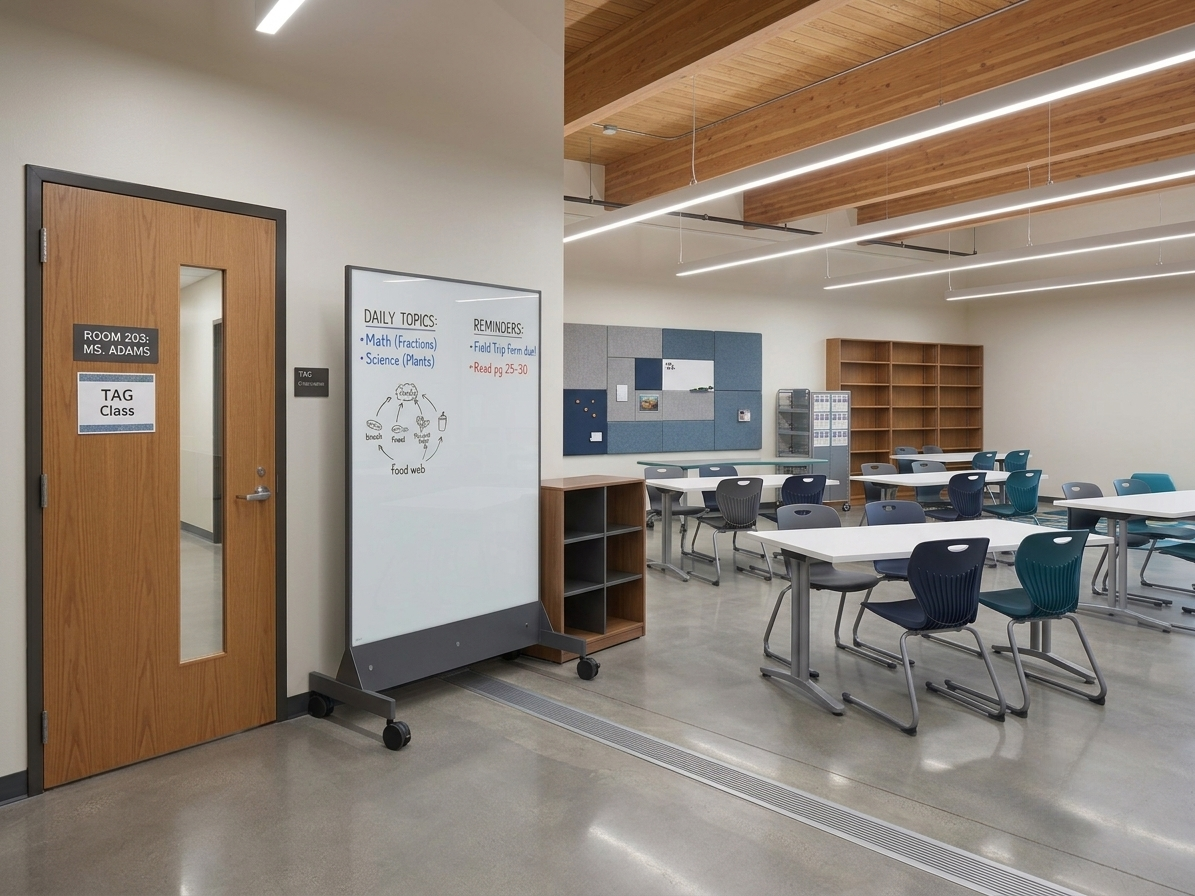
The TAG Mobile™ combines everyday classroom functionality with accessible ballistic protection, allowing schools to improve preparedness without disrupting learning environments.
Bulletproof whiteboards have emerged as one of the most innovative developments in modern physical security and emergency preparedness. Unlike traditional security products that remain hidden until needed, bulletproof whiteboards combine everyday functionality with accessible ballistic protection.
As organizations continue to evaluate ways to improve preparedness while maintaining welcoming, productive environments, bulletproof whiteboards are becoming increasingly popular in schools, universities, government facilities, corporate offices, healthcare facilities, and houses of worship.
This guide explains what a bulletproof whiteboard is, how it works, what ballistic ratings matter, where it should be placed, and how organizations can incorporate bulletproof whiteboards into broader layered protection strategies.
What Is a Bulletproof Whiteboard?
A bulletproof whiteboard, often referred to as a bullet-resistant whiteboard or ballistic whiteboard, is a dual-purpose protection solution that combines a writable dry-erase surface with ballistic protection.
Unlike traditional whiteboards, a bulletproof whiteboard is engineered to help protect occupants from ballistic threats while still serving as an everyday collaboration and communication tool.
Modern bulletproof whiteboards are commonly used in:
Schools
Universities
Government facilities
Corporate offices
Houses of worship
Healthcare facilities
The most effective solutions are designed to remain visible, functional, and immediately accessible during daily operations rather than being stored away until an emergency occurs.
As discussed in Dual-Use School Safety Products, many organizations are increasingly prioritizing solutions that support both everyday functionality and emergency preparedness.
What Makes a Bulletproof Whiteboard Different From a Traditional Whiteboard?
At first glance, a bulletproof whiteboard may appear similar to a standard dry-erase board.
The difference lies in what happens when it is needed most.
Traditional whiteboards are designed solely for communication and collaboration.
Bulletproof whiteboards are designed to provide those same everyday functions while also serving as a protective barrier capable of helping defend against ballistic threats.
Key differences include:
Ballistic Protection
Designed to help stop specified ballistic threats based on recognized testing standards.
Mobility
Many modern bulletproof whiteboards can be repositioned throughout a facility as needs change.
Accessibility
Unlike security equipment stored in closets or secured locations, bulletproof whiteboards remain visible and available.
Dual-Use Functionality
Used daily for instruction, meetings, planning, and collaboration.
Preparedness
Can become part of a broader layered safety strategy without disrupting normal operations.
How Does a Bulletproof Whiteboard Work?
A bulletproof whiteboard works by combining a writable surface with a ballistic core engineered to resist ballistic threats.
While construction methods vary among manufacturers, the primary purpose remains the same: to provide ballistic protection while maintaining practical functionality.
Unlike traditional ballistic shields that are often stored until needed, bulletproof whiteboards are designed to remain integrated into the environment.
This approach supports accessibility and deployment readiness while maximizing daily value.
As discussed in What Actually Works in a School Shooting, accessibility and deployment readiness can play important roles during rapidly evolving emergencies.
What Makes a Bulletproof Whiteboard Effective?
Not all bulletproof whiteboards are created equal.
When evaluating different solutions, organizations should focus on performance rather than appearance alone.
Several factors influence effectiveness:
Ballistic Performance
The ability to resist specified ballistic threats.
Coverage Area
The amount of protection provided to occupants behind the system.
Accessibility
How quickly the system can be positioned or utilized.
Mobility
The ability to reposition protection throughout a facility.
Everyday Functionality
Whether the system provides value during normal daily operations.
Durability
The ability to withstand years of everyday use while maintaining performance.
The most effective bulletproof whiteboards successfully combine these factors into a single integrated solution.
What Ballistic Ratings Matter?
Understanding ballistic ratings is an important part of evaluating any protection system.
Two standards commonly referenced in ballistic protection discussions are:
UL 752
UL 752 is a widely recognized ballistic testing standard used to evaluate the performance of ballistic barriers, glazing systems, and protective materials.
Protection levels are designed to evaluate performance against various firearm threats ranging from handguns to higher-powered rifles.
NIJ Standards
The National Institute of Justice (NIJ) establishes testing standards used throughout the ballistic protection industry.
NIJ standards are often referenced when discussing rifle-rated ballistic protection and ballistic resistance performance.
As discussed in Understanding Ballistic Glass: How Bullet-Resistant Glass Works, understanding ballistic standards can help organizations make informed decisions when evaluating protection solutions.
Can a Bulletproof Whiteboard Stop Rifle Threats?
Some bulletproof whiteboards are designed to help protect against rifle threats, while others may only provide protection against handgun threats.
This is why understanding ballistic ratings is critical.
Organizations should carefully evaluate:
Ballistic testing standards
Protection ratings
Intended threat levels
Independent testing documentation
Higher-rated systems may be designed to help protect against more powerful threats, including certain rifle rounds.
When evaluating protection systems, organizations should focus on independently validated performance rather than marketing claims alone.
As discussed in Proven Protection: TAG Mobile™ UL 752 Level 8 Standards for School Safety, real-world testing and validation can provide valuable insight into how protection systems may perform under demanding conditions.
Why Bulletproof Whiteboards Are Growing in Popularity
Several factors are driving adoption:
Increased Focus on Preparedness
Organizations are evaluating proactive ways to improve emergency preparedness.
Demand for Dual-Use Products
Decision-makers increasingly prefer solutions that provide daily value.
Accessibility
Protection that remains visible and immediately available is often easier to deploy.
Budget Efficiency
Dual-purpose products may provide greater long-term value than single-purpose equipment.
Layered Protection Strategies
Bulletproof whiteboards are increasingly being integrated into broader security plans rather than being treated as standalone solutions.
As discussed in Layered School Safety Strategy, effective preparedness often depends on multiple layers of protection working together.
Who Uses Bulletproof Whiteboards?
Schools
Schools remain one of the most common environments for bulletproof whiteboards. Educators and administrators increasingly seek solutions that improve preparedness without disrupting learning.
Universities
Universities use bulletproof whiteboards in classrooms, lecture halls, administration buildings, and student service areas.
Government Facilities
Government offices often require solutions that balance security with public accessibility while supporting meetings, planning, and training activities.
Corporate Offices
Conference rooms, training spaces, executive offices, and collaborative work environments can benefit from solutions that provide both functionality and preparedness.
Houses of Worship
Many houses of worship seek discreet security solutions that preserve welcoming environments while improving preparedness.
As discussed in How Jewish Schools and Synagogues Are Strengthening Security Without Sacrificing Community, many faith-based organizations are prioritizing layered protection strategies that align with their mission and values.
Healthcare Facilities
Hospitals, clinics, and healthcare facilities often require solutions that support communication, training, and preparedness.
Why Accessibility Matters
Many traditional security tools remain stored away until they are needed.
A bulletproof whiteboard remains visible, functional, and integrated into daily operations.
Because it serves a purpose every day, it is already positioned within the environment where people work, learn, meet, and collaborate.
The most effective protection is often the protection that is available when it is needed.
TAG Mobile™ vs Traditional Ballistic Shields
Both mobile ballistic shields and traditional ballistic shields can play valuable roles in preparedness planning.
However, they are designed with different objectives in mind.
Traditional Ballistic Shields
Single-purpose protection devices
Stored until needed
Often deployed by trained personnel
Designed primarily for emergency response situations
TAG Mobile™ Bulletproof Whiteboard
Daily use as a writable collaboration surface
Continuous visibility and accessibility
Mobility throughout a facility
Larger protective coverage area
Integration into classrooms, offices, and common areas
Dual-use functionality that supports long-term value
Return on Investment
Traditional ballistic shields typically remain stored until needed.
The TAG Mobile™ provides value every day through communication, collaboration, planning, training, and instruction while remaining immediately accessible as part of a preparedness strategy.
This dual-use approach often provides greater long-term value than single-purpose equipment.
Bulletproof Whiteboards and Bulletproof Wall Panels: Understanding the Difference
While bulletproof whiteboards provide mobile ballistic protection and everyday functionality, many organizations also evaluate fixed protection solutions such as bulletproof wall panels.
Bulletproof Whiteboards
Provide:
Mobility
Accessibility
Everyday functionality
Flexible deployment
Collaboration and communication surfaces
Bulletproof Wall Panels
Provide:
Permanent ballistic protection
Fixed installation
Designated protected areas
Continuous readiness
Bulletproof wall panels are commonly installed in:
Classroom entrances
Hallways
Administrative offices
Reception areas
Conference rooms
Executive offices
Houses of worship
Government facilities
While mobile bulletproof whiteboards provide flexible protection and everyday functionality, bulletproof wall panels can help create designated protected areas and safe rooms within schools, universities, government facilities, corporate offices, healthcare facilities, and houses of worship.
Many organizations implement both mobile and fixed ballistic protection solutions as part of a comprehensive layered protection strategy.
Bulletproof Whiteboards vs Ballistic Glass
Both bulletproof whiteboards and ballistic glass can contribute to a layered protection strategy.
Ballistic glass is often used in:
Entry vestibules
Reception areas
Administrative offices
Exterior windows
Bulletproof whiteboards provide:
Mobility
Flexibility
Accessibility
Daily functionality
Many organizations implement both solutions as part of a comprehensive layered security strategy.
As discussed in Understanding Ballistic Glass: How Bullet-Resistant Glass Works, ballistic glazing systems and mobile protection solutions often complement one another.
Where Should Bulletproof Whiteboards Be Placed?
Classroom Entrances
One of the most effective locations due to accessibility and visibility.
Hallways and Intersections
Strategically positioned protection can support broader preparedness objectives.
Administrative Offices
Reception and administration areas often serve as the first point of contact for visitors.
Common Areas
Libraries, cafeterias, training rooms, and collaborative spaces can benefit from mobile protection.
Houses of Worship and Community Facilities
Supports communication and preparedness while maintaining welcoming environments.
As discussed in Where Ballistic Protection Should Be Placed in Schools, placement strategy is a critical consideration.
What Should Buyers Look For?
Organizations evaluating bulletproof whiteboards should consider:
Ballistic ratings
Independent testing
Coverage area
Mobility
Accessibility
Durability
Daily functionality
Warranty support
Manufacturer experience
Long-term value
The best solution is often one that balances protection, usability, and deployment readiness.
How Much Does a Bulletproof Whiteboard Cost?
The cost of a bulletproof whiteboard varies based on factors including ballistic rating, size, mobility, customization, and deployment requirements.
Organizations should evaluate both upfront cost and long-term value.
Unlike traditional single-purpose equipment, dual-use solutions provide ongoing utility throughout their service life.
Many organizations appreciate that bulletproof whiteboards can often be acquired through cooperative purchasing programs such as TIPS and BuyBoard, helping simplify procurement processes.
Some organizations also explore leasing and financing options as a way to implement ballistic protection projects while managing budget constraints.
As discussed in Bulletproof Whiteboard Cost Guide, evaluating long-term value is just as important as evaluating initial cost.
The Future of Bulletproof Whiteboards
The future of bulletproof whiteboards will continue to be shaped by:
Preparedness
Organizations are increasingly focused on proactive planning and risk reduction.
Accessibility
Decision-makers are prioritizing solutions that remain visible and available.
Dual-Use Design
Products that provide everyday value while supporting preparedness continue to gain traction.
Bulletproof whiteboards sit at the intersection of these trends, making them one of the most innovative categories in modern physical security.
Frequently Asked Questions About Bulletproof Whiteboards
What is a bulletproof whiteboard?
A bulletproof whiteboard combines a writable surface with ballistic protection, providing everyday functionality and emergency preparedness.
Can a bulletproof whiteboard stop rifle rounds?
Some bulletproof whiteboards are designed to resist rifle threats. Always review ballistic ratings and testing documentation.
Are bulletproof whiteboards only used in schools?
No. They are commonly used in schools, universities, government facilities, corporate offices, healthcare facilities, and houses of worship.
How are bulletproof whiteboards different from traditional ballistic shields?
Bulletproof whiteboards provide everyday functionality in addition to ballistic protection, while traditional ballistic shields are typically single-purpose emergency response tools.
Where should a bulletproof whiteboard be placed?
Common locations include classroom entrances, hallways, administrative offices, common areas, and public-facing environments.
Are bulletproof whiteboards part of a layered security strategy?
Yes. Many organizations incorporate bulletproof whiteboards alongside ballistic glass, access control systems, communication systems, and emergency preparedness planning.
Learn More About Bulletproof Whiteboards
As a manufacturer of bulletproof whiteboards, ballistic glass systems, and bulletproof wall panels, Titan Armored school safety and ballistic protection solutions can help organizations implement layered protection strategies that support both everyday functionality and emergency preparedness.
Titan Armored's TAG Mobile™ was designed to combine everyday functionality with immediately accessible ballistic protection.
Whether you're evaluating solutions for a school, university, government facility, corporate office, healthcare environment, or house of worship, the TAG Mobile™ supports modern preparedness strategies without disrupting daily operations.
Learn More About Titan Armored School Safety and Ballistic Protection Solutions
Learn More About the TAG Mobile™