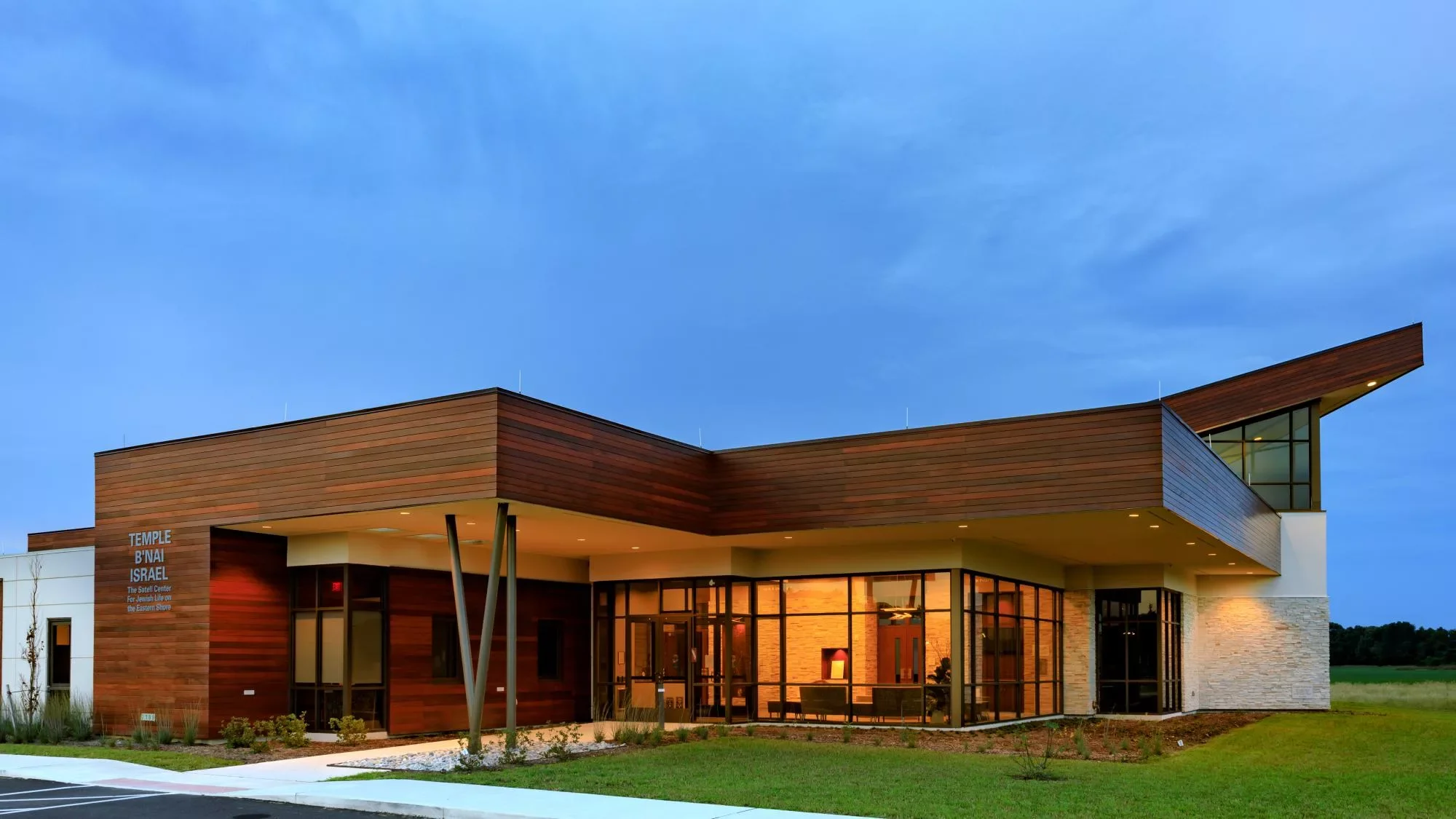
Effective synagogue security combines thoughtful planning, controlled access, emergency preparedness and appropriate physical protection while preserving a welcoming environment for worship and community.
Jewish schools and synagogues face a complex physical security challenge.
They are places of worship, education, tradition and community. Their mission depends on bringing people together—and security planning should support that mission rather than redefine it.
The objective is not to make a synagogue or Jewish school look fortified.
The objective is to understand where people may be exposed, establish appropriate security layers and integrate protection without sacrificing the welcoming character of the community.
That process can include access control, visitor management, emergency communications, staff preparedness, architectural improvements and, where an assessment identifies the need, ballistic protection.
Security should follow exposure.
And just as importantly:
Not every vulnerability requires a ballistic solution.
The most effective synagogue security strategy is one designed around the individual facility, its people, its architecture, its operations and the risks identified through a thoughtful security assessment.
Why Synagogue Security Requires a Layered Approach
There is no single product, technology or procedure that can secure an entire facility.
A synagogue may include a sanctuary, classrooms, administrative offices, children's areas, social halls, kitchens, exterior gathering spaces, multiple entrances and community meeting rooms.
A Jewish school may include classrooms, administrative offices, libraries, cafeterias, gymnasiums, playgrounds, hallways and visitor entrances.
Some organizations combine both functions on the same campus.
That complexity is why physical security should be approached in layers.
Depending on the facility and its security assessment, those layers may include:
Exterior awareness and lighting
Controlled entrances
Visitor management
Access control
Cameras and monitoring
Emergency communications
Staff and volunteer training
Reinforced doors and hardware
Ballistic glazing
Bullet-resistant wall protection
Designated protected areas
Accessible mobile ballistic protection
Emergency response planning
CISA's guidance for houses of worship similarly emphasizes a comprehensive approach that includes vulnerability assessment, multiple security layers, emergency planning and physical-security measures tailored to the individual organization.
The goal is not to maximize the number of security products inside a building.
The goal is to identify meaningful vulnerabilities and determine which layers appropriately address them.
Start With a Physical Security Assessment
Before deciding what to purchase, organizations should first understand what they are trying to protect and where exposure exists.
A physical security assessment can evaluate questions such as:
How do visitors approach the facility?
How many entrances are routinely used?
Which doors remain locked?
Where are visitors received and screened?
What separates public areas from private areas?
Where are children and students located?
Which spaces have significant exterior glazing?
Where are administrative personnel positioned?
Are there interior areas that could provide enhanced protection during an emergency?
How quickly can staff communicate across the facility?
How would occupants respond if the primary entrance were compromised?
What existing security measures are already in place?
CISA provides a Houses of Worship Security Self-Assessment specifically to help faith-based organizations identify vulnerabilities and consider potential mitigation measures. CISA describes assessment as an important early step in building an effective security program.
The same principle is central to Titan Armored's approach to school security assessments:
Assess first. Prioritize second. Invest intentionally.
Where Does Public Access End?
One of the most important questions in synagogue security planning is deceptively simple:
Where does public access end and the protected facility begin?
For some buildings, that transition occurs at the exterior entrance.
For others, visitors enter a lobby or vestibule before reaching a controlled interior door.
Larger campuses may have several transitions between public, semi-public and restricted areas.
Consider the sequence:
Exterior → Entrance → Vestibule → Reception or Check-In → Access-Controlled Boundary → Interior Facility
Each transition provides an opportunity to observe, communicate, control access or add another appropriate security layer.
The exact strategy will be different for every facility.
Protecting Entrances and Reception Areas
Main entrances deserve particular attention because they often combine several important functions:
Visitor arrival
Staff interaction
Access control
Exterior glazing
Door systems
Sidelites
Reception or administrative personnel
Interior circulation
Security planning should therefore evaluate the entrance as a system, rather than evaluating one door or one window independently.
Possible improvements may include:
Improved visitor management
Electronic access control
Reinforced doors and hardware
Improved sightlines
Cameras
Communication systems
Security vestibules
Purpose-built ballistic glazing
Bullet-resistant wall protection
An entrance can remain attractive, transparent and welcoming while incorporating thoughtful physical security.
Welcoming and secure are not mutually exclusive.
Ballistic Glass for Synagogues and Jewish Schools
Glass plays an important role in contemporary architecture.
It provides natural light, visibility and connection between spaces—all characteristics that can contribute to a welcoming environment.
But glazing located at an entrance, reception area, administrative office or other exposed location should also be evaluated as part of the overall physical-security strategy.
Where an assessment identifies a need for ballistic protection, purpose-built Ballistic Glass Systems can provide tested ballistic resistance while preserving visibility and architectural design.
Potential applications can include:
Main entrances
Security vestibules
Reception areas
Administrative offices
Exterior windows
Interior transaction windows
Children's areas
School administrative areas
Protected interior spaces
Importantly, security window film and ballistic glazing are not interchangeable.
Security film may provide benefits such as glass retention or forced-entry delay depending on the product and installation, but it should not be confused with purpose-built ballistic glazing.
Organizations evaluating these options can learn more in Titan Armored's guide to Ballistic Glass vs. Security Window Film. Titan's current guide explains these different functions in detail.
Ballistic Glass Is a System—Not Just Glass
One of the most important concepts when evaluating ballistic glazing is that protection does not begin and end with the transparent material.
A ballistic opening should be evaluated as a complete system:
Ballistic Glazing + Framing + Anchorage + Doors + Hardware + Surrounding Construction + Installation
Installing purpose-built ballistic glazing into a surrounding system that cannot appropriately support it may leave other vulnerabilities unresolved.
That is why Titan evaluates ballistic-glass projects based on the existing conditions and the desired security outcome.
Depending on the building, an existing opening may be suitable for modification.
In other situations, a more comprehensive custom ballistic window, framing or secured vestibule system may be appropriate.
There is no universal retrofit solution.
Security is strongest when the components are designed to work together.
Can Existing Synagogues Be Upgraded?
Yes, many existing facilities can be evaluated for physical-security improvements.
But the appropriate solution depends on the building.
Existing conditions that may need to be evaluated include:
Window and door dimensions
Existing framing
Anchorage conditions
Surrounding wall construction
Door configuration
Hardware
Glazing type
Structural conditions
Required protection level
Daily operation and egress
Architectural objectives
Sometimes a targeted improvement is appropriate.
Sometimes several complementary improvements are needed.
And sometimes the existing conditions make a particular upgrade impractical.
The correct solution should come from the evaluation—not from a predetermined product.
Creating Protected Spaces Without Creating a Fortress
Not every security improvement needs to be located at the perimeter.
Organizations may also evaluate interior spaces that could provide additional protection during an emergency.
Potential locations might include:
Administrative offices
Classrooms
Conference rooms
Children's areas
Community rooms
Interior offices
Designated protected spaces
Depending on the facility, these areas may incorporate combinations of ballistic glazing, reinforced doors and frames, bullet-resistant wall systems, communications, access control or other protective measures.
Titan's guide, What Is a Safe Room?, discusses how protected spaces can combine multiple physical-security components rather than relying on a single reinforced wall or product. It specifically addresses houses of worship as one potential application.
It is also important not to describe a room as a “safe room” simply because one component is bullet resistant.
A protected space should be evaluated as a complete system.
Protecting Walls and Administrative Areas
Windows and doors often receive the most attention during physical-security planning, but adjacent opaque walls should not automatically be overlooked.
Where an assessment identifies an appropriate application, Titan WallShield™ bullet-resistant wall panels can add fixed ballistic protection while maintaining useful interior functionality.
Potential applications can include:
Administrative offices
Reception areas
Classrooms
Conference rooms
Children's areas
Community rooms
Designated protected spaces
Because WallShield integrates a dry-erase surface with fixed ballistic protection, it can serve the facility every day rather than appearing solely as emergency equipment.
That dual-use philosophy can be particularly valuable in environments where organizations want meaningful protection without changing the character of the space.
How TAG Mobile™ Can Provide Accessible Protection
Accessibility is an important consideration in emergency planning.
A traditional ballistic shield that remains stored in a closet, office or equipment room is only useful if someone can access it when it is needed.
The TAG Mobile™ bulletproof mobile whiteboard was developed around a different concept.
During everyday use, TAG Mobile functions as a mobile magnetic dry-erase glass board and collaborative surface.
It can support:
Classroom instruction
Staff meetings
Community meetings
Event communication
Training
Collaborative planning
Flexible gathering spaces
At the same time, it provides immediately accessible mobile ballistic protection.
For Jewish schools, that dual-use functionality can allow ballistic protection to remain within classrooms and learning environments without introducing traditional tactical equipment into the educational setting.
In synagogues and community facilities, TAG Mobile may be appropriate in meeting rooms, administrative spaces, classrooms, reception areas or other locations identified through a security assessment.
The important question is not simply:
How many ballistic shields should we have?
A better question is:
Where should protection be located so it is accessible if it is ever needed?
Security Considerations for Jewish Schools
Jewish schools occupy a particularly important position within this discussion because they combine the security considerations of both educational facilities and faith-based communities.
A comprehensive assessment may consider:
Student arrival and dismissal
Visitor entry
Classroom access
Administrative offices
Exterior classroom glazing
Interior circulation
Cafeterias and gathering areas
Playgrounds
After-school activities
Community events
Emergency communications
Reunification planning
Coordination with law enforcement
Titan's School Security Assessments: The Complete Guide to Evaluating Your Campus provides a deeper framework for evaluating a school as a complete environment rather than focusing on individual security products.
Organizations should also recognize that security requirements may change throughout the day.
A controlled school entrance during normal instructional hours may operate very differently during an evening community event, worship service or large gathering.
The security plan should account for how the facility is actually used.
Emergency Preparedness and Staff Training
Physical improvements are only one part of a comprehensive security strategy.
Technology cannot replace preparedness.
Organizations should also consider:
Emergency action plans
Communication procedures
Staff and volunteer responsibilities
Training
Drills and exercises
Coordination with local law enforcement and first responders
Medical response planning
Reunification procedures
Regular reassessment
CISA recommends that houses of worship develop and exercise emergency action, continuity and incident-response plans and establish clear roles and responsibilities for security decisions.
CISA also provides active-assailant preparedness resources specifically for houses of worship, schools, businesses and other organizations.
Physical security works best when the people inside the facility understand how the security plan is intended to work.
Funding Synagogue Security Improvements Through FEMA NSGP
For eligible nonprofit organizations, security planning may also involve identifying potential funding sources.
The FEMA Nonprofit Security Grant Program (NSGP) is an important program for qualifying nonprofit organizations concerned about terrorism and other security risks.
CISA identifies the Nonprofit Security Grant as a resource supporting physical-security enhancements for nonprofit organizations at high risk of terrorist attack.
Because funding cycles, eligibility requirements, allowable costs and application procedures can change, organizations should review the current FEMA and state administering agency requirements before developing a project around grant funding.
Titan's broader guide, How Schools Pay for Ballistic Protection, also discusses funding and procurement considerations for organizations evaluating physical-security investments.
Security improvements should begin with the organization's needs—not with an assumption that a particular product will qualify for a particular grant.
Assess the vulnerability. Define the project. Then determine which funding opportunities may apply.
Not Every Facility Needs the Same Security
A small neighborhood synagogue should not automatically have the same security plan as a large Jewish community center.
A standalone Jewish school should not automatically have the same strategy as a combined synagogue and school campus.
And a historic facility may present very different architectural constraints from new construction.
Factors can include:
Risk — What threats are being considered?
Exposure — Where are occupants potentially vulnerable?
Access — How do people enter and move through the facility?
Occupancy — Who uses the facility, when and how?
Existing Protection — What measures are already in place?
Consequence — What could happen if a particular security layer fails?
Correctability — Can the vulnerability be addressed operationally, architecturally or through equipment?
Integration — How will an improvement affect daily operations, architecture and emergency planning?
There is no universal product hierarchy because there is no universal facility.
Security Should Preserve Community
Synagogues and Jewish schools exist to bring people together.
Security planning should respect that purpose.
CISA's guidance for houses of worship specifically recognizes the need to balance openness, convenience and security and recommends tailoring security to the organization's unique needs and values.
That philosophy matters.
A well-designed security strategy does not need to dominate the architecture or define the experience of entering the building.
Ballistic glass can preserve transparency.
Bullet-resistant wall systems can integrate into everyday interiors.
Mobile ballistic protection can function as a teaching or collaboration tool.
Access control can create boundaries without turning every doorway into an intimidating checkpoint.
Preparedness should support the mission of the institution—not redefine it.
Questions Every Synagogue or Jewish School Should Ask
Before investing in major physical-security improvements, leadership teams should be able to answer several fundamental questions:
Where are our most significant vulnerabilities?
How do visitors currently enter the facility?
Where does public access end?
Which areas contain the greatest concentration of people?
Where are children and students located?
Which employees or volunteers interact with visitors?
What happens if the primary entrance is compromised?
Can staff communicate quickly during an emergency?
Are designated protected areas available?
Does existing glazing provide the protection we believe it provides?
Are security measures accessible when needed?
Have we coordinated our plans with local law enforcement?
Have we evaluated both operational and physical-security improvements?
Which improvements should be addressed immediately?
Which improvements belong in a longer-term security plan?
These questions shift the conversation away from:
“What security product should we buy?”
and toward the more important question:
“What problem are we trying to solve?”
Frequently Asked Questions About Synagogue Security
What is the best way to improve synagogue security?
There is no single solution for every synagogue. A strong starting point is a physical-security assessment that evaluates entrances, visitor access, glazing, doors, interior circulation, emergency communications, procedures and existing protection. Improvements can then be prioritized according to the vulnerabilities identified.
What is a layered synagogue security strategy?
Layered security combines multiple complementary measures rather than relying on one product or procedure. Depending on the facility, layers may include access control, visitor management, cameras, communications, staff training, reinforced entrances, ballistic glazing, protected spaces and emergency response planning.
Should synagogues use bullet-resistant glass?
Not every synagogue requires ballistic glazing. Where a security assessment identifies ballistic exposure at an entrance, reception area, administrative office or other opening, purpose-built ballistic glass may be an appropriate component of a broader security strategy.
Can an existing synagogue be upgraded with ballistic glass?
Potentially. Existing openings must be evaluated based on the glazing, frame, anchorage, doors, surrounding construction, dimensions and desired protection level. Some facilities may be candidates for modification, while others may require a more comprehensive custom ballistic window or framing system.
Is security window film the same as ballistic glass?
No. Security window film may provide glass-retention or forced-entry-delay benefits depending on the system, but it should not be confused with purpose-built ballistic glazing engineered and tested for ballistic resistance.
How can Jewish schools improve physical security?
Jewish schools can begin by evaluating visitor access, entrances, classrooms, administrative areas, exterior glazing, emergency communications, interior circulation, after-school activities and response procedures. The appropriate improvements should follow the vulnerabilities identified during the assessment.
Can a synagogue improve security without looking like a fortress?
Yes. Modern security planning can incorporate access control, architectural glazing, discreet wall protection, communications and other measures while preserving natural light, visibility, aesthetics and a welcoming environment.
What is the FEMA Nonprofit Security Grant Program?
The FEMA Nonprofit Security Grant Program provides security-related funding opportunities for eligible nonprofit organizations. Program requirements, eligible expenses, funding levels and application procedures should always be verified through current FEMA and applicable state guidance.
Can FEMA NSGP funding be used for ballistic protection?
Certain physical-security improvements may be eligible depending on the applicable grant cycle and project. Organizations should verify current NSGP requirements and work with the appropriate state administering agency rather than assuming a specific product or project is eligible.
How can TAG Mobile™ be used in a synagogue or Jewish school?
TAG Mobile combines everyday whiteboard and collaboration functionality with immediately accessible mobile ballistic protection. Depending on a facility's assessment and emergency plan, it may be positioned in classrooms, meeting spaces, administrative areas, reception areas or other appropriate locations.
Strengthening Security Without Sacrificing Community
Effective synagogue security is not about transforming a place of worship into a fortress.
It is about understanding risk, identifying exposure and making deliberate improvements that protect people while respecting the purpose of the facility.
For some organizations, the priority may be access control.
For others, it may be emergency communications or staff training.
Some facilities may need to strengthen entrances or glazing.
Others may identify a need for protected interior areas, bullet-resistant walls or accessible mobile ballistic protection.
Often, the strongest strategy combines several of these measures.
Assess first.
Prioritize second.
Protect where appropriate.
Train and prepare.
Reassess over time.
The objective is not simply to add more security.
It is to create a thoughtful, layered security strategy that helps protect the community while allowing the community to remain exactly what it was created to be: a place for people to come together.
Evaluating Security at Your Synagogue, Jewish School or Community Facility?
Titan Armored works with Jewish schools, synagogues, houses of worship, community organizations, architects, facility leaders and security professionals to evaluate discreet physical-protection solutions for existing facilities and new construction.
Depending on the facility, existing conditions and security objectives, solutions may include custom Ballistic Glass Systems, Titan WallShield™ bullet-resistant wall panels, TAG Mobile™ bulletproof mobile whiteboards, secured vestibules or a combination of protection layers.
The objective is not to force every organization into the same solution.
It is to understand the facility, identify where protection is appropriate and integrate it intelligently.
Discuss Your Security Project With Titan Armored → Contact Us