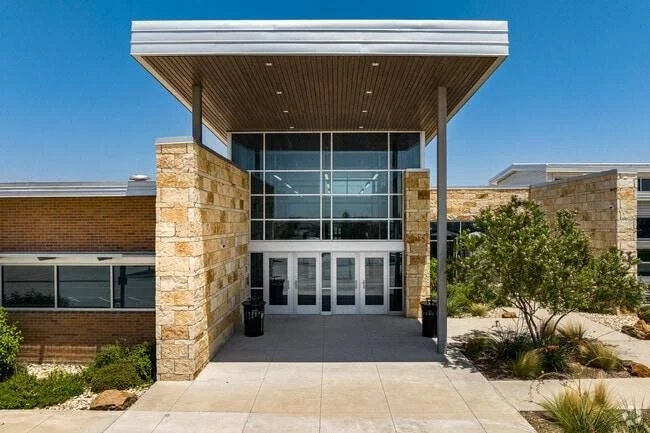
School door security involves more than functioning locks. Research highlights the importance of evaluating glazing, door construction, and access control as part of a comprehensive campus security strategy.
A locked door is one of the most fundamental components of school security. But what happens when the lock functions properly and the glass surrounding it cannot withstand an attack?
New research from the ALERRT Center at Texas State University highlights an important distinction: securing a school door requires more than a functioning lock. The glazing, door construction, surrounding framing, access-control procedures, and ability to initiate a rapid lockdown all contribute to the effectiveness of school security.
For K–12 administrators, school police chiefs, safety directors, and facility managers, these findings provide an opportunity to reevaluate how school entrances and classroom doors are protected.
The objective is not to replace established security practices. It is to understand where those practices may need additional support.
What Does the ALERRT Research Reveal About School Door Security?
In its 2026 report, The Role of Locked Doors and Access Control in School-Based Active Shooter Events, the ALERRT Center examined 54 U.S. K–12 school-based active-shooter incidents occurring between 2000 and 2025.
The researchers identified 66 doors with which perpetrators interacted and evaluated available information about locking status, door construction, access control, and outcomes.
Several findings deserve particular attention.
First, functioning locks matter.
Among doors with known victim outcomes, secured doors were associated with fewer incidents involving casualties than unsecured doors. The study identified an association, not proof that locking a door alone caused the difference.
Second, unsecured doors remain a significant vulnerability.
Of 47 doors with known security status, 29 were unlocked or propped open when the attack occurred.
Third, glass was involved in every documented successful mechanical breach.
Across nine documented attempts to force locked or barricaded doors, six were successful. In each successful attempt, the attacker defeated the barrier by shooting through glass rather than mechanically defeating the locking mechanism.
These findings do not mean that every glazed door is vulnerable in the same way or that any single security product can prevent an attack.
They do, however, reinforce an important principle:
School door security should be evaluated as a complete system, not simply as a lock attached to a door.
The researchers also acknowledged gaps in available incident documentation. Their findings describe patterns within the studied events rather than predicting how every future incident will unfold.
Read the original ALERRT research report.
Why Locked School Doors May Still Have Vulnerable Glass
Many school entrances incorporate glass for practical architectural reasons.
Glazed doors and adjacent windows provide visibility, natural light, and a welcoming appearance. They allow staff to observe approaching visitors and help entrances function as open, accessible spaces during normal school operations.
However, conventional architectural glazing is not necessarily designed to resist forced entry or ballistic threats.
A typical school entrance may include:
Glass panels within the entrance doors.
Sidelites positioned beside the doors.
Transom windows above the doors.
Aluminum storefront framing.
Access-control hardware and locking mechanisms.
Adjacent glazed walls or vestibule panels.
These components may be designed for different performance requirements.
For example, conventional tempered safety glass is designed to reduce certain injury hazards when broken. That does not make it bullet-resistant or establish that it will prevent an unauthorized person from entering.
Likewise, a properly functioning lock does not automatically establish that the complete entrance assembly can resist a specified attack.
The appropriate question is therefore not only whether the door locks.
It is whether the complete entrance configuration addresses the security vulnerabilities identified by the school's assessment.
School Door Security Begins With Functioning Locks and Daily Compliance
One of the most important lessons from the ALERRT report is that security procedures remain essential.
The researchers found that unsecured doors were a recurring factor in the documented incidents.
This matters because even an extensively upgraded entrance can be undermined if doors are routinely left unsecured or security procedures are not followed.
School districts should evaluate whether:
Exterior doors remain secured during school hours, consistent with emergency egress requirements.
Classroom doors have functioning locks that staff can operate quickly from inside.
Door hardware is inspected and maintained.
Staff understand access-control procedures.
Propped-open doors and malfunctioning hardware are identified and addressed.
Lockdown procedures are regularly reviewed and practiced appropriately.
These measures are not substitutes for evaluating physical vulnerabilities.
They are foundational elements of a layered school security strategy.
The research supports a balanced conclusion: locks, procedures, and protective construction must work together.
What Is the Difference Between Safety Glass, Security Glass, and Ballistic Glass?
Understanding the different types of protective glazing is essential when evaluating school security doors.
Conventional Safety Glass
Tempered and laminated safety glazing may be used to address building-code safety requirements and reduce certain injury risks associated with broken glass.
However, compliance with safety-glazing requirements does not automatically establish forced-entry resistance or ballistic protection.
Forced-Entry-Resistant Glazing
Forced-entry-resistant glazing systems are designed and tested to resist specified physical attacks under defined test conditions.
Depending on the product and tested assembly, these systems may be intended to delay unauthorized entry by resisting impacts or attempts to create an opening.
Performance depends on the applicable test standard, glazing construction, framing, and installation.
A forced-entry rating should not automatically be interpreted as a ballistic rating.
Ballistic-Resistant Glass
Ballistic-resistant glazing is designed and tested against specified firearm and ammunition threats.
Different ballistic protection levels address different test conditions and projectile threats.
For school entrances, the selected glazing must be evaluated alongside the protective framing, door construction, anchorage, and surrounding structure.
Installing a rated glass panel into an ordinary frame does not automatically establish the ballistic performance of the completed entrance.
For a detailed explanation of ballistic protection levels, read our guide:
UL 752 & NIJ Ballistic Protection Standards Explained.
Can Security Window Film Make School Doors Bulletproof?
Security window film is frequently discussed as a potential upgrade for existing school glazing.
However, security film and purpose-built ballistic glazing should not be treated as interchangeable products.
Certain film and glazing-retention systems may provide tested forced-entry or impact-resistance performance when installed in specified configurations.
That does not mean ordinary security film makes an existing window bullet-resistant.
If a district's security assessment identifies a need for protection against specified firearm threats, the glazing system should be evaluated against applicable ballistic testing requirements.
The surrounding frame, attachment, and complete installation also matter.
Schools should request clear documentation identifying exactly what performance has been tested and under which conditions.
The objective is to match the protective system to the identified security requirement—not assume that all products marketed as security glazing provide equivalent protection.
Why School Entrance Security Must Include Doors, Glass, and Framing
A school entrance is an interconnected architectural system.
Protective glazing is only one component.
Depending on the building, an appropriate security evaluation may need to consider:
Door construction: Whether the doors themselves are suitable for the identified protection objectives.
Glazing: Whether the glass provides documented performance against the relevant threats.
Protective framing: Whether the framing is appropriate for the glazing and required system performance.
Anchoring and surrounding construction: Whether the system can be adequately supported by the existing structure.
Locks and access control: Whether hardware functions properly and supports established entry procedures.
Emergency egress and accessibility: Whether the upgraded entrance continues to satisfy applicable safety and operational requirements.
This is particularly important in existing schools.
An entrance built years ago may have been designed around architectural appearance, energy performance, weather resistance, and everyday access requirements—not the security threats now being evaluated.
Retrofitting protective glazing may be possible in some locations.
Other openings may require replacement framing, new doors, structural modifications, or a complete engineered entrance system.
There is no universal solution.
Why Elementary and Secondary Schools May Need Different Door Security Priorities
Another significant finding in the ALERRT research concerns differences between school levels.
Within the studied incidents, the researchers found that exterior access control played a particularly important role in elementary school cases, while rapid interior lockdown capability was especially relevant in secondary school settings.
This distinction reflects differences in the documented circumstances of those incidents.
It does not mean elementary schools should focus only on exterior doors or that middle and high schools can disregard perimeter security.
Instead, it reinforces the importance of tailoring security improvements to the campus.
For example, an elementary school may prioritize evaluating exterior entry doors, visitor access, and the integrity of entrance glazing.
A secondary school may place additional emphasis on classroom door security, rapid lockdown procedures, and protection of occupied interior spaces.
Both require comprehensive planning.
The appropriate priorities should emerge from a facility-specific risk assessment rather than assumptions based solely on grade level.
Should Schools Upgrade Classroom Door Glass?
Classroom door security deserves the same careful evaluation as exterior entrances.
Some classroom doors contain narrow vision panels, while others incorporate larger glass openings or adjacent sidelites.
These features provide visibility and can support daily supervision, but their protective performance may differ substantially depending on the glazing and door construction.
When evaluating classroom door glass, schools should consider:
The size and location of the glazed opening.
The type of existing glass.
Door and frame construction.
The condition and operation of locking hardware.
Applicable forced-entry or ballistic protection requirements.
Visibility, accessibility, and emergency egress.
A school should not assume that replacing the glass alone will create a rated protective door assembly.
Likewise, replacing every classroom door may not be necessary or appropriate.
The objective should be to identify specific vulnerabilities and evaluate suitable improvements within the broader school security plan.
How Can Ballistic Glass Strengthen School Entrance Security?
When a security assessment identifies a need for protection against specified firearm threats, ballistic glass systems may be considered for selected school openings.
These applications can include:
Main entrance doors and surrounding glazing.
Reception and administrative windows.
Secured vestibules.
Selected interior openings.
Other areas identified through a facility security assessment.
Properly specified ballistic glazing can provide resistance to defined firearm threats while maintaining transparency.
However, its protective performance must be understood in the context of the selected system.
The glazing, protective framing, doors, anchorage, and surrounding construction must be evaluated together.
Ballistic glass should not be presented as a guarantee that an entrance cannot be breached or that a school is completely protected.
It is one potential component of a comprehensive physical security strategy.
The Role of Secured Vestibules in School Access Control
A secured vestibule can create a controlled transition between the exterior of a school and its occupied interior spaces.
Depending on its configuration, a vestibule may support visitor screening, access control, reception operations, and additional physical security measures.
For existing schools, the appropriate approach depends on the building.
Some facilities may be able to upgrade selected glazing, doors, or framing components.
Others may benefit from a newly engineered vestibule incorporating protective glazing, reinforced framing, doors, hardware, and coordinated access-control features.
A secured vestibule should not be evaluated solely by the appearance or rating of its glass.
Its overall design should address how visitors enter, how staff control access, how emergency egress is maintained, and how the system integrates with the school's security procedures.
Titan Armored provides custom ballistic glass systems and secured vestibule solutions designed around project-specific architectural and security requirements.
For additional guidance, see:
Upgrading School Entrances With Ballistic Glass: What Schools Should Evaluate First.
Can Existing School Doors and Windows Be Retrofitted With Ballistic Protection?
In some applications, yes.
Existing schools may have opportunities to upgrade selected openings without completely replacing the surrounding architecture.
However, feasibility depends on the construction of the original doors and windows, the available space, the desired protection level, and the structural conditions.
Possible approaches include replacing unsuitable glazing and framing, installing new protective assemblies, or incorporating separately engineered secondary glazing systems where appropriate.
For existing windows, secondary protective glazing may allow the original exterior windows to remain in place.
Titan FrameShield™ is one example of a custom-engineered protective glazing system developed for integration behind suitable existing windows and architectural glazing.
The appropriate configuration depends on the project and its documented performance requirements.
To understand how these systems work, see:
Can You Make Existing Windows Bulletproof Without Replacing Them?
What Should School Districts Evaluate First?
The ALERRT findings offer a useful foundation for prioritizing school door security improvements.
Rather than beginning with a product selection, school leaders can start with a structured review.
1. Verify Door and Lock Functionality
Confirm that classroom and exterior door hardware functions as intended and that identified maintenance issues are addressed.
2. Review Access-Control Procedures
Evaluate how doors are secured during school hours, how visitors are admitted, and how staff respond to unsecured openings.
3. Assess Existing Glazing
Identify doors, sidelites, and adjacent openings where the existing glass may not provide the protection required by the school's security assessment.
4. Evaluate Complete Door and Entrance Assemblies
Consider the glazing, frames, hardware, anchorage, and surrounding construction together.
5. Review Lockdown Readiness
Ensure staff understand established procedures and that communication and alert systems support timely protective actions.
6. Prioritize Improvements Based on Risk
Consider campus-specific conditions, identified vulnerabilities, available funding, and operational requirements.
7. Coordinate With Qualified Professionals
Involve appropriate school security personnel, architects, engineers, and protective-system specialists when evaluating construction-related improvements.
The goal is not to create an identical security solution for every school.
It is to establish an informed process for determining which improvements are appropriate for each campus.
Frequently Asked Questions About School Door Security
Are locked school doors enough to prevent unauthorized entry?
Not necessarily. Functioning locks are an essential security measure, but the overall protection of a doorway also depends on the door construction, glazing, framing, access-control practices, and other conditions.
What did the ALERRT research find about school door glass?
In its analysis of 54 K–12 active-shooter events from 2000 through 2025, ALERRT documented nine mechanical breach attempts involving locked or barricaded doors. Six were successful, and each successful breach involved shooting through glass.
Can a school security door contain glass?
Yes. School security doors can incorporate protective glazing when the glass, framing, and complete assembly are appropriate for the intended application and documented performance requirements.
Is tempered glass bulletproof?
No. Conventional tempered safety glass should not be considered bullet-resistant simply because it meets safety-glazing requirements.
Can school door glass be upgraded to bullet-resistant glass?
Potentially. The feasibility of an upgrade depends on the existing door, frame, glazing dimensions, structural conditions, and required ballistic protection. A complete system evaluation is necessary.
Is security window film the same as ballistic glass?
No. Security film and ballistic glazing have different constructions and performance characteristics. A security film installation should not be represented as bullet-resistant without applicable ballistic test documentation.
Do schools need bullet-resistant glass on every door?
Not necessarily. The appropriate locations and protection requirements should be determined through a school-specific risk assessment, applicable requirements, and coordinated security planning.
Can a secured vestibule improve school entrance security?
A properly designed secured vestibule can support controlled visitor access and layered physical security. Its effectiveness depends on the complete configuration, including doors, glazing, framing, hardware, access control, and operational procedures.
What is the most important first step in improving school door security?
A practical starting point is to verify that existing locks, doors, and access-control procedures function as intended, then evaluate glazing and other physical vulnerabilities through a comprehensive security assessment.
Building Safer Schools Requires More Than One Solution
The ALERRT research reinforces an important lesson for school leaders: effective school security depends on multiple protective measures working together.
Functioning locks matter.
Consistent access-control procedures matter.
Rapid lockdown capability matters.
And when doors incorporate glass, the protective performance of that glazing and its surrounding construction deserves careful evaluation.
No single product or building improvement can eliminate every security risk.
But informed planning can help districts identify vulnerabilities, prioritize investments, and develop protective measures appropriate to their facilities.
At Titan Armored, we believe security improvements should support the environments where students learn and educators teach.
That means combining practical protection with thoughtful architectural design, operational functionality, and an understanding of each school's unique needs.
Explore School Entrance and Ballistic Glass Solutions
Titan Armored is a U.S. manufacturer of bullet-resistant protection solutions for schools and other facilities.
Our capabilities include custom ballistic glass systems, secured vestibules, Titan WallShield™ protective wall systems, and TAG Mobile™ bullet-resistant mobile whiteboards.
For schools evaluating protective glazing or entrance-security improvements, our team can discuss the available options and the next steps for assessing a specific project.
Explore Titan Armored Ballistic Glass Systems
Built for learning. Ready when it matters most.
Research reference
ALERRT Center. (2026). The Role of Locked Doors and Access Control in School-Based Active Shooter Events: An Analysis of U.S. K–12 Active Shooter Incidents, 2000–2025. ALERRT Center at Texas State University. Research funded by the Security Industry Association.