How Schools Pay for Ballistic Protection: Grants, FEMA Funding & School Safety Budgets
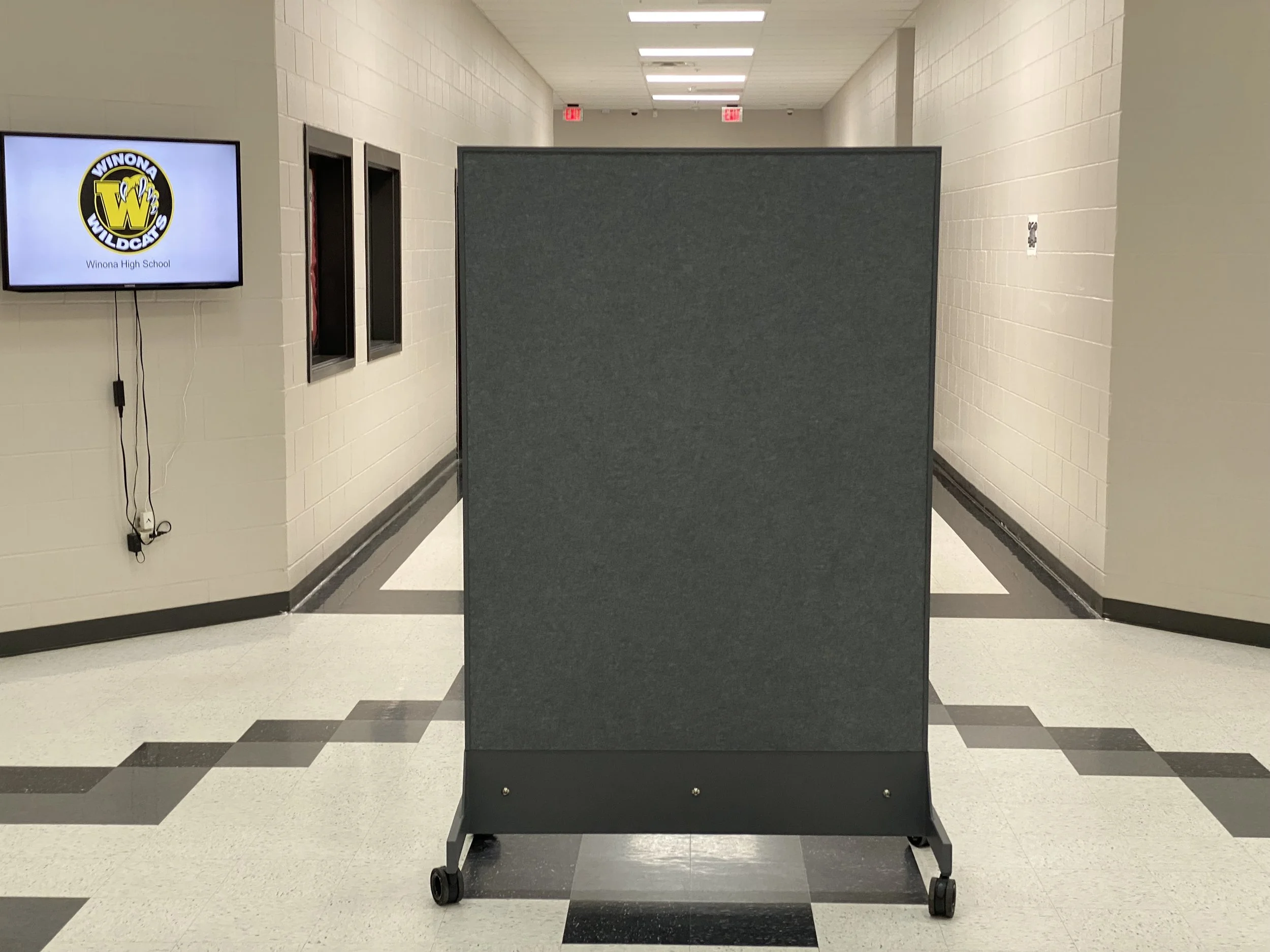
TAG Mobile™ combines an everyday educational whiteboard with rifle-rated ballistic protection, offering schools a practical option when evaluating funded security improvements.
One of the first questions school administrators, nonprofit leaders, and security professionals ask when considering physical protection is straightforward:
How do we pay for ballistic protection?
For public school districts, private nonprofit schools, faith-based educational institutions, and houses of worship, the answer may involve federal grants, state school safety programs, organizational budgets, or a combination of funding sources.
The challenge is understanding which funding programs apply, what purchases are allowable, and how to turn an approved security project into a practical improvement.
That question has become especially relevant in 2026.
The Federal Emergency Management Agency (FEMA) made $300 million available through its Fiscal Year 2026 Nonprofit Security Grant Program (NSGP), supporting eligible nonprofit organizations seeking to strengthen security against terrorist and extremist threats.
For organizations that have received funding, attention is now shifting from grant applications to implementation.
What equipment is appropriate? Which security improvements are covered? What documentation is required? How should purchases be coordinated with the grant administrator?
At Titan Armored, we work with schools and organizations evaluating ballistic-resistant protection, including the TAG Mobile™ bulletproof mobile whiteboard, Titan WallShield™ ballistic wall panels, and ballistic glass systems.
This guide explains how different organizations can approach funding, evaluate physical security improvements, and navigate the purchasing process responsibly.
Understanding the Different Ways Schools and Nonprofits Fund Security
There is no single funding program available to every educational institution.
A public school district may have access to state school safety allocations and district capital budgets.
A private nonprofit school may qualify for certain charitable or federal nonprofit security programs.
A house of worship may be eligible for grants designed to reduce vulnerabilities associated with targeted violence.
Organizations may also combine eligible funding sources when program rules permit, provided the same expenses are not charged improperly to multiple awards.
The most important starting point is identifying the organization's legal status, the applicable funding program, and the specific security improvements authorized under that program.
Three Common Funding Paths
Federal nonprofit security funding: Programs such as FEMA's Nonprofit Security Grant Program support eligible nonprofit organizations facing specified security risks.
State and local school safety funding: State grants, legislative appropriations, and district security budgets may support qualifying school safety improvements.
Organizational and capital budgets: Public schools, private schools, and nonprofit organizations may allocate their own approved funds toward physical security projects.
Each funding source has different eligibility, documentation, procurement, and reimbursement requirements.
Receiving funding does not automatically authorize the purchase of every security product.
That distinction is particularly important for organizations evaluating ballistic protection.
FEMA's $300 Million Nonprofit Security Grant Program: What Organizations Need to Know
The Fiscal Year 2026 Nonprofit Security Grant Program represents a significant federal investment in nonprofit security.
FEMA made $300 million available nationwide, divided into two components:
$150 million — Nonprofit Security Grant Program, Urban Area (NSGP-UA).
$150 million — Nonprofit Security Grant Program, State (NSGP-S).
The program supports eligible nonprofit organizations seeking to improve physical security, target hardening, preparedness, and other authorized security capabilities.
Its purpose is to help organizations at elevated risk of terrorist or extremist attacks strengthen their facilities and protect the people who use them.
Examples of organizations that may qualify, subject to the program's requirements, include:
Nonprofit private schools.
Faith-based schools.
Churches and other houses of worship.
Religious educational facilities.
Community centers operated by eligible nonprofits.
Other qualifying nonprofit organizations.
Eligibility depends on the applicant's nonprofit status, risk considerations, program requirements, and award conditions.
Public school districts should not assume they qualify for FEMA NSGP funding simply because they operate educational facilities. The program is designed for eligible nonprofit organizations, not as a general public school security grant.
For official program information, visit FEMA's Nonprofit Security Grant Program.
What Can FEMA Nonprofit Security Grant Funding Cover?
FEMA NSGP funding can support certain approved security activities, including eligible physical security enhancements and target-hardening equipment.
Depending on the applicable award and program rules, qualifying projects may involve:
Access-control improvements.
Security cameras and related systems.
Intrusion detection and alarm systems.
Protective doors and entrance improvements.
Certain security glazing and protective barriers.
Emergency notification and warning systems.
Security planning, training, and exercises.
Equipment eligibility is governed by the applicable grant requirements and FEMA's Authorized Equipment List (AEL).
For FY 2026, the equipment categories include selected items within:
AEL Section 14 — Physical Security Enhancement Equipment
AEL Section 15 — Inspection and Screening Systems
Other specifically authorized equipment categories may also apply.
Not every item within a broad security category is automatically allowable.
For example, a ballistic-resistant product must be evaluated according to its specific equipment classification, intended installation or deployment, the organization's approved project, and applicable grant requirements.
Organizations should obtain confirmation from their State Administrative Agency or grant administrator before committing grant funds.
Are Bulletproof Whiteboards and Ballistic Shields Eligible for FEMA Grants?
This is an important question for organizations considering classroom protection or mobile ballistic barriers.
Products such as TAG Mobile™ combine an everyday educational function with ballistic-resistant construction.
However, a product's ballistic rating or protective purpose does not independently establish FEMA grant eligibility.
Eligibility may depend on:
The approved Investment Justification.
The vulnerability assessment supporting the project.
The applicable AEL category.
Whether the proposed product fits the authorized project scope.
Any installation or equipment restrictions.
State and federal procurement requirements.
Written approval or clarification from the grant administrator, when required.
A nonprofit organization considering TAG Mobile™, Titan WallShield™, or ballistic glass should confirm that the proposed purchase is consistent with its approved award.
Titan Armored can provide product specifications, available ballistic testing documentation, and quotations to support that evaluation.
The grant administrator—not the equipment manufacturer—determines whether a proposed expenditure is allowable under the award.
Already Awarded FEMA Nonprofit Security Funding? What to Do Next
For nonprofit organizations that have received a grant award, the next phase is implementation.
This is where careful planning can help avoid delays, ineligible expenses, or purchasing problems.
Step 1: Review Your Award Documents
Start with the grant award, approved Investment Justification, project budget, and any special conditions.
Determine what security improvements were approved and whether specific equipment categories or project locations were identified.
Do not assume that an approved security budget can be redirected to different equipment without authorization.
Step 2: Review the Vulnerability Assessment
The proposed equipment should address the vulnerabilities identified in the organization's assessment.
For example, an assessment may identify concerns involving:
Unprotected reception areas.
Vulnerable entrances or glazing.
Classroom or assembly-space exposure.
Inadequate access control.
Emergency communication gaps.
The proposed improvement should connect clearly to the approved security objective.
Step 3: Identify the Appropriate Protective Solution
Different vulnerabilities require different forms of protection.
A reception window may call for an engineered ballistic glazing system.
A designated interior location may benefit from fixed ballistic wall protection.
An appropriate classroom or multipurpose space may warrant evaluation of a mobile ballistic barrier.
No single product addresses every security concern.
Step 4: Confirm Equipment Eligibility Before Purchasing
Before issuing a purchase order, verify that the proposed equipment is allowable under the applicable award.
This may involve confirming the AEL classification, approved scope, budget, and procurement requirements with the State Administrative Agency.
If the proposed purchase differs from the approved project, request clarification or any necessary modification before proceeding.
Step 5: Obtain a Detailed Quotation
A useful quotation should identify:
Product description and configuration.
Quantity and unit pricing.
Applicable ballistic specifications.
Delivery or installation requirements.
Estimated lead time.
Warranty information.
Total project cost.
For custom ballistic glass or architectural systems, project-specific dimensions, framing, and installation conditions may also be necessary.
Step 6: Follow the Required Procurement Process
Grant-funded purchases may be subject to federal, state, and organizational procurement rules.
Depending on the award and purchase amount, this can involve competition, documentation, cost reasonableness, vendor verification, and required approvals.
An available cooperative purchasing contract does not automatically eliminate these obligations.
Step 7: Coordinate Production, Delivery, and Documentation
Once the purchase is authorized, confirm the production schedule, delivery requirements, and any documentation needed for grant administration.
Organizations should also understand applicable payment, reimbursement, recordkeeping, and project completion requirements.
The objective is to turn approved funding into an appropriate, documented security improvement—not simply to spend the award.
Ballistic Protection for Private Schools, Faith-Based Schools, and Houses of Worship
Private nonprofit schools and houses of worship may share certain security concerns, but their facilities often operate differently.
A school may have classrooms, administrative offices, libraries, and common areas.
A house of worship may include a sanctuary, classrooms, meeting rooms, reception areas, and community gathering spaces.
Many organizations operate both educational and worship facilities on the same property.
These environments may benefit from a layered security approach that combines prevention, access control, emergency communication, and targeted physical protection.
Classroom and Educational Spaces
A mobile ballistic whiteboard can support everyday instruction while providing an additional protective capability in suitable applications.
TAG Mobile™ is designed around this dual-use approach.
Reception and Administrative Areas
Selected reception windows and office spaces may benefit from ballistic-resistant glazing or fixed protective barriers.
Entrances and Vestibules
Engineered ballistic glass systems may be appropriate for certain entrance and visitor-management improvements.
Multipurpose and Community Spaces
Flexible learning and gathering spaces may benefit from security products that integrate into everyday operations without creating an institutional appearance.
For more information, read How TAG Mobile Supports Houses of Worship and Faith-Based Schools.
Texas HB 33: Understanding the Ballistic Shield Requirement
Texas school districts have an additional consideration when evaluating ballistic protection.
House Bill 33, known as the Uvalde Strong Act, established a requirement involving ballistic shields for Texas public school campuses.
The law creates a distinct compliance consideration that should not be confused with eligibility for FEMA nonprofit security funding.
HB 33 addresses school safety requirements, while grant programs determine how qualifying expenditures may be funded.
These are related but separate questions.
What Does HB 33 Mean for Texas Schools?
District leaders should review the statute and applicable Texas Education Agency guidance to understand their obligations.
Important considerations include:
The requirement for ballistic shields at public school campuses.
How the equipment is incorporated into emergency planning.
Applicable implementation guidance.
Whether a proposed product satisfies the district's interpretation of the requirement.
How the district intends to fund the purchase.
The law's requirements should be evaluated independently of any manufacturer's product claims.
How Does TAG Mobile Fit Into HB 33 Planning?
Titan Armored positions TAG Mobile™ as a dual-use ballistic mobile shield for Texas schools evaluating classroom protection and HB 33 implementation.
Its current configuration is specified to UL 752 Level 8, and it combines a ballistic-resistant barrier with everyday classroom whiteboard functionality.
Unlike traditional handheld shields, TAG Mobile is designed as a larger mobile product intended for selected educational environments.
Districts should confirm how any proposed equipment fits their compliance responsibilities, emergency operations plan, and applicable guidance.
For a more detailed discussion, read Texas HB 33: How TAG Mobile Serves as a Practical Ballistic Shield.
Other Funding Options for Public School Districts
Although FEMA NSGP is particularly relevant to eligible nonprofit organizations, public school districts have different funding opportunities.
These may include state school safety grants, legislative allocations, local budgets, and other programs.
State School Safety Grants
State education agencies and public safety offices may administer grants for specific school safety improvements.
Eligible activities vary by program and funding cycle.
Some programs focus on physical security equipment, while others emphasize communications, planning, training, or infrastructure.
Districts should review the current grant announcement, eligible expenses, application requirements, and award conditions.
District Safety and Capital Budgets
School districts may fund protective equipment through approved operating, safety, or capital improvement budgets.
Depending on applicable law and district policy, certain projects may also be considered within broader facility improvement programs.
These funding decisions typically involve school boards, finance departments, purchasing offices, and safety personnel.
Federal School Safety Programs
Federal programs may support particular aspects of school safety, including prevention, coordination, training, and security-related initiatives.
However, programs should not be treated as interchangeable.
For example, funding designed for violence prevention or behavioral threat assessment should not automatically be assumed to authorize ballistic equipment purchases.
Always verify the specific program's eligible activities before including a product in a funding proposal.
Local and Community Support
Some organizations also pursue support from:
Educational foundations.
Community fundraising initiatives.
Private donors.
Corporate giving programs.
Local partnerships.
These sources may help supplement approved budgets when consistent with organizational policies and applicable requirements.
Texas Police Vehicle Up-Armoring Grants
In addition to school and nonprofit security funding, Texas has established grant opportunities to help eligible law enforcement agencies strengthen officer protection through vehicle up-armoring.
The Texas Bullet-Resistant Windshield Grant Program supports qualifying law enforcement agencies seeking to improve protection in patrol vehicles, subject to available funding, program eligibility, and current grant requirements.
Titan Armored offers vehicle up-armoring solutions for law enforcement fleets, including:
Bullet-resistant windshields designed for applicable law enforcement vehicle configurations.
Ballistic-resistant front door glass for enhanced officer protection.
Ballistic door panels to provide additional protection in designated vehicle areas.
Professional installation of vehicle-specific ballistic protection systems.
Our vehicle armor solutions include NIJ Level IIIA-rated configurations, with specifications and compatibility determined by the vehicle and selected components.
Law enforcement agencies should review the current Texas grant requirements to confirm eligible equipment, reimbursement conditions, and procurement procedures before purchasing.
Contact Titan Armored to Discuss Police Vehicle Up-Armoring
What Types of Ballistic Protection Should Schools Consider Funding?
The appropriate protective product depends on the vulnerability, location, intended users, and operational requirements.
Titan Armored provides several approaches to physical protection.
TAG Mobile™ Bulletproof Mobile Whiteboard
TAG Mobile combines a magnetic dry-erase writing surface and tackable acoustic panel with rifle-rated ballistic-resistant construction.
The standard unit measures approximately 48 inches wide by 74 inches high, with heavy-duty locking casters for mobility.
Its current configuration is specified to UL 752 Level 8.
For appropriate school and nonprofit environments, the dual-use design offers everyday educational functionality alongside its protective purpose.
Titan WallShield™ Ballistic Wall Panels
Titan WallShield provides fixed ballistic-resistant wall protection with a functional dry-erase writing surface.
It may be considered for selected classrooms, administrative areas, reception spaces, and other locations identified through a security assessment.
Ballistic Glass Systems
Ballistic-resistant glazing systems may be appropriate for selected entrances, reception windows, vestibules, and other architectural openings.
The complete protective assembly—including glazing, framing, hardware, and anchorage—must be designed for the intended application.
Explore Titan Armored Ballistic Glass Systems
Funding eligibility for each product or project must be confirmed under the specific program and award.
Why Dual-Use Ballistic Protection Can Deliver Long-Term Value
School security budgets are often constrained, making long-term value an important consideration.
Traditional protective equipment may be necessary for specialized emergency applications.
However, certain products can provide additional functionality during normal operations.
TAG Mobile is an example of this approach.
During the school day, it can function as a writing surface for lessons, presentations, collaborative activities, and meetings.
Its ballistic-resistant construction remains integrated into the product.
That creates an opportunity to evaluate security spending through two lenses:
Protective value: Does the product address an identified vulnerability with appropriate documented performance?
Everyday value: Does the product also contribute to normal educational or organizational activities?
Dual-use functionality does not override grant eligibility requirements, ballistic testing limitations, or proper placement considerations.
But when a product is suitable for the intended application, everyday utility can be an important part of its long-term value.
For additional guidance, read How to Invest in School Security: Choosing Protection That Delivers Long-Term Value.
Purchasing Ballistic Protection Through TIPS
Funding approval and procurement authorization are separate steps.
Schools and other eligible organizations must follow applicable purchasing requirements when acquiring security equipment.
Cooperative purchasing programs can provide an established contracting pathway for qualifying buyers.
Titan Armored participates in:
TIPS — The Interlocal Purchasing System
This program may help eligible organizations evaluate purchasing options under existing cooperative contracts.
However, participation in a cooperative does not automatically establish compliance with every grant, federal procurement requirement, or local purchasing policy.
Buyers should confirm:
Their organization's eligibility to use the cooperative.
Whether the specific product is covered by the applicable contract.
Any grant-specific procurement requirements.
Documentation and approval requirements.
Whether additional competition or cost analysis is necessary.
Titan Armored can provide relevant purchasing information and quotations to support the process.
A Practical Funding Checklist for Schools and Nonprofit Organizations
Before purchasing ballistic protection, use the following checklist:
Identify your funding source. Determine whether the project will use FEMA NSGP, state funding, district funds, or another authorized source.
Confirm your organization's eligibility. Public schools, private nonprofit schools, and houses of worship may qualify for different programs.
Review the approved project. Understand the security improvements and expenses authorized by the award.
Evaluate the vulnerability. Confirm that the proposed protective equipment addresses an identified need.
Verify technical specifications. Review relevant ballistic testing documentation, dimensions, installation requirements, and product limitations.
Confirm allowable equipment. Check the applicable grant requirements and obtain clarification where needed.
Obtain a detailed quotation. Include product configuration, quantity, pricing, delivery, and installation when applicable.
Follow procurement requirements. Document the purchasing process and obtain necessary approvals.
Coordinate implementation. Confirm production, delivery, installation, and project timelines.
Maintain grant documentation. Retain required records, invoices, approvals, and supporting materials.
Following a structured process can help organizations make responsible security investments while reducing the risk of procurement or grant administration problems.
Frequently Asked Questions About School Safety Grants and Ballistic Protection Funding
Can FEMA nonprofit security grants pay for ballistic protection?
Certain ballistic-resistant security improvements may qualify when they meet applicable equipment eligibility requirements and are included in an approved project. Eligibility depends on the specific product, grant conditions, and administrator approval.
Can a nonprofit private school apply for FEMA NSGP funding?
Eligible nonprofit private schools may qualify if they meet the program's organizational, risk, and application requirements. Nonprofit status alone does not guarantee eligibility or an award.
Can churches and houses of worship receive FEMA security funding?
Yes. Eligible nonprofit houses of worship may qualify for FEMA NSGP funding, subject to the applicable requirements and award process.
Can public schools use FEMA's Nonprofit Security Grant Program?
FEMA NSGP is not a general funding program for public school districts. Public schools should investigate applicable state school safety programs, district budgets, and other authorized funding sources.
Is TAG Mobile™ automatically approved for FEMA grant purchases?
No. TAG Mobile's ballistic-resistant construction does not automatically establish eligibility under a FEMA grant. Organizations should confirm the applicable equipment classification, approved project scope, and grant requirements before purchasing.
What should we do if our nonprofit has already received a FEMA security grant?
Review your award documents and approved project, identify the authorized improvements, confirm equipment eligibility, obtain detailed quotations, and follow the required procurement process before committing funds.
Can FEMA grants fund ballistic glass for a church or school?
Certain eligible physical security and target-hardening projects may include protective glazing, depending on the approved project and program requirements. The specific system and expenditure must be confirmed as allowable.
Are bulletproof whiteboards eligible for school safety grants?
Eligibility varies by program. Some funding sources may authorize ballistic-resistant equipment, but schools should verify that the proposed whiteboard configuration meets the applicable grant's requirements.
Does Texas HB 33 provide funding for ballistic shields?
HB 33 establishes school safety requirements involving ballistic shields. Whether funding is available for a particular purchase depends on separate appropriations, grant programs, and district funding decisions.
Can schools use TIPS or BuyBoard to purchase ballistic protection?
Eligible buyers may be able to use applicable cooperative purchasing contracts, subject to contract scope, organizational policies, and any additional grant procurement requirements.
What is the difference between a ballistic mobile shield and a bulletproof whiteboard?
A ballistic mobile shield is a movable protective barrier. A bulletproof whiteboard incorporates a writing surface into ballistic-resistant construction. TAG Mobile combines these functions in one product.
How can schools maximize the value of security funding?
Schools can prioritize documented vulnerabilities, verify protective performance, consider long-term costs, and evaluate dual-use solutions when appropriate for the facility and funding program.
Turning Security Funding Into Meaningful Protection
Receiving funding is an important step toward strengthening a school or nonprofit facility.
But the value of a grant is ultimately determined by how responsibly the funds are used and whether the resulting improvements address meaningful security needs.
That requires a clear understanding of vulnerabilities, equipment performance, grant eligibility, procurement requirements, and implementation planning.
For organizations evaluating ballistic protection, the goal should not be to purchase the greatest amount of equipment.
The goal should be to select appropriate protective solutions that deliver practical, lasting value.
Titan Armored believes that physical protection should integrate into the environments where students, educators, staff, and communities gather.
Through TAG Mobile™ bulletproof mobile whiteboards, Titan WallShield™ ballistic wall panels, and ballistic glass systems, we provide options for organizations evaluating targeted protective improvements.
Whether your project is supported by FEMA nonprofit security funding, a state school safety grant, or an approved organizational budget, our team can help you evaluate product specifications, configurations, and project quotations.
Received a FEMA Security Grant? Let's Discuss Your Project.
If your school, church, house of worship, or nonprofit organization has received security funding and is evaluating ballistic protection, Titan Armored welcomes the opportunity to discuss your project.
We can assist with:
TAG Mobile™ product specifications and quotations.
Ballistic-resistant wall panel options.
Ballistic glass and secured vestibule project evaluations.
Available ballistic testing documentation.
Product configurations and delivery planning.
Purchasing information for eligible organizations.
Please have your approved project scope and relevant purchasing requirements available so we can help identify the most appropriate next steps.
Explore TAG Mobile™ Bulletproof Mobile Whiteboards
Explore Titan Armored Ballistic Glass Systems
Request a Quote or Discuss Your Security Project
Funding information is provided for general educational purposes. Grant eligibility, allowable expenses, procurement requirements, and project approvals are determined by the applicable funding agency and award documents. Titan Armored does not guarantee grant approval, reimbursement, or eligibility of a specific product.