How to Invest in School Security: Choosing Protection That Delivers Long-Term Value
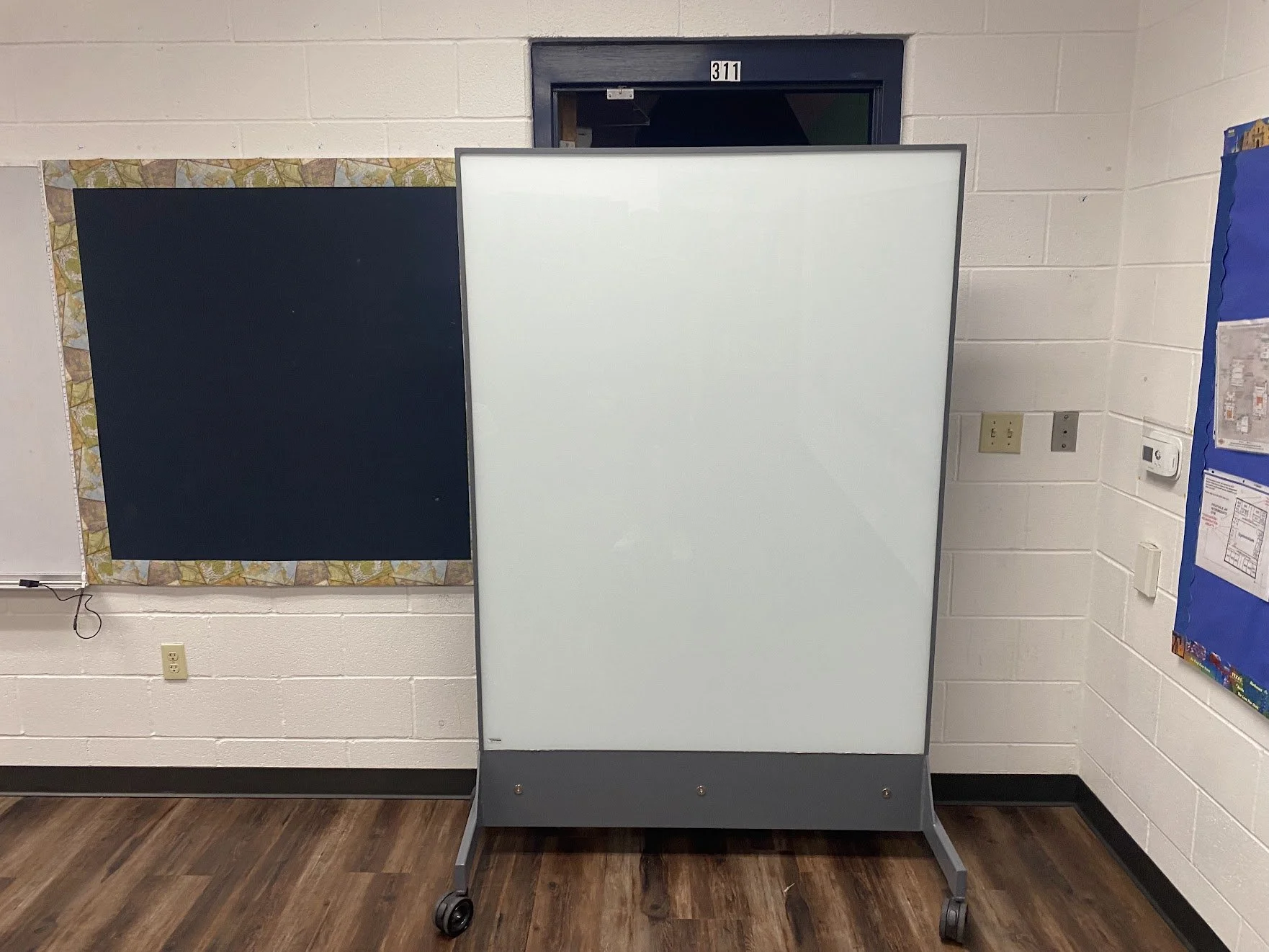
TAG Mobile™ combines an everyday classroom whiteboard with rifle-rated ballistic protection. Positioned in front of a classroom doorway, it illustrates how dual-use school security products can support shelter-in-place planning while providing daily educational value.
School districts across the United States face an increasingly important challenge: how to strengthen campus security while making responsible investments with limited budgets.
From access control and emergency communications to ballistic protection and building improvements, administrators have more school safety products and technologies to evaluate than ever before.
But purchasing more security equipment does not automatically make a school safer.
The real question is whether each investment addresses an identified vulnerability, supports the school's emergency procedures, and delivers meaningful long-term value.
At Titan Armored, we believe school security investments should be practical, purposeful, and integrated into the environments they are designed to protect.
That philosophy is driving interest in dual-use school safety products—solutions that support everyday educational activities while providing protective capabilities when needed.
Our TAG Mobile™ bulletproof whiteboard demonstrates this approach by combining a functional mobile whiteboard with rifle-rated ballistic protection.
For districts evaluating their next school security upgrades, the most effective starting point is not a product catalog.
It is understanding what needs to be protected, why it matters, and how to invest wisely.
Why School Security Investments Require a Strategic Approach
School safety has become an important part of district facilities planning, capital improvement programs, and annual budgeting.
Administrators must balance competing priorities, including building maintenance, instructional technology, staffing, educational resources, and physical security.
At the same time, the school security industry offers an expanding range of products designed to address different vulnerabilities.
These include:
Electronic access control and visitor management systems.
Security cameras and monitoring technology.
Emergency notification and communication systems.
Reinforced doors and secured entrances.
Ballistic glass and protective wall systems.
Traditional handheld ballistic shields.
Ballistic mobile shields and dual-use protective products.
Each category can serve a legitimate purpose.
However, no single product addresses every vulnerability, and not every campus requires the same combination of solutions.
The best school security investment is one that addresses a documented need, delivers appropriate protection, and fits the facility's operational requirements.
That requires thoughtful planning rather than purchasing equipment simply because it is new, heavily marketed, or popular.
Start With a School Security Assessment, Not a Product Catalog
Before investing in physical security upgrades, districts should understand their existing facilities, emergency procedures, and potential vulnerabilities.
A comprehensive school security assessment helps identify where improvements may deliver the greatest value.
Important considerations include:
Building Entrances: How are visitors screened and admitted? Are there vulnerabilities involving doors, glazing, or reception areas?
Classroom Environments: What protective measures already exist? How are classrooms configured for instruction, emergency response, and shelter-in-place procedures?
Administrative Areas: Are reception personnel and other staff positioned in locations with elevated exposure?
Common Spaces: How are cafeterias, libraries, hallways, and gathering areas used throughout the school day?
Emergency Communications: Can staff quickly report an incident and receive instructions?
Existing Equipment: What protective resources are already available, where are they located, and who is expected to use them?
A security assessment should also consider how proposed improvements interact with fire safety, accessibility, evacuation procedures, and emergency response.
A solution that works well in one building may be inappropriate in another.
Security should follow exposure—not square footage, marketing claims, or purchasing trends.
For a deeper understanding of the assessment process, read our Complete Guide to School Security Assessments.
Five Questions Every School District Should Ask Before Purchasing Security Equipment
Whether a district is considering ballistic protection, access control, surveillance technology, or another security upgrade, several questions can help distinguish meaningful investments from unnecessary spending.
1. What Specific Vulnerability Does This Product Address?
Every proposed purchase should have a clear purpose.
Does it strengthen a vulnerable entrance? Improve emergency communication? Provide protective coverage in a particular location?
If the problem cannot be clearly defined, determining whether the proposed solution is appropriate becomes more difficult.
Not every vulnerability requires ballistic protection.
In some cases, improvements to access control, procedures, or existing infrastructure may be more effective.
The assessment should determine the solution—not the product.
2. Is the Product's Protective Performance Documented?
When evaluating ballistic-resistant equipment, schools should request appropriate testing documentation and understand what the ratings actually mean.
Two commonly referenced standards are:
UL 752: A standard addressing bullet-resisting equipment and materials under specified test conditions.
NIJ Ballistic Standards: Standards used for particular categories of ballistic-resistant equipment and materials.
These standards are not interchangeable, and their applicability depends on the product.
Districts should verify the specific tested configuration, threat level, limitations, and supporting documentation rather than relying solely on the word "bulletproof."
A ballistic rating describes resistance to defined threats under specified conditions. It does not guarantee protection against every possible incident.
3. Will the Equipment Be Accessible and Practical to Use?
A product's location and intended users matter as much as its technical specifications.
Schools should consider:
Where the equipment will be positioned or stored.
Who is expected to operate it.
Whether it can be accessed when needed.
Whether its size and weight are appropriate.
What training or familiarization is necessary.
Whether it interferes with everyday circulation or emergency exits.
A handheld ballistic shield, fixed protective panel, and ballistic mobile shield each have different operational characteristics.
The appropriate choice depends on the intended application.
4. Does the Investment Provide Value Beyond Emergency Use?
This is an especially important consideration for districts working within constrained budgets.
Some security products are necessarily specialized. Their value comes from performing a critical function during a particular event.
Others can support everyday school operations while retaining a protective purpose.
Examples of dual-use school safety products include:
Ballistic-resistant dry-erase wall panels.
Bulletproof mobile whiteboards.
Mobile ballistic barriers with educational functionality.
Protective architectural glazing integrated into occupied spaces.
Dual-use design does not automatically make a product more effective. Its protective capability must still be appropriate for the intended application.
However, when performance and application are suitable, everyday functionality can provide additional value from the same investment.
5. What Is the Total Long-Term Cost?
Purchase price is only one component of value.
Districts should also evaluate:
Installation and delivery.
Training and deployment requirements.
Maintenance and replacement.
Expected service life.
Warranty coverage.
Operational limitations.
Everyday functionality.
Compatibility with future facility improvements.
The lowest initial price is not always the lowest long-term cost.
Likewise, a more expensive product is not necessarily a better investment.
The goal is to compare the total value delivered—not simply the number on a quotation.
Single-Purpose vs. Dual-Use School Safety Products: What's the Difference?
Traditional security products often serve one primary function.
A handheld ballistic shield is designed for specialized protective use.
A dedicated security camera provides surveillance.
An access-control system manages entry.
These are legitimate and often essential functions.
However, certain forms of physical protection can be incorporated into the everyday school environment in ways that provide additional utility.
A ballistic-resistant wall panel can also function as a classroom writing surface.
A mobile ballistic shield can also support instruction and collaboration.
Protective glazing can preserve visibility and natural light while addressing an identified security requirement.
Dual-use security is not about replacing every traditional safety product. It is about recognizing opportunities where protection and everyday functionality can work together.
For school leaders, that creates a different way of evaluating value.
Instead of asking only, "What does this equipment cost?" districts can also ask:
"What does this investment contribute to our school every day?"
This is the principle behind Titan Armored's approach to dual-use ballistic protection.
TAG Mobile™: A Bulletproof Whiteboard Designed for Everyday Learning and Ballistic Protection
Titan Armored developed TAG Mobile™ around a straightforward idea:
What if a ballistic mobile shield could also serve as a functional educational tool every day?
The result is a mobile, rifle-rated ballistic barrier designed for classrooms and other suitable school environments.
Unlike a conventional handheld police shield, TAG Mobile incorporates a magnetic dry-erase writing surface and a tackable acoustic panel.
During normal school operations, it supports teaching, presentations, group activities, and collaboration.
Its ballistic-resistant construction provides an additional protective capability for appropriate emergency applications.
Everyday Classroom Functionality
TAG Mobile supports a range of educational activities, including:
Classroom lessons and demonstrations.
Student presentations.
Collaborative learning and brainstorming.
Small-group instruction.
School announcements and displays.
Teacher planning and staff meetings.
Professional development and training.
Its tackable acoustic panel also provides a surface for displaying educational materials while contributing to acoustic management.
This means the product can become part of the classroom environment rather than remaining dedicated solely to emergency use.
For school districts evaluating security budgets and long-term priorities, choosing solutions that provide both protection and everyday functionality can help maximize the value of each investment. Explore our guide to How to Invest in School Security: Choosing Protection That Delivers Long-Term Value to learn how schools can prioritize security upgrades and evaluate dual-use ballistic protection.
Rifle-Rated Ballistic Protection
TAG Mobile's current configuration is specified to UL 752 Level 8, providing resistance to the rifle threats addressed by that classification.
Standard product specifications include:
Dimensions: Approximately 48" wide × 74" high × 24" deep.
Weight: Approximately 280 pounds.
Ballistic performance: UL 752 Level 8.
Writing surface: Magnetic dry-erase surface.
Reverse surface: Tackable acoustic panel.
Frame: Powder-coated.
Mobility: Heavy-duty locking casters.
Available options: Grab Bar, viewport, and custom finishes.
Manufacturing: Made in the USA.
Warranty: 10 years.
The optional Grab Bar provides an additional handling feature for maneuvering the unit within suitable environments.
Ballistic performance should always be evaluated according to the product's tested configuration, protective area, and intended use.
A Ballistic Mobile Shield With a Different Purpose
Traditional handheld ballistic shields are designed for portability and specialized protective applications.
TAG Mobile is designed as a larger mobile barrier suitable for selected school environments.
It is not intended to duplicate every function of a handheld law-enforcement shield.
Instead, it introduces a different approach:
Integrating a ballistic mobile shield into a useful everyday educational product.
That distinction is particularly relevant when districts evaluate classroom protection, equipment accessibility, and the long-term value of school security purchases.
Explore TAG Mobile™ Features and Specifications
Where Can Dual-Use Ballistic Protection Add Value in Schools?
The appropriate location for ballistic protection should always follow a site-specific security assessment.
TAG Mobile may be considered for several types of educational spaces.
Classrooms
A mobile whiteboard can support instruction while providing a ballistic-resistant barrier within the classroom environment.
Placement should consider room layout, doors, windows, furniture, and emergency procedures.
For schools evaluating shelter-in-place applications, the equipment's positioning should be coordinated with the campus emergency operations plan.
Libraries and Media Centers
Libraries and collaborative learning spaces frequently use movable writing surfaces, displays, and flexible furniture.
A dual-use mobile whiteboard can support these functions while providing an additional protective capability.
Administrative Offices
School administrators regularly use writing surfaces for meetings, planning, and coordination.
TAG Mobile can support these activities in appropriate office environments.
Training and Professional Development Areas
Staff training rooms, conference spaces, and multipurpose facilities benefit from mobile collaboration tools.
A dual-use product allows these spaces to retain everyday flexibility.
Hallways and Common Areas
Selected common areas may warrant mobile protective equipment depending on their layout and exposure.
Any deployment must preserve required access, circulation, and emergency egress.
The right location is not simply wherever a product will fit. It is where the product addresses an identified need without creating new operational problems.
How Ballistic Glass, Wall Panels, and Mobile Shields Work Together
One of the most common mistakes in school security planning is expecting a single product to solve multiple unrelated vulnerabilities.
A mobile ballistic shield does not replace a secured entrance.
Ballistic glass does not replace emergency communications.
A reinforced wall panel does not replace appropriate training and procedures.
These solutions address different needs.
Ballistic Glass Systems
Selected entrances, reception windows, and vestibules may benefit from ballistic-resistant glazing and properly designed framing.
The complete assembly—including glazing, framing, hardware, and anchorage—must be evaluated for its intended protective function.
Explore Titan Armored Ballistic Glass Systems
Fixed Ballistic Wall Panels
Some spaces require permanent protective barriers.
Titan WallShield™ combines fixed ballistic-resistant wall protection with a functional dry-erase writing surface.
It may be appropriate for selected classrooms, offices, reception areas, and other identified locations.
Mobile Ballistic Protection
TAG Mobile provides a movable option for spaces where flexible placement and everyday collaboration are valuable.
The appropriate combination depends on the facility and its identified vulnerabilities.
For a broader perspective, read our Guide to Ballistic Glass, Ballistic Panels, and Mobile Protection.
How to Prioritize School Security Improvements With a Limited Budget
Most school districts cannot implement every desired security improvement at once.
That makes prioritization essential.
A practical process begins by ranking identified vulnerabilities according to exposure, potential consequences, and the effectiveness of available solutions.
Priority 1: Address Critical Vulnerabilities
Begin with conditions that present significant exposure and can be addressed through appropriate, feasible measures.
Examples may include weaknesses in visitor access, unsecured entry points, or critical emergency communication gaps.
The assessment—not the product—should determine the priority.
Priority 2: Strengthen Existing Security Systems
Before adding new technology, evaluate whether existing security measures are properly maintained, integrated, and understood.
Improving procedures, training, or system reliability may deliver meaningful benefits.
Priority 3: Evaluate Targeted Physical Protection
Where the assessment identifies a need for ballistic-resistant protection, consider the most suitable form.
That might involve fixed wall protection, ballistic glazing, mobile barriers, or a combination of measures.
Not every opening or wall requires the same level of protection.
Priority 4: Consider Dual-Use Value
When comparing suitable products, evaluate whether they provide additional everyday functionality.
A dual-use bulletproof whiteboard may support instruction and collaboration while also serving a protective purpose.
This added utility can strengthen the overall value proposition.
Priority 5: Plan for Long-Term Maintenance and Expansion
Consider future facility changes, equipment maintenance, staff turnover, and replacement cycles.
Security investments should remain practical as a district's needs evolve.
For more guidance, read How to Prioritize School Security Upgrades.
School Security Investment Checklist for Administrators
Before approving a major school safety purchase, district leaders can use the following checklist:
Identify the vulnerability. What specific problem are we trying to solve?
Review the security assessment. Does the proposed purchase address a documented need?
Verify product performance. Are the relevant testing and technical specifications available?
Evaluate operational use. Who will use the equipment, where will it be located, and what training is required?
Consider building compatibility. Will the solution affect accessibility, emergency exits, or other building systems?
Compare alternatives. Are there other products or approaches that address the same vulnerability?
Evaluate everyday functionality. Can the product provide additional educational or operational value?
Review total cost. Include delivery, installation, training, maintenance, and expected service life.
Confirm procurement requirements. Review applicable purchasing procedures, funding restrictions, and documentation.
Measure the outcome. How will the district determine whether the investment has improved its security posture?
A disciplined evaluation process helps school leaders make purchasing decisions that are easier to explain, document, and defend.
Frequently Asked Questions About School Security Investments
What should schools prioritize when investing in security?
Schools should begin with a security assessment that identifies vulnerabilities, evaluates existing measures, and establishes priorities. Access control, communications, emergency procedures, and targeted physical protection may all be important depending on the facility.
What is the best way to evaluate school safety products?
Districts should consider documented performance, intended application, operational practicality, compatibility with existing systems, training needs, and total long-term cost.
Are more expensive school security products always better?
No. Higher cost does not automatically mean better protection. Products should be compared according to the specific need they address and the value they deliver.
What are dual-use school safety products?
Dual-use school safety products combine a protective function with an everyday operational purpose. Examples include ballistic-resistant writing surfaces and mobile ballistic whiteboards.
What is a bulletproof whiteboard?
A bulletproof whiteboard is a writing surface integrated with ballistic-resistant materials. The term "bulletproof" is commonly used in product searches, but actual protection depends on the product's tested ballistic rating and configuration.
What is a ballistic mobile shield?
A ballistic mobile shield is a movable protective barrier incorporating ballistic-resistant materials. Designs vary in size, mobility, intended users, and protective ratings.
How is TAG Mobile different from a traditional ballistic shield?
TAG Mobile combines a large mobile ballistic barrier with a magnetic dry-erase writing surface and tackable acoustic panel. Traditional handheld shields are generally designed for specialized protective and tactical applications.
Does TAG Mobile provide rifle-rated protection?
TAG Mobile's current configuration is specified to UL 752 Level 8. Schools should review the applicable product testing documentation and configuration when evaluating protection.
Can ballistic protection be integrated into existing schools?
Yes. Depending on the facility, options may include mobile ballistic barriers, fixed ballistic wall panels, and engineered ballistic glazing systems. The appropriate solution should follow a site-specific assessment.
How can districts get more value from school security spending?
Districts can improve value by prioritizing documented vulnerabilities, comparing total ownership costs, evaluating product performance, and considering dual-use solutions when appropriate.
Should schools purchase ballistic protection before completing a security assessment?
A security assessment is generally the best starting point for prioritizing physical protection. It helps determine where ballistic-resistant equipment is warranted and which type is most appropriate.
Can school safety investments support everyday learning?
Yes. Products such as TAG Mobile™ demonstrate how certain protective technologies can also serve as classroom teaching and collaboration tools.
The Future of School Security Is Practical, Integrated, and Purpose-Driven
School safety should not be measured by how much equipment a district purchases.
It should be measured by how effectively the district identifies vulnerabilities, implements appropriate safeguards, and prepares its people and facilities.
That requires more than responding to the latest security trend.
It requires thoughtful planning, documented performance, operational practicality, and responsible investment.
Dual-use school safety products represent an important opportunity within that approach.
When a protective product can also support teaching, collaboration, and everyday school operations, it offers value that extends beyond emergency preparedness.
Titan Armored believes the next generation of school security should combine meaningful protection with the environments people use every day.
Our TAG Mobile™ bulletproof whiteboard reflects that philosophy: a rifle-rated ballistic mobile shield designed to serve as an everyday educational tool.
Protecting what matters most should never mean compromising the purpose of the space.
Make Every School Security Investment Count
Titan Armored works with school districts, administrators, school police departments, and security professionals evaluating practical ballistic-protection solutions.
Whether your district is considering a bulletproof whiteboard, ballistic mobile shield, fixed ballistic wall panels, or ballistic glass systems, our goal is to help identify solutions that address real needs and provide lasting value.