Beyond Thoughts & Prayers: A Practical, Layered Approach to School Safety
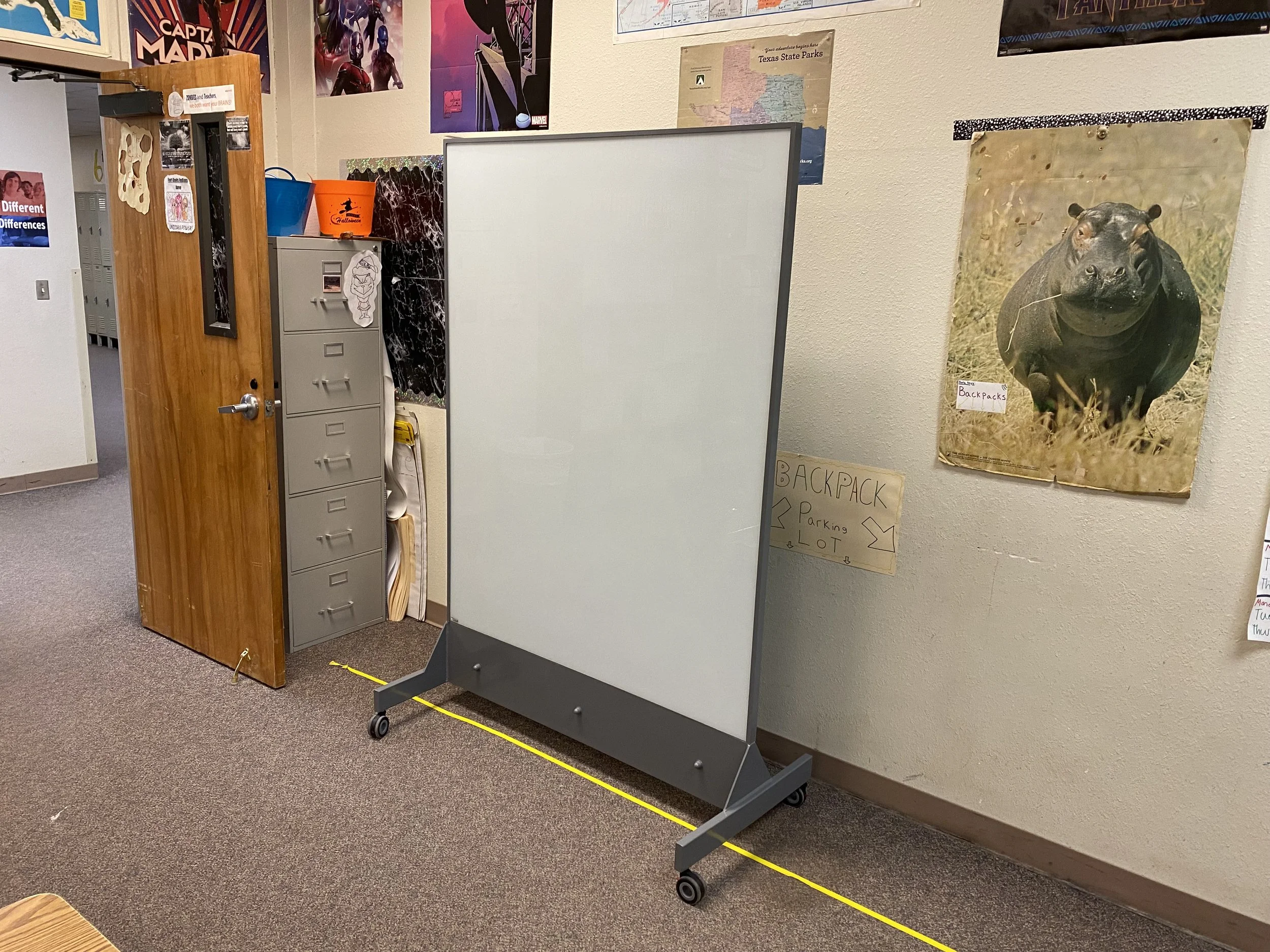
TAG Mobile™ combines everyday classroom whiteboard functionality with rifle-rated ballistic protection, supporting a practical, layered approach to school safety.
TAG Mobile™ combines everyday classroom whiteboard functionality with rifle-rated ballistic protection, supporting a practical, layered approach to school safety.
When HBO's Thoughts & Prayers documentary premiered, it brought renewed attention to a difficult reality facing American schools: students and educators are navigating an environment where lockdown drills, emergency preparedness, and physical security have become part of the educational landscape.
The documentary also raised an important question about the growing school safety industry:
How can schools distinguish meaningful protection from products and practices that create the appearance of security without adequately addressing real vulnerabilities?
It is a question that deserves thoughtful answers.
School administrators, educators, parents, and law enforcement professionals share a common goal: creating learning environments where students and staff can feel safe without sacrificing the welcoming atmosphere that makes schools places of learning and growth.
Achieving that balance requires more than purchasing security equipment.
It requires a comprehensive strategy that combines prevention, preparedness, communication, trained personnel, and appropriate physical protection.
At Titan Armored, we believe effective school safety begins with a practical, layered approach—one that addresses identified vulnerabilities while integrating protective measures into the everyday school environment.
School security should be purposeful, not performative.
Beyond Awareness: Turning School Safety Concerns Into Meaningful Action
Public conversations about school violence often intensify following a tragedy, documentary, or national news event.
These conversations can generate awareness, encourage policy discussions, and motivate communities to examine their preparedness.
But awareness alone does not strengthen a vulnerable entrance, improve emergency communications, or provide physical protection inside a classroom.
Meaningful progress requires schools to translate concern into an actionable security strategy.
That process begins by asking several important questions:
What are the most significant vulnerabilities across our campuses?
Are our current security procedures practical and consistently understood?
How effectively do our entrances control unauthorized access?
Are emergency communication systems reliable and accessible?
Where might additional physical protection be appropriate?
Do our security investments support everyday school operations?
How will we measure whether our improvements are effective?
The answers will differ from district to district—and often from campus to campus.
A small rural school, a large urban high school, and a multi-building educational campus may face very different security challenges.
That is why a standardized list of products should never replace a facility-specific assessment.
For administrators developing a long-term strategy, our Complete Guide to School Security Assessments explains how to identify vulnerabilities and prioritize appropriate improvements.
What Is a Layered Approach to School Security?
Layered school security is a strategy that combines multiple complementary safety measures rather than relying on one product, procedure, or technology.
The objective is to reduce vulnerabilities, improve awareness, support emergency response, and provide appropriate protective capabilities throughout the school environment.
A layered approach may include:
Prevention, threat assessment, and early intervention.
Controlled entrances and visitor management.
Emergency communication and coordinated response.
Physical protection for selected entrances and occupied spaces.
Classroom preparedness and appropriate shelter-in-place resources.
Training, evaluation, and continuous improvement.
These measures work together, but each serves a different purpose.
For example, a secure vestibule may help manage access at the main entrance, while emergency communications help personnel share information during a developing incident.
Ballistic-resistant glazing may provide protection at a selected reception window, while a mobile ballistic barrier may offer an additional protective resource in an appropriate classroom.
No single security product can replace an effective, coordinated school safety plan.
The strength of layered security comes from understanding how different safeguards complement one another.
Layer One: Prevention, Awareness, and Preparedness
The first layer of school safety begins long before a physical security product is needed.
Schools should establish procedures for identifying concerns, reporting threats, supporting students, and coordinating with appropriate safety professionals.
Depending on applicable requirements and available resources, these efforts may include:
Behavioral threat assessment processes.
Anonymous or confidential reporting mechanisms.
Student support and mental health resources.
Staff awareness and training.
Emergency operations planning.
Coordination with school resource officers and local first responders.
Age-appropriate emergency preparedness activities.
These measures are important because physical security alone cannot address every threat.
A well-designed ballistic barrier cannot identify concerning behavior.
A security camera cannot replace a functioning reporting process.
An access-control system cannot substitute for a coordinated emergency response plan.
Prevention and preparedness form the foundation of a comprehensive school security strategy.
Physical protection should complement these efforts—not compete with them.
Layer Two: Strengthening School Entrances and Access Control
School entrances are a critical consideration in physical security planning because they establish the transition between public access and occupied educational spaces.
Administrators should evaluate how visitors enter a building, where staff interact with the public, and whether existing architectural features create vulnerabilities.
Potential improvements may include:
Controlled entry and visitor management.
Secured vestibules.
Reinforced doors and appropriate hardware.
Access-control systems.
Ballistic-resistant reception windows.
Ballistic glazing and engineered framing systems.
The Role of Ballistic Glass in School Security
Ballistic-resistant glass systems can be incorporated into selected entrances, reception areas, administrative offices, and vestibules where an assessment identifies a need for additional protection.
These systems are designed to resist specified ballistic threats under defined testing conditions.
Importantly, effective ballistic protection depends on more than the glazing itself.
The framing, anchorage, hardware, and surrounding construction must be appropriate for the intended application.
Ballistic glass should not be confused with ordinary security film or impact-resistant glazing. These products can have different performance characteristics and should be evaluated against the specific threats and objectives identified by the school.
Titan Armored provides Ballistic Glass Systems for secured vestibules, reception windows, and other architectural applications.
For additional guidance, read Upgrading School Entrances With Ballistic Glass.
Layer Three: Providing Practical Classroom Protection
Classrooms present a different set of security considerations from school entrances.
They are occupied throughout the day, contain furniture and instructional materials, and must remain functional learning environments.
Any proposed protective measure should account for these realities.
A classroom protection strategy may involve:
Appropriate door hardware and locking procedures.
Reliable emergency notifications.
Clearly communicated emergency protocols.
Room layouts that support approved emergency procedures.
Identified protective locations.
Ballistic-resistant equipment where justified by a security assessment.
The objective is not to turn classrooms into intimidating security installations.
It is to integrate appropriate protective capabilities without undermining teaching, learning, accessibility, or safe movement.
Why Accessibility and Placement Matter
A protective product's specifications are only one part of its value.
Schools should also consider where equipment is positioned, who is expected to use it, and how it fits into the campus emergency operations plan.
Equipment intended for emergency use should be evaluated for practical accessibility and operational requirements.
For mobile ballistic barriers, that includes reviewing:
Available space and classroom layout.
Product dimensions and weight.
Mobility and handling requirements.
Appropriate positioning.
Staff familiarization.
Compatibility with emergency procedures.
Required exits and circulation routes.
A protective barrier should never be positioned in a way that compromises required emergency egress.
The most appropriate placement is determined by the room, the identified vulnerability, and the school's approved safety procedures.
Layer Four: Integrating Dual-Use Ballistic Protection Into Everyday Learning
One of the challenges school districts face is determining how to invest in security products that may be used infrequently during an emergency.
Specialized equipment can be essential, but certain types of physical protection can also serve an everyday educational purpose.
This is where dual-use school safety products offer a different approach.
A dual-use product combines a protective capability with an operational function that supports normal activities.
Examples include:
Ballistic-resistant wall panels with dry-erase surfaces.
Bulletproof mobile whiteboards.
Ballistic-resistant architectural systems integrated into functional spaces.
Mobile protective barriers designed for everyday collaboration.
The advantage is not simply that a product performs two functions.
It is that its everyday use can make the equipment a familiar, practical part of the school environment.
That is the philosophy behind Titan Armored's TAG Mobile™.
TAG Mobile™: An Everyday Whiteboard With Rifle-Rated Ballistic Protection
The TAG Mobile™ bulletproof mobile whiteboard was designed to combine educational functionality with ballistic-resistant protection.
During normal school operations, TAG Mobile serves as a mobile writing and collaboration surface.
It can support:
Classroom lessons and presentations.
Student projects and group instruction.
Brainstorming and collaborative activities.
Teacher planning and staff meetings.
Professional development.
School announcements and displays.
Its magnetic dry-erase writing surface provides a practical instructional tool, while the tackable acoustic panel supports educational displays and contributes to acoustic management.
Unlike equipment that must be removed from storage to serve its primary purpose, TAG Mobile can be incorporated into appropriate everyday learning spaces.
Understanding Its Ballistic Protection
TAG Mobile's current configuration is specified to UL 752 Level 8, a ballistic-resistance classification addressing defined rifle threats.
The standard unit measures approximately 48 inches wide by 74 inches high, providing a substantially larger nominal frontal area than many handheld shields.
However, overall product dimensions should not be confused with certified protective area. Schools should review applicable testing documentation and product specifications when evaluating ballistic performance.
Additional features include:
Heavy-duty locking casters.
Powder-coated aluminum frame.
Magnetic dry-erase writing surface.
Tackable acoustic panel.
Optional Grab Bar for maneuverability.
Optional ballistic-resistant viewport.
Custom finish options.
Made-in-USA manufacturing.
10-year warranty.
TAG Mobile does not require a physical transformation from a whiteboard into a shield.
Its ballistic-resistant capability is integrated into the product while it performs its everyday educational function.
This makes it a distinctive option for districts considering dual-use classroom protection as part of a broader security plan.
Explore TAG Mobile™ Features and Specifications
Layer Five: Using Fixed Ballistic Protection Where Mobility Is Not Required
Not every protective application benefits from mobility.
Certain areas may require permanent ballistic-resistant barriers integrated into the building.
Examples can include selected classroom walls, reception areas, administrative offices, conference rooms, and designated protective spaces.
Titan WallShield™ is designed for applications where fixed ballistic protection and everyday writing functionality can be combined.
These panels integrate a ballistic-resistant structure with a dry-erase surface, allowing the protected area to serve a practical educational or workplace function.
A fixed panel and a mobile ballistic whiteboard address different operational requirements.
The appropriate choice depends on the facility, desired placement, protective objectives, and long-term use.
Explore Titan WallShield™ Ballistic Wall Panels
For a broader comparison of available approaches, see Ballistic Glass vs. Ballistic Panels vs. Mobile Protection.
Layer Six: Emergency Communication, Training, and Coordinated Response
Physical security equipment cannot function as a complete safety strategy without people, procedures, and communication.
Schools should establish emergency protocols that are appropriate to their facilities and coordinated with relevant first responders.
Important considerations include:
Emergency Notifications: Can staff and students receive timely, understandable instructions?
Communication Systems: Are personnel able to report emergencies and communicate with appropriate responders?
Staff Familiarization: Do educators understand the purpose and limitations of installed security equipment?
Emergency Procedures: Are evacuation, lockdown, and shelter-in-place procedures clearly established?
Coordination: Are school administrators, school police, and local emergency responders aligned on relevant protocols?
Review and Improvement: Are plans evaluated after drills, exercises, and changes to the school environment?
Training should be age-appropriate and designed with student well-being in mind.
The purpose is to improve preparedness without creating unnecessary fear or disruption.
Security products support emergency plans. They do not replace them.
How Schools Can Strengthen Security Without Creating a Fortress
School administrators face a legitimate design challenge.
They want facilities that are secure, but they also want environments that feel welcoming, accessible, and supportive of learning.
These goals do not have to be mutually exclusive.
Thoughtful security design can integrate protective features into ordinary architectural and educational elements.
Examples include:
Ballistic glazing that preserves visibility and natural light.
Protective wall panels that function as classroom writing surfaces.
Mobile ballistic whiteboards that support daily instruction.
Secured entrances designed to complement the building's architecture.
Protective solutions selected for specific vulnerabilities rather than installed indiscriminately.
A school should not have to sacrifice its educational identity to incorporate appropriate physical security.
For more on this approach, read How to Harden a School Without Making It Feel Like a Fortress.
Moving Beyond Symbolic Security: How to Evaluate What Actually Works
One of the most important lessons from the national school safety conversation is that security investments deserve careful scrutiny.
Purchasing a product can demonstrate that a district is taking action.
But the purchase itself is not evidence that a specific vulnerability has been effectively addressed.
Administrators should evaluate prospective investments using several practical questions.
Does the Solution Address a Documented Vulnerability?
Start with the school's assessment and identify the specific exposure the proposed improvement is intended to address.
Is Its Performance Supported by Appropriate Testing?
For ballistic-resistant products, review the applicable standards, test reports, and product configurations.
Avoid assuming that all products described as "bulletproof" provide the same level of resistance.
Can It Be Integrated Into Existing Operations?
Consider the impact on instruction, accessibility, building circulation, emergency procedures, and maintenance.
Does It Provide Long-Term Value?
Evaluate purchase price alongside durability, warranty, maintenance, training, and everyday functionality.
Does It Complement the Other Security Layers?
A classroom barrier should fit into the broader strategy for prevention, access control, communications, and emergency response.
Can the District Explain Why It Was Selected?
A well-supported purchasing decision should connect an identified need to an appropriate solution.
For additional guidance, read How to Invest in School Security: Choosing Protection That Delivers Long-Term Value.
Building a Long-Term School Safety Strategy
Meaningful security improvements rarely happen through a single purchasing cycle.
Districts often need to prioritize projects, evaluate funding opportunities, coordinate stakeholders, and implement improvements in phases.
A practical long-term strategy should include:
A current, facility-specific security assessment.
A clear ranking of identified vulnerabilities.
Defined objectives for proposed improvements.
Appropriate technical and operational evaluation.
Coordination with relevant school and emergency response personnel.
A realistic implementation budget and schedule.
Training and maintenance considerations.
Periodic reassessment as facilities and needs change.
This process helps schools make security decisions based on documented priorities rather than reacting to each new product or headline.
Our School Security Master Planning Complete Guide provides additional insight into developing a coordinated, long-term approach.
Frequently Asked Questions About Layered School Security
What does layered school security mean?
Layered school security is an approach that combines prevention, controlled access, emergency communications, physical protection, training, and response procedures. Each measure addresses different risks and supports the overall school safety strategy.
Why isn't one school security product enough?
School environments contain different vulnerabilities that require different solutions. A secured entrance, classroom ballistic barrier, and emergency communication system each perform distinct functions. No single product addresses every aspect of school safety.
What role does ballistic glass play in school safety?
Ballistic-resistant glass can provide protection at selected entrances, reception windows, and other architectural openings. Its performance depends on the specified threat level and the properly designed and tested assembly.
What is a bulletproof whiteboard?
A bulletproof whiteboard is a writing surface integrated with ballistic-resistant materials. The term "bulletproof" is commonly used in searches, but actual protective performance depends on the product's documented ballistic rating and configuration.
What is a ballistic mobile shield?
A ballistic mobile shield is a movable protective barrier designed to resist specified ballistic threats. Products differ in size, mobility, intended application, and protective rating.
How does TAG Mobile support layered school security?
TAG Mobile combines an everyday mobile whiteboard with rifle-rated ballistic resistance. It may serve as an additional protective resource in appropriate school environments when incorporated into a facility-specific safety plan.
Can schools add ballistic protection without making classrooms feel intimidating?
Yes. Dual-use products and thoughtfully integrated architectural systems can provide protective capabilities while maintaining everyday educational functionality and a welcoming appearance.
Are ballistic wall panels and mobile shields interchangeable?
No. Fixed ballistic panels provide permanent protection at designated locations, while mobile ballistic barriers offer flexibility for suitable applications. Selection should follow a security assessment.
How should school districts prioritize security investments?
Districts should identify vulnerabilities, evaluate existing safeguards, review available options, verify product performance, and consider operational requirements and long-term costs before making purchasing decisions.
Does ballistic protection guarantee safety during a school emergency?
No. Ballistic-resistant products are tested against specified threats and have defined performance limitations. They should be incorporated into comprehensive school safety strategies rather than treated as guarantees of protection.
Beyond Thoughts & Prayers: Turning Commitment Into Practical Protection
The national conversation about school safety is important.
Documentaries, public discussions, and community advocacy can help bring attention to challenges that deserve serious consideration.
But lasting improvements require more than awareness.
They require responsible planning, informed decisions, and practical measures that address real vulnerabilities.
For schools, that means combining prevention and preparedness with effective communication, appropriate access control, and targeted physical protection.
It also means recognizing that security does not have to come at the expense of the learning environment.
At Titan Armored, our approach is built around that principle.
Through TAG Mobile™ ballistic mobile whiteboards, Titan WallShield™ ballistic wall panels, and engineered ballistic glass systems, we provide protective solutions designed to integrate into the environments where people learn and work.
The objective is not to make schools look more secure. It is to help them become better prepared through thoughtful, layered protection.
Because every second counts.
Take the Next Step Toward Practical School Security
Whether your district is evaluating classroom protection, secured entrances, ballistic glass, or dual-use school safety products, Titan Armored can help you explore solutions appropriate to your facility and security objectives.
We work with school administrators, safety directors, school police departments, architects, and other professionals responsible for protecting educational environments.
Explore Titan Armored's Ballistic Security Products
Contact Titan Armored to Discuss Your School Security Needs
Protecting what matters most.